Introduction
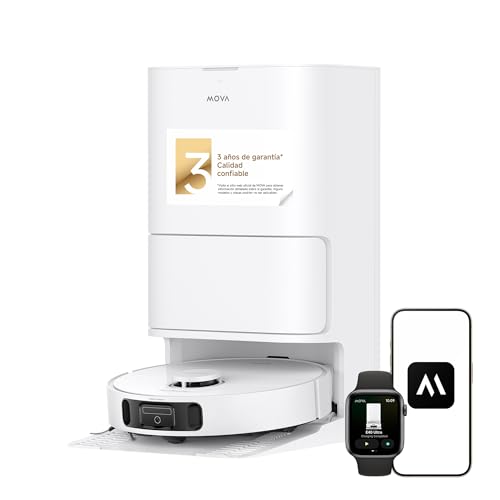
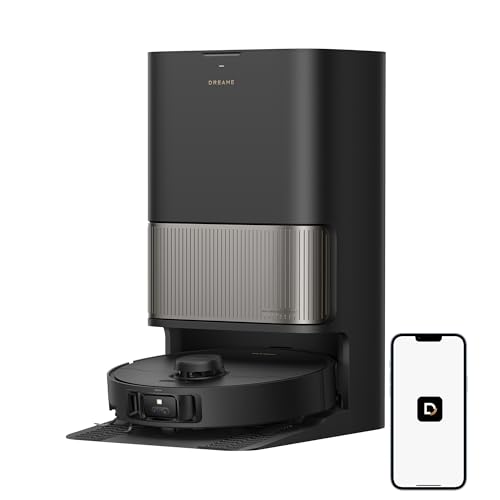
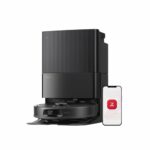
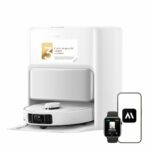
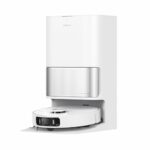
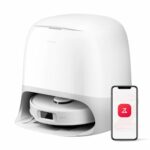
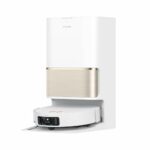
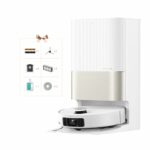
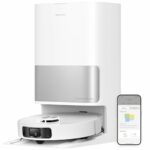
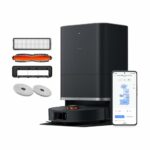
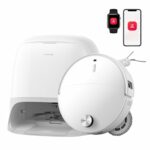
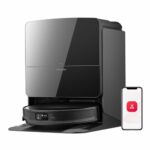
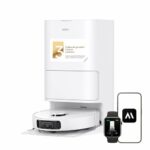
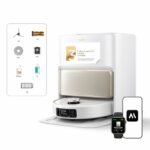
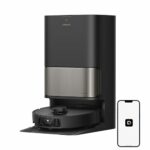
The Mova E40 Ultra and Dreame L40s Pro Ultra represent the latest 2025 releases from two closely related manufacturers—Mova being Dreame's second brand. Both models share an impressive 19,000 Pa suction power and 5,200 mAh batteries, positioning them as high-performance options for households demanding thorough cleaning across multiple surface types. They feature dual rotating mops, multifunctional bases with hot air drying, and advanced LiDAR navigation systems.
Despite their shared DNA, these models diverge in several meaningful ways. The Dreame L40s Pro Ultra incorporates additional intelligence features and hardware refinements that push it into a more premium bracket, whilst the Mova E40 Ultra offers a streamlined experience at what's likely a more accessible price point. Understanding which features matter for your specific home environment will guide your decision between these two capable robots.
Suction Power and Brushing Systems
Both robots deliver 19,000 Pa suction, placing them among the most powerful consumer models available in 2025. This level of performance handles everything from fine dust on hard floors to embedded debris in medium-pile carpets.
The brush configuration reveals the first significant divergence. The Mova E40 Ultra employs a single main brush design, which performs adequately for most households but represents older technology. The Dreame L40s Pro Ultra counters with its dual HyperStream brush system—two independently anchored brushes that actively prevent hair tangles, particularly valuable for homes with pets or long-haired occupants. This design channels hair directly into the suction path rather than wrapping it around a central roller.
Brush elevation matters during mopping. The Dreame raises both its main and side brushes when the mops are deployed, preventing wet bristles from redistributing dirt or leaving damp streaks on already-cleaned areas. The Mova lacks this refinement, keeping its brushes in contact with the floor throughout mopping cycles.
For edge cleaning, the Dreame's extendable side brush swings outward to sweep debris from corners and skirting boards more effectively. The Mova's fixed side brush can't match this reach, though both models include anti-tangle side brush technology. In practical terms, the Dreame will leave noticeably cleaner room perimeters.
Mopping Performance
Both models use dual rotating mops with 10.5mm elevation and RoboSwing technology, allowing them to extend slightly under furniture lips and toe kicks. The mop extension systems are identical, providing thorough edge coverage during wet cleaning.
The base stations handle mop maintenance differently. The Dreame L40s Pro Ultra washes mops with hot water, which dissolves grease and sanitises more effectively than the Mova's cold water system. Both dry mops with hot air, but the Dreame's heated washing cycle provides a meaningful hygiene advantage for kitchens and homes with young children.
Dirt detection separates these models substantially. The Dreame monitors both floor-level grime and mop cleanliness in real time, automatically returning to heavily soiled areas for additional passes and washing mops more frequently when they accumulate dirt. The Mova follows predetermined patterns without adaptive behaviour, which may leave stubborn marks untreated.
The Dreame's ability to automatically detach its mops at the base transforms workflow. When you need vacuum-only operation—perhaps after mopping or for carpeted areas—the robot handles this transition without manual intervention. The Mova requires you to physically remove the mop assembly, adding a maintenance step that becomes tedious with frequent use.
Navigation and Intelligence
Both robots navigate using 3D LiDAR turrets combined with frontal laser sensors for obstacle detection. This dual-layer approach maps homes accurately and avoids collisions reliably.
The intelligence gap widens dramatically with camera systems. The Dreame L40s Pro Ultra incorporates dual AI cameras that recognise 180 distinct object types—shoes, cables, pet waste, furniture legs, and more. It detects curtains specifically, adjusting behaviour to avoid entanglement. LED illumination enables operation in darkness without navigation degradation. Remote camera access lets you check on your home or pets through the app whilst the robot cleans.
The Mova E40 Ultra includes no cameras whatsoever. It recognises pets through its laser sensors but can't visually identify specific objects or adapt cleaning strategies based on what it encounters. For homes with complex floor clutter or owners who value remote monitoring, this represents a substantial functional limitation.
Both models feature CleanGenius AI systems for intelligent cleaning routines, though the Dreame's visual recognition enables more sophisticated decision-making. Spot detection on the Dreame identifies visible marks and concentrates cleaning effort accordingly—something the camera-less Mova simply cannot replicate.
Battery and Autonomy
The 5,200 mAh batteries provide 210 minutes of runtime for the Mova and 220 minutes for the Dreame under standard conditions. This ten-minute difference proves negligible in practice; both robots comfortably handle homes up to 250 square metres on a single charge. When battery levels drop during cleaning, both return to base, recharge, and resume where they left off.
Smart Features
The Mova E40 Ultra climbs obstacles up to 20mm—adequate for standard door thresholds and thin carpet edges. The Dreame L40s Pro Ultra handles more complex obstacles beyond simple step heights, though specific measurements aren't detailed. In homes with varied flooring transitions or raised shower trays, the Dreame's enhanced climbing capability reduces the need for physical intervention.
The Dreame includes a built-in voice assistant, allowing direct voice commands to the robot itself without relying on external smart speakers. Both models integrate with Alexa and Google Home for broader smart home control, but the Dreame's onboard assistant adds convenience for quick instructions.
Multifunctional Base Station
Both bases provide identical 3.2-litre dust bags, 4.5-litre clean water tanks, and 4-litre dirty water tanks. These capacities support several weeks of operation before requiring attention, depending on home size and cleaning frequency.
The Dreame base distinguishes itself with third-generation automatic tray self-cleaning, scrubbing the washing platform after each mop cycle to prevent bacterial growth and odours. The Mova requires manual tray cleaning, which becomes unpleasant if neglected.
Detergent dispensing is integrated into the Dreame's base, automatically adding cleaning solution during mop washing. The Mova offers this as an optional accessory purchased separately—an additional cost and installation step.
Dreame provides an optional plumbing connection kit (sold separately) that eliminates manual water tank refilling and emptying. The Mova offers no such option. For those willing to invest in permanent installation, the Dreame's plumbing capability transforms the robot into a truly hands-off system.
Physical Dimensions
The Mova E40 Ultra stands 97mm tall, whilst the Dreame L40s Pro Ultra measures 103.8mm. This 6.8mm difference allows the Mova to access furniture with tighter clearances—sofas, bed frames, and low cabinets that might exclude the slightly taller Dreame. Both share 350mm diameters, navigating through standard doorways and around furniture legs with equal ease.
The base stations are dimensionally identical at 340mm wide, 590.5mm tall, and 456.7mm deep. Plan for roughly half a square metre of floor space in a location with accessible power.
Real-World Usage Scenarios
For homes with pets, the Dreame L40s Pro Ultra's dual HyperStream brush system dramatically reduces hair maintenance compared to the Mova's conventional roller. The hot water mop washing also sanitises more thoroughly after pet accidents.
In larger properties exceeding 200 square metres, both robots possess sufficient battery capacity, but the Dreame's advanced navigation and dirt detection ensure more consistent results across extensive floor plans. The camera-based obstacle recognition prevents the cleaning interruptions that occur when simpler robots become confused by unfamiliar objects.
Households with varied flooring benefit from the Dreame's superior obstacle climbing and automatic mop removal. Transitioning between carpeted bedrooms and tiled kitchens becomes seamless without manual intervention.
The Mova E40 Ultra suits homes with low-clearance furniture where its reduced height provides access the Dreame cannot match. For straightforward floor plans without excessive clutter, its simpler feature set still delivers thorough cleaning at presumably lower cost.
Remote monitoring through the Dreame's cameras appeals to pet owners checking on animals or anyone wanting visual confirmation of cleaning progress whilst away from home. The Mova offers no equivalent capability.
Conclusion: Which Should You Choose?
Choose the Mova E40 Ultra if: you have furniture with minimal floor clearance where its 97mm height proves essential; your home layout is relatively simple without complex obstacles; you're comfortable with manual base tray cleaning and optional detergent accessories; and you prioritise value over advanced AI features. This model delivers powerful suction and effective mopping without the premium attached to cutting-edge intelligence.
Choose the Dreame L40s Pro Ultra if: you share your home with pets and need superior hair management; you want hot water mop sanitisation and automatic base maintenance; remote camera monitoring matters for security or pet checking; your home contains varied obstacles, curtains, or complex layouts where visual recognition prevents problems; you value hands-free operation including automatic mop removal; or you plan to install plumbing connections for ultimate convenience. The additional investment buys genuinely useful intelligence rather than gimmicks, making this the better robot aspirador for demanding households seeking the best robot aspirador 2025 can offer.
The differences between these models reflect Dreame's strategy of offering premium features under its main brand whilst providing solid core performance through Mova. Your decision ultimately depends on whether the Dreame's advanced capabilities justify its higher price for your specific cleaning challenges.