Introduction
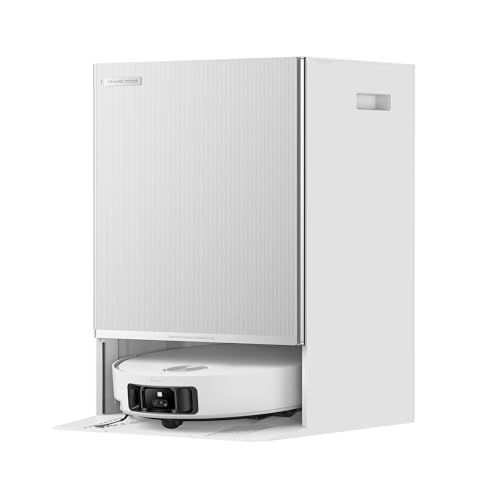
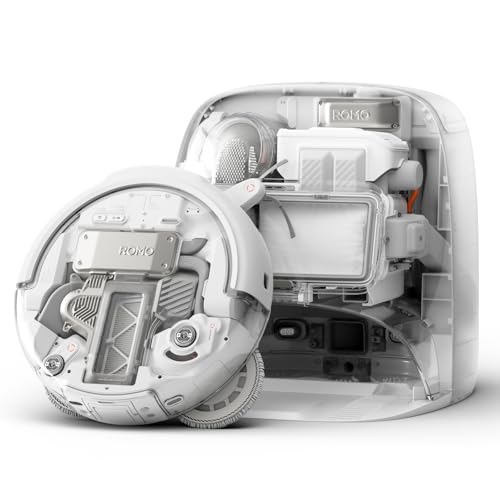
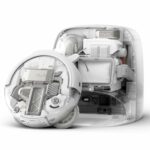
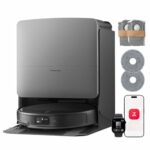
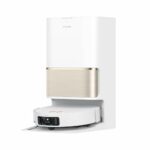
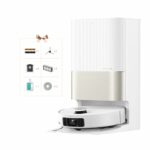
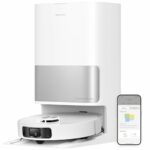
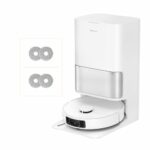
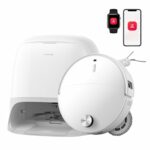
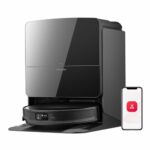
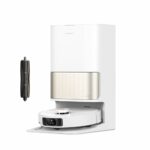
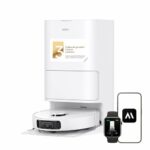
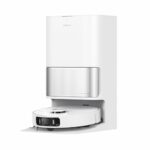
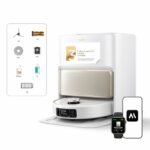
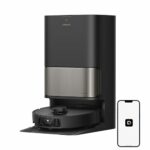
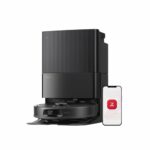
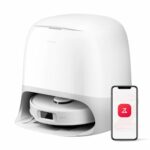
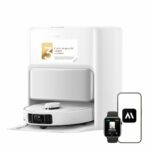
The Dreame Matrix10 Ultra and the DJI Romo P (Robot y Base Transparente) represent two of the most advanced cleaning solutions launched in 2025. Both manufacturers have equipped these models with multifunction bases, rotating dual mops, and artificial intelligence systems designed to adapt cleaning to the specific conditions of each home.
The Dreame model sits at the premium end of the spectrum, incorporating features like hot water mopping and an automatic mop replacement system with three pairs of mops. DJI, making its entrance into the robot vacuum market, has opted for a more streamlined approach whilst maintaining essential high-end features such as UV disinfection in the base.
These robots are designed for users seeking comprehensive cleaning automation in medium to large homes, particularly those with mixed flooring types and pets. The presence of multifunction bases in both models ensures that mopping isn't just a token feature but a genuinely effective cleaning method.
Power and Suction
Suction power marks one of the clearest distinctions in this comparison. The Dreame Matrix10 Ultra reaches 30,000 Pa, giving it a 5,000 Pa advantage over the DJI Romo P's 25,000 Pa. In practical terms, this translates to more aggressive dirt pickup, particularly relevant for homes with deep-pile carpets or heavy pet hair accumulation.
Both models feature divided brush systems designed to minimise hair tangles. The Dreame employs its Doble Cepillo HyperStream design, whilst the DJI uses a Cepillo Dividido configuration. These anti-tangle designs prove especially valuable for households with long-haired pets or family members, reducing maintenance frequency considerably.
The side brush setup reveals an important difference. Both models include extendable side brushes for improved corner cleaning, and both feature anti-tangle technology. However, the Dreame Matrix10 Ultra can elevate its side brush during mopping to prevent interference with the mops, whereas the DJI's side brush remains at a fixed height. The main brush, fortunately, lifts on both models when mopping is active.
This combination of higher suction and smarter brush management gives the Dreame a slight edge in versatility, particularly for mixed cleaning tasks where the robot switches between vacuuming and mopping within the same session.
Mopping
Both robots employ rotating dual mop systems with edge extension capabilities. The Dreame Matrix10 Ultra includes its Roboswing movement, which creates a swaying motion to push the mop slightly under furniture edges and skirting boards. The DJI also extends its mops for border cleaning but doesn't specify this particular movement pattern.
Mop elevation is present in both models, though the Dreame specifies 10.5 mm lift height. This allows both robots to transition onto carpets or rugs without dragging wet mops across them.
The most significant mopping difference lies in water temperature. The Dreame Matrix10 Ultra heats water to 55°C for floor mopping, which helps dissolve stubborn grime and sticky residues more effectively than cold water. The DJI Romo P uses cold water for floor cleaning. When it comes to mop washing at the base, the Dreame again uses hot water, whilst the DJI cleans the mops with cold water. Both models dry the mops with hot air, which prevents odours and bacterial growth.
The Dreame's automatic mop changing system represents a unique feature in this comparison. The base houses three pairs of mops that the robot can swap automatically, allowing for extended cleaning sessions with consistently fresh mops. The DJI doesn't offer this capability. The Dreame can also dismount its mops at the base when only vacuuming is required, though information about this feature on the DJI remains unclear.
Both robots detect dirt on their mops and on the floor itself, triggering additional cleaning passes or mop washing cycles as needed. This intelligent approach ensures genuinely clean results rather than just spreading dirt around.
Navigation System
Navigation technology is sophisticated on both models. The Dreame Matrix10 Ultra uses a retractable LiDAR system, whilst the DJI employs solid-state LiDAR. Both approaches provide accurate room mapping and efficient route planning.
Obstacle detection incorporates dual RGB cameras on the Dreame, whilst the DJI features a camera system without specifying the dual configuration. Both models include frontal 3D laser sensors and LED lighting for low-light conditions, enabling navigation even in darkened rooms.
The Dreame Matrix10 Ultra recognises up to 240 different obstacle types, including specific detection for pets and curtains. The DJI's exact number of recognised obstacles isn't specified, and whilst pet recognition capability isn't confirmed, curtain detection is absent. Both robots allow remote camera access through their respective apps.
Artificial intelligence powers the cleaning logic on both models. The Dreame runs its CleanGenius AI system on an AI Sage 15.0 Octa-core processor, delivering adaptive cleaning patterns based on room type and dirt levels. The DJI also incorporates intelligent cleaning and stain recognition, though the specific CPU details aren't disclosed.
For households with pets or complex floor plans with multiple obstacle types, the Dreame's more comprehensive object recognition may prove advantageous.
Battery and Autonomy
Battery capacity differs substantially between these models. The Dreame Matrix10 Ultra houses a 6,400 mAh battery delivering 260 minutes of runtime, whilst the DJI Romo P contains a 5,000 mAh battery providing 180 minutes. That's an 80-minute difference, which becomes significant in larger homes.
In practical terms, the Dreame's extended autonomy means fewer interruptions for recharging during whole-home cleaning sessions. For properties exceeding 150 square metres, this additional runtime can mean the difference between completing the job in one go or requiring the robot to return to base mid-clean.
Neither specification sheet provides charging time details, but the larger battery in the Dreame would typically require a longer recharge period, all else being equal.
Smart Features
Obstacle climbing capability shows another distinction. The Dreame Matrix10 Ultra can tackle single steps up to 4 cm and ramps, whilst the DJI Romo P manages 20 mm obstacles. The Dreame's superior climbing ability helps it navigate over door thresholds, thick carpet edges, and minor floor level changes more confidently.
The Dreame includes its own voice assistant, allowing direct interaction with the robot without requiring external smart speakers. The DJI's built-in voice assistant capability isn't confirmed, though both models integrate with external assistants like Alexa and Google Home.
Neither robot incorporates a robotic arm, which remains a rare feature reserved for only the most experimental models in the market.
Multifunction Cleaning Base
Both bases handle the essential tasks: automatic dustbin emptying, mop washing, and hot air drying. The differences emerge in the details and capacities.
The Dreame Matrix10 Ultra's base features a self-cleaning system that operates at 3.5° generation technology, whilst the DJI uses a high-pressure nozzle approach for cleaning its washing tray. Both methods aim to prevent residue buildup and maintain hygiene within the base itself.
UV disinfection appears exclusively on the DJI Romo P, adding an extra layer of sanitisation to the cleaning process. This feature targets bacteria and germs, potentially beneficial for households concerned about allergens or with young children.
Detergent dispensing differs in capacity: the Dreame offers three separate detergent tanks, allowing for different cleaning solutions for various floor types or rooms, whilst the DJI provides two tanks. This flexibility on the Dreame might appeal to users with multiple flooring materials requiring specific treatments.
Storage capacities favour the Dreame across the board. Its dust bag holds 3.2 litres versus 2.4 litres in the DJI. Clean water reservoirs measure 5.5 litres and 4 litres respectively, whilst dirty water tanks come in at 4 litres and 3.2 litres. These larger capacities mean less frequent emptying and refilling, particularly valuable for extensive cleaning sessions.
The Dreame Matrix10 Ultra offers an optional water pipe connection kit, purchased separately, which would allow continuous water supply and drainage without manual intervention. The DJI doesn't offer this option. Neither model includes integrated pipe connection as standard.
Dimensions
Robot height often determines whether a vacuum can access the space beneath furniture. The Dreame Matrix10 Ultra measures 89 mm tall, whilst the DJI Romo P stands at 98 mm. That 9 mm difference could prove decisive for fitting under low-clearance sofas, beds, or cabinets. Diameter is virtually identical at 350 mm and 351 mm respectively.
The dust collection capacity in the robot itself differs slightly: 310 ml in the Dreame versus 260 ml in the DJI. The Dreame also specifies an 80 ml water tank aboard the robot, though the DJI's onboard water capacity isn't detailed.
Base dimensions reveal contrasting design philosophies. The Dreame's base measures 416 mm wide, 590 mm tall, and 457 mm deep. The DJI comes in at 453 mm wide, 440 mm tall, and 425 mm deep. The Dreame base stands taller but is narrower, whilst the DJI is shorter but wider. Depending on the intended location—whether tucked under a counter or positioned in a corner—one configuration may suit better than the other.
Real-World Usage Experience
For large homes, the Dreame Matrix10 Ultra's superior battery life and larger base capacities translate to fewer interruptions and less maintenance. The 260-minute runtime handles extensive floor plans without requiring mid-clean recharging, whilst the 5.5-litre clean water tank supports prolonged mopping sessions.
Pet owners will appreciate the anti-tangle brush systems on both models, though the Dreame's higher suction power and specific pet recognition in its AI system give it an advantage for homes with multiple animals or heavy shedding breeds. The ability to recognise pets as obstacles also reduces the likelihood of the robot disturbing sleeping animals or getting tangled in pet toys.
The hot water mopping on the Dreame Matrix10 Ultra makes a tangible difference on hard floors, particularly in kitchens or dining areas prone to sticky spills and grease. Cold water mopping, as implemented in the DJI, handles light dirt adequately but struggles more with stubborn residues.
For homes with varied furniture heights, the Dreame's lower profile opens up more cleaning area. That 89 mm height allows it to service spaces the 98 mm DJI simply cannot reach, potentially leaving dust accumulation under low-clearance pieces.
The automatic mop changing system on the Dreame suits users who want maximum autonomy. The robot manages its own mop hygiene without user intervention, swapping to fresh mops as needed from the three pairs stored in the base. This becomes especially valuable for larger properties where a single pair of mops might not remain effective throughout the entire cleaning cycle.
Conclusion: Which to Choose?
Choose the Dreame Matrix10 Ultra if: you have a large home requiring extended battery life and substantial water capacity; you want hot water mopping for superior results on hard floors; you need the lowest possible profile to access furniture with minimal clearance; you value the convenience of automatic mop changing and triple detergent tanks; you have pets and benefit from comprehensive object recognition including specific pet and curtain detection; you prefer maximum autonomy with larger dust and water capacities requiring less frequent maintenance.
Choose the DJI Romo P if: you want UV disinfection in the base for additional sanitisation; you have a smaller to medium-sized home where 180 minutes of battery life suffices; you can accommodate a taller robot and don't have extremely low furniture; you're entering the robot vacuum market for the first time with DJI's reputation for camera and navigation technology; you prefer a base with a smaller vertical footprint that fits better under counters or in tighter spaces; you're comfortable with cold water mopping and don't require the absolute highest suction power; you want a capable robot with multifunction base features at what may be a more accessible price point given the slightly reduced specifications.
Both represent strong entries in the 2025 robot vacuum market, but the Dreame Matrix10 Ultra delivers more comprehensive features for demanding users with larger homes, whilst the DJI Romo P offers solid performance with some unique touches like UV disinfection in a potentially more compact overall package.