Introduction
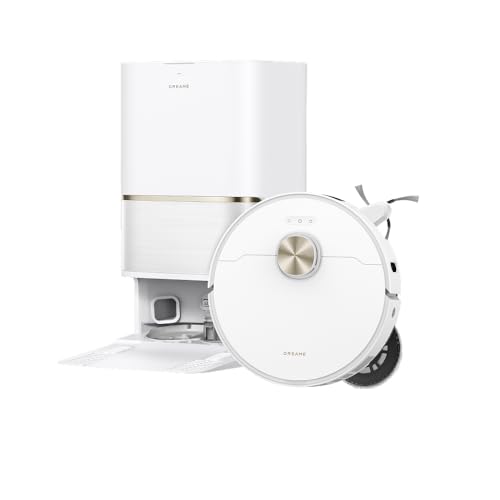
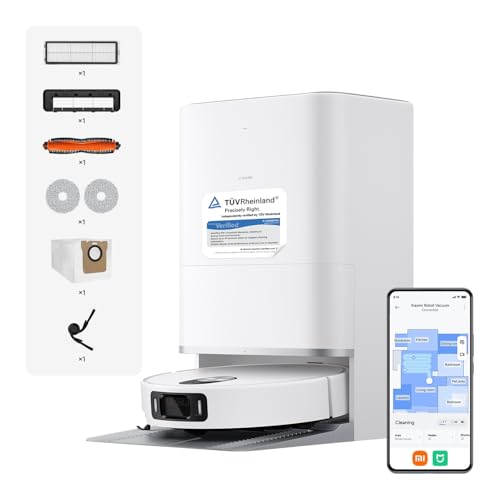
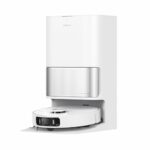
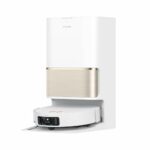
The Dreame L50 Ultra AE and the Xiaomi Robot Vacuum 5 Pro represent two distinct approaches to high-end robotic cleaning. The Dreame model arrives in March 2026 with impressive 28,000 Pa suction power, whilst the Xiaomi 5 Pro launched in 2025 with 20,000 Pa and a comprehensive suite of AI-driven features. Both incorporate multifunctional bases with hot water mop washing and heated air drying, making them suitable for homes requiring thorough floor maintenance with minimal manual intervention.
These models target users seeking premium cleaning performance without constant supervision. The Dreame leans towards raw power and practical convenience features, whereas the Xiaomi emphasises intelligent navigation and adaptive cleaning through its AI camera system.
Power and Suction
The Dreame L50 Ultra AE delivers 28,000 Pa of suction, which represents a substantial advantage over the Xiaomi Robot Vacuum 5 Pro's 20,000 Pa. This difference becomes particularly relevant in homes with thick carpets or households with pets that shed heavily. Higher suction generally translates to more effective removal of embedded dirt and finer particles.
Both models use the TriCut 3.0 brush system, which combines bristles with integrated blades to cut through tangled hair. This design reduces maintenance time compared to traditional bristle-only brushes. The main brush lifts automatically during mopping on both robots, preventing wet dirt from transferring back onto cleaned floors.
Each model features an extendable side brush that reaches into corners more effectively, alongside anti-tangle technology. Neither offers side brush elevation during mopping, though this function tends to matter less than main brush elevation in practical use. For households dealing with long hair or pet fur, the TriCut 3.0 system should handle these challenges reasonably well across both options.
Mopping
The mopping systems share similarities but diverge in important ways. Both employ dual rotating mops and offer mop extension for edge cleaning. The Dreame L50 Ultra AE includes RoboSwing functionality, which adds a swaying motion to push the mop slightly under furniture edges and skirting boards. The Xiaomi simply extends its mops without this additional movement.
Mop lift height differs noticeably. The Xiaomi Robot Vacuum 5 Pro raises its mops 15 mm, whilst the Dreame manages 10.5 mm. This extra clearance on the Xiaomi model provides better protection for medium-pile rugs during combined vacuuming and mopping routines.
A practical distinction emerges with mop removal. The Dreame L50 Ultra AE automatically detaches its mops at the base when you want to vacuum only, eliminating the need to manually remove them. The Xiaomi requires manual intervention for this task. For homes with mostly hard floors and occasional carpeted areas, this automation saves time.
The Xiaomi takes a different approach with dirt detection. It monitors both mop cleanliness and floor dirtiness, adjusting cleaning intensity accordingly. The Dreame lacks these sensors, relying instead on preset cleaning patterns. In practice, this means the Xiaomi can identify particularly soiled areas and refocus efforts there, whilst the Dreame maintains consistent cleaning regardless of floor condition.
Both bases wash mops with hot water and dry them using heated air, which helps prevent odours and bacterial growth between cleaning sessions.
Navigation System
Navigation technology sets these models apart significantly. The Dreame L50 Ultra AE uses a third-generation LiDAR turret combined with front-facing 3D laser sensors for obstacle avoidance. This setup provides reliable mapping and decent object detection without camera assistance.
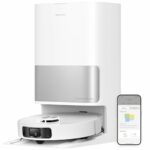
The Xiaomi Robot Vacuum 5 Pro incorporates a retractable LiDAR system alongside an AI-powered camera, 3D laser sensors, and LED illumination for night vision. This combination enables recognition of up to 200 different obstacle types. The camera allows remote access through the app, letting you check on your home whilst away.
The camera-based intelligence on the Xiaomi extends to stain recognition and adaptive cleaning strategies. It can identify marks on floors and adjust mopping intensity or make additional passes. The Dreame navigates efficiently but doesn't adapt its cleaning approach based on visual assessment of floor conditions.
Neither model specifically recognises pets or curtains, which some competing premium robots offer. For users who value visual monitoring or AI-driven cleaning decisions, the Xiaomi presents clear advantages. Those prioritising straightforward, predictable operation may find the Dreame's approach perfectly adequate.
Battery and Autonomy
Both robots contain identical 5,200 mAh batteries. The Xiaomi Robot Vacuum 5 Pro provides 140 minutes of runtime, though the Dreame's autonomy figures aren't specified in available data. Given the Dreame's higher suction power, it may consume energy more quickly, though this remains speculative without confirmed runtime information.
Each model can climb obstacles up to 20 mm high, which handles most door thresholds and minor floor transitions without difficulty. This capability suits multi-level homes or properties with varied flooring types.
Smart Features
Beyond navigation differences already covered, both robots integrate with external voice assistants like Alexa and Google Home. Neither includes a proprietary voice assistant or robotic arm functionality.
The obstacle-clearing ability matches at 20 mm for both models, sufficient for typical household challenges but not exceptional compared to some competitors offering 25-30 mm clearance.
Multifunctional Cleaning Base
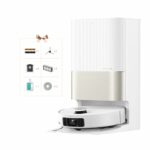
The bases share core functionality: automatic dustbin emptying, hot water mop washing, and heated air drying. Both feature third-generation self-cleaning base plates that rinse themselves after washing the robot's mops.
Storage capacity favours the Dreame L50 Ultra AE. Its dust bag holds 3.2 litres against the Xiaomi's 2.5 litres—roughly 28% more capacity before requiring replacement. The Dreame also provides a 4.5-litre clean water tank compared to 4 litres on the Xiaomi, and a 4-litre dirty water tank versus 3.8 litres. These differences extend maintenance intervals slightly.
Only the Dreame includes a detergent dispenser in the base. This automatically adds cleaning solution during mop washing, potentially improving mopping results without manual intervention. The Xiaomi relies on water alone unless you manually add detergent to its tank.
The Dreame offers an optional plumbing connection kit, sold separately, which would eliminate the need to refill clean water or empty dirty water manually. The Xiaomi doesn't support this option. For users interested in maximum automation, this represents a future upgrade path, though it requires additional purchase and installation.
Neither base includes UV disinfection or automatic mop replacement systems.
Dimensions
Robot height matters when navigating under furniture. The Xiaomi Robot Vacuum 5 Pro measures 88 mm tall, whilst the Dreame L50 Ultra AE stands at 97 mm. That 9 mm difference can determine whether a robot fits beneath sofas, beds, or kitchen cabinets. For homes with low-clearance furniture, the Xiaomi's slimmer profile provides better access.
Both robots share a 350 mm diameter, standard for this category and suitable for manoeuvring around chair legs and tight spaces.
Base dimensions vary slightly. The Dreame base measures 340 mm wide, 590 mm tall, and 457 mm deep. The Xiaomi base spans 360 mm wide, 572 mm tall, and 470 mm deep. The Dreame base sits taller but narrower, whilst the Xiaomi base spreads wider and deeper. Neither presents a particularly compact footprint—both require dedicated floor space in a utility area or kitchen corner.
Real-World Usage
For larger homes with extensive hard flooring, the Dreame L50 Ultra AE's superior suction and larger dust bag reduce maintenance frequency. The automatic mop removal suits mixed-floor properties where you might want vacuum-only sessions on carpeted areas without manually handling wet mops.
The Xiaomi Robot Vacuum 5 Pro excels in homes where adaptive cleaning matters. Its dirt detection adjusts effort based on actual floor conditions rather than following preset patterns. The camera access appeals to users wanting remote home monitoring, and the slimmer profile reaches under more furniture.
Pet owners benefit from the TriCut 3.0 brush on both models, though the Dreame's extra suction power may extract more embedded pet hair from carpets. Neither offers specific pet recognition features, so don't expect the robots to avoid pet bowls or toys without training the no-go zones in the app.
On hard floors—tiles, laminate, sealed wood—both models should perform well given their hot-water mop washing systems. The Xiaomi's higher mop lift protects rugs more effectively during mixed cleaning sessions. The Dreame's detergent dispenser potentially delivers slightly better mopping results, though water-only mopping remains quite effective for routine maintenance.
Conclusion: Which to Choose?
Choose the Dreame L50 Ultra AE if: you prioritise maximum suction power, want a detergent dispenser built into the base, need automatic mop removal for convenient vacuum-only sessions, prefer larger dust and water tank capacities for extended maintenance intervals, or might consider adding plumbing connections in future.
Choose the Xiaomi Robot Vacuum 5 Pro if: you value AI-driven adaptive cleaning with dirt detection, want remote camera access for home monitoring, need the slimmest possible profile to fit under low furniture, prefer higher mop lift for better rug protection, or want LED night vision and recognition of 200+ obstacle types for more sophisticated navigation.
Both represent capable premium options. The Dreame suits users wanting straightforward power and convenience features, particularly in larger homes with mostly hard floors. The Xiaomi appeals to those seeking intelligent, adaptive operation with visual monitoring capabilities, especially where furniture clearance matters.