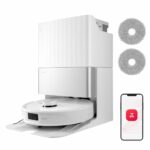
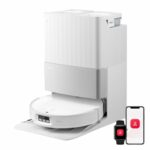
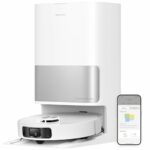
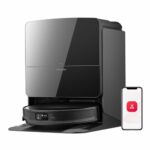
✨ VS Analyses · VacuumSpain comparison technology. Explanation created with AI from verified technical data.
Introduction
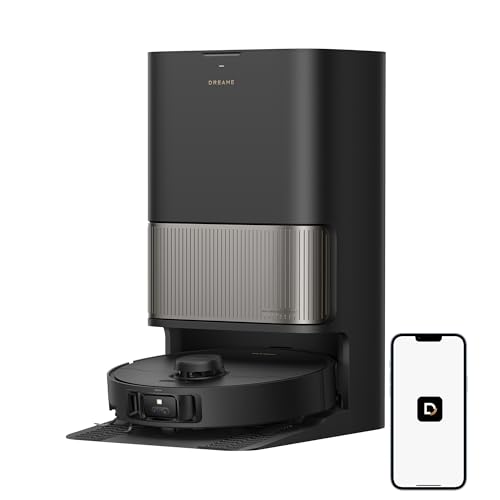
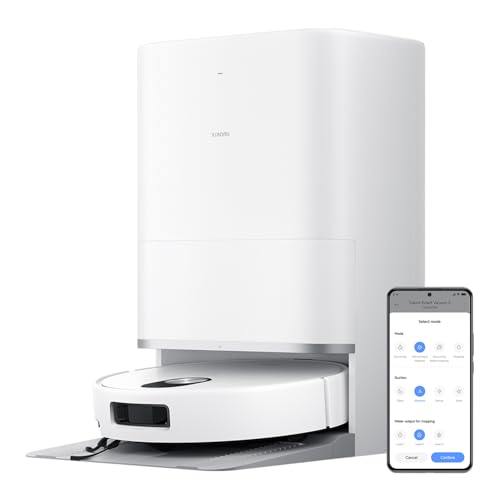
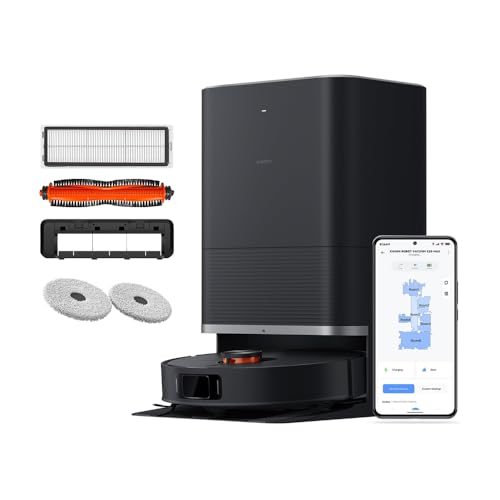
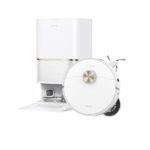
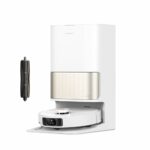
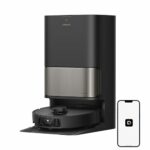
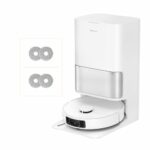
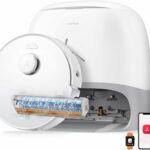
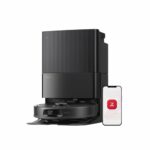
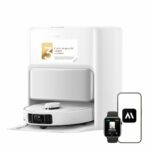
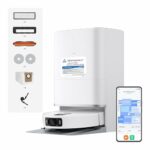
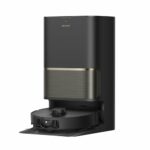
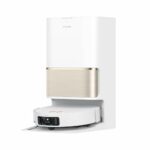
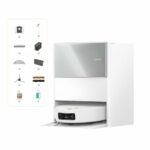
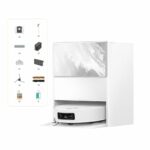
Choosing the right robot vacuum in 2025 means weighing up genuine technological differences rather than marketing claims. The Dreame L40s Pro Ultra, Xiaomi Robot Vacuum 5, and Xiaomi X20 Max represent three distinct approaches to automated cleaning, each targeting different user needs and budgets.
The Dreame L40s Pro Ultra arrives as a 2025 flagship model packed with advanced AI features and dual cameras. The Xiaomi Robot Vacuum 5, also launched in 2025, focuses on raw suction power with its 20,000 Pa rating. Meanwhile, the Xiaomi X20 Max from 2024 offers a more straightforward cleaning experience at what's likely a lower price point. All three feature multifunction bases that wash and dry mops, but the similarities largely end there.
For larger homes with pets and complex layouts, the differences in navigation, brush design, and autonomy become critical. Smaller flats might prioritise height clearance under furniture, whilst households with multiple floor types need to consider mop extension and dirt detection capabilities.
Suction Power and Brushwork
The Xiaomi Robot Vacuum 5 leads on paper with 20,000 Pa suction, edging past the Dreame L40s Pro Ultra's 19,000 Pa. The X20 Max sits considerably lower at 8,000 Pa, which places it firmly in the mid-range territory for 2024 models. In practice, this difference matters most on thick carpets or when dealing with ground-in debris.
Where the Dreame distinguishes itself is brush design. Its dual brush system—likely HyperStream based on Dreame's recent lineup—minimises hair tangles by using two independently anchored rollers. The Xiaomi models employ TriCut 3.0 brushes, which combine bristles with integrated cutting blades to slice through tangled hair. Both approaches work, but the Dreame's elevating main brush adds a functional advantage: it lifts when mopping to prevent wet debris from fouling the roller.
All three robots feature side brushes, but implementation varies. The Dreame and Robot Vacuum 5 both extend their side brushes to sweep corners more effectively, whilst the X20 Max uses a fixed design. More importantly, the Dreame's side brush elevates during mopping and includes anti-tangle features—capabilities absent from both Xiaomi models. For homes with pets that shed heavily, these details reduce maintenance frequency noticeably.
Mopping Systems
All three robots use dual rotating mops, but the Dreame L40s Pro Ultra layers on several refinements. Its mops extend outwards to reach edges and include what Dreame calls RoboSwing—a subtle swaying motion that pushes the mop slightly under furniture lips and skirting boards. The Robot Vacuum 5 offers mop extension without the swaying mechanism, whilst the X20 Max provides basic extension.
Mop lift height varies: the Robot Vacuum 5 achieves 15 mm, the Dreame manages 10.5 mm, and the X20 Max reaches 10 mm. Those extra millimetres on the Robot Vacuum 5 help when transitioning onto thicker rugs, though none of these robots should tackle high-pile carpets whilst mopping.
The Dreame's standout feature here is automatic mop removal at the base. When you want to vacuum only—perhaps before guests arrive—the robot detaches its mops at the docking station without manual intervention. Neither Xiaomi model offers this, requiring you to physically remove the mop pads if you want pure vacuuming.
Dirt detection separates the Dreame further. It identifies soiled areas on floors and monitors mop cleanliness in real time, triggering additional cleaning passes or mop washing cycles as needed. The Xiaomi models lack these sensors entirely, following predetermined cleaning patterns regardless of actual dirt levels.
Navigation Technology
The Dreame L40s Pro Ultra employs a LiDAR turret combined with dual AI cameras and 3D laser sensors. This setup enables it to recognise 180 different object types, including pets and curtains—useful for avoiding cat litter trays or preventing the robot from tangling in drapes. The dual cameras also permit remote access via the app, effectively turning the robot into a mobile home monitor.
The Xiaomi Robot Vacuum 5 uses a retractable LiDAR system paired with frontal 3D laser sensors but omits cameras entirely. This keeps the profile lower—helpful for navigating under furniture—but eliminates visual object recognition. The X20 Max combines a traditional LiDAR turret with 3D sensors and adds LED lighting for night operation, though it also lacks camera-based AI.
In practical terms, the Dreame will navigate around shoes, cables, and pet toys more reliably thanks to its visual recognition. The Xiaomi models depend on geometric obstacle detection, which works well for larger items but can struggle with flat objects like socks or charging cables lying on the floor.
The Dreame also includes a built-in voice assistant, allowing direct voice commands to the robot itself rather than relying solely on Alexa or Google Home integration. All three support external voice assistants, but only the Dreame responds independently.
Battery Life and Coverage
All three robots share identical 5,200 mAh batteries, yet runtime differs dramatically. The Dreame L40s Pro Ultra achieves 220 minutes on a single charge, the Robot Vacuum 5 manages 140 minutes, and the X20 Max reaches 120 minutes. These variations stem from motor efficiency, suction settings, and navigation algorithms rather than battery capacity alone.
For larger homes exceeding 150 square metres, the Dreame's extended runtime reduces the likelihood of mid-clean recharging sessions. The Robot Vacuum 5's shorter runtime might necessitate a recharge break in sprawling layouts, particularly when using maximum suction. The X20 Max is better suited to compact flats or targeted room cleaning rather than whole-home sessions.
Intelligent Features
All three robots can climb obstacles up to 20 mm—sufficient for standard door thresholds and low carpet edges. The Dreame specifies "simple steps" within this range, suggesting it handles straightforward transitions rather than complex multi-level obstacles.
None of these models include robotic arms for picking up objects, which remains a feature reserved for experimental or ultra-premium models outside this comparison.
The Dreame's onboard voice assistant deserves mention again here. Rather than always routing commands through your phone or smart speaker, you can speak directly to the robot for immediate responses. This proves handy when you're hands-full in the kitchen and need to pause cleaning or send the robot back to its base.
Multifunction Base Stations
All three bases auto-empty dust, wash mops with hot water, and dry them with heated air—essential features for maintaining hygiene and reducing manual intervention. The Dreame's base holds a 3.2-litre dust bag compared to 2.5 litres in both Xiaomi bases, meaning slightly longer intervals between bag changes in larger homes.
Water tank capacities favour the Dreame as well: 4.5 litres of clean water and 4 litres for dirty water, versus 4 litres clean and 3.8 litres dirty in the Xiaomi bases. The difference isn't enormous, but it translates to perhaps one extra mopping session before refilling becomes necessary.
The Dreame includes third-generation self-cleaning for its base tray, actively scrubbing the area where mops are washed to prevent residue buildup. The Robot Vacuum 5 offers base tray cleaning without specifying the generation or mechanism, whilst the X20 Max lacks this feature entirely—you'll need to manually rinse the tray periodically.
Only the Dreame incorporates a detergent dispenser within the base, automatically dosing cleaning solution during mop washing. This ensures consistent cleaning performance without remembering to add detergent manually. Neither Xiaomi base includes this capability.
The Dreame also supports an optional plumbing connection kit, purchased separately, which allows the base to refill clean water and drain dirty water automatically via household pipes. This isn't integrated out of the box, so it requires additional investment and installation, but it's worth noting for those seeking maximum automation. Neither Xiaomi model offers even an optional plumbing kit.
Physical Dimensions
Height matters when furniture clearance is tight. The Xiaomi Robot Vacuum 5 measures just 88 mm tall, making it the shortest of the three and most likely to slip under low-slung sofas or bed frames. The X20 Max stands at 97 mm, whilst the Dreame reaches 103.8 mm—a difference of nearly 16 mm compared to the Robot Vacuum 5. If your furniture sits close to the floor, this could determine which areas the robot can actually clean.
All three share a 350 mm diameter, standard for modern robot vacuums and narrow enough for most doorways and furniture gaps.
Base dimensions vary slightly. The Dreame's base measures 340 mm wide, 590.5 mm tall, and 456.7 mm deep. The Robot Vacuum 5's base is 360 mm wide, 572 mm tall, and 470 mm deep—wider and deeper but slightly shorter. The X20 Max base is 340 mm wide, 563 mm tall, and 420 mm deep, making it the most compact overall. Consider these measurements when planning where to position the base, particularly in cupboards or alcoves.
Real-World Usage Scenarios
For large homes with multiple floor types and pets, the Dreame L40s Pro Ultra offers the most comprehensive feature set. Its 220-minute runtime handles extensive cleaning sessions without interruption, whilst dirt detection ensures thorough results rather than merely following a pattern. The dual cameras and pet recognition prevent the robot from spreading accidents or getting tangled in pet toys. Automatic mop removal means you can switch between vacuuming and mopping modes without manual intervention—useful when you need a quick vacuum before mopping later.
The Xiaomi Robot Vacuum 5 suits households prioritising raw suction power and low-profile navigation. Its 20,000 Pa suction tackles ground-in dirt effectively, whilst the 88 mm height lets it reach under more furniture than its competitors. The 140-minute runtime suffices for medium-sized homes, though larger properties might require mid-clean recharging. Without dirt detection or camera-based navigation, it follows a more predictable cleaning routine, which some users actually prefer for consistency.
The Xiaomi X20 Max fits smaller flats or budget-conscious buyers who still want automated mop washing and drying. Its 8,000 Pa suction handles everyday dust and debris on hard floors, though it struggles more with thick carpets. The 120-minute runtime covers compact spaces adequately, and the 97 mm height offers reasonable furniture clearance. The absence of advanced AI features and shorter runtime make it less suitable for complex layouts or large areas.
For homes with low furniture, the Robot Vacuum 5's slim profile becomes its defining advantage. For pet owners who value visual monitoring and mess detection, the Dreame's cameras and dirt sensors justify the height trade-off.
Conclusion: Which Should You Choose?
Choose the Dreame L40s Pro Ultra if you want the most advanced robot vacuum available in this comparison. Its dual cameras, 180-object recognition, dirt detection, automatic mop removal, and 220-minute runtime make it ideal for large homes with pets and varied floor types. The detergent dispenser and third-generation base tray cleaning reduce maintenance further. Accept that its 103.8 mm height limits access under very low furniture, and be prepared to pay a premium for these capabilities.
Choose the Xiaomi Robot Vacuum 5 if maximum suction power and minimal height are your priorities. Its 20,000 Pa motor and 88 mm profile let it clean deeply and reach under low furniture better than alternatives. The 140-minute runtime suits medium-sized homes, though you'll miss out on dirt detection, camera navigation, and automatic mop removal. This represents a strong middle ground between features and price.
Choose the Xiaomi X20 Max if you live in a smaller flat and want automated mop washing without paying for advanced AI features you won't use. Its 8,000 Pa suction handles routine cleaning on hard floors, and the 120-minute runtime covers compact spaces. The absence of dirt detection, camera navigation, and base tray self-cleaning means more manual oversight, but the lower price reflects this positioning. It's a sensible choice for straightforward cleaning needs rather than complex households.