Introduction
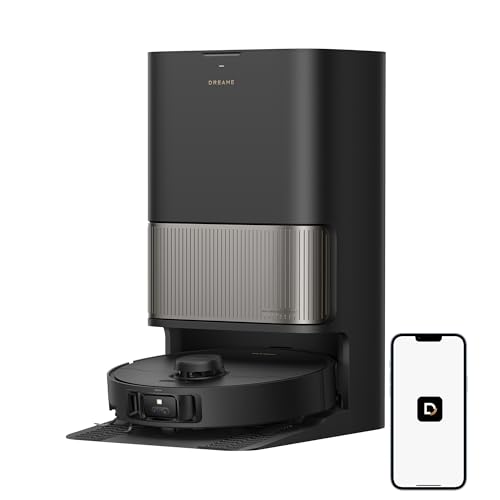
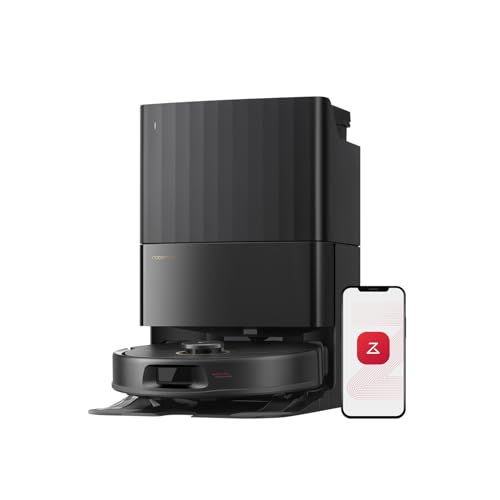
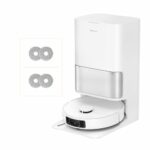
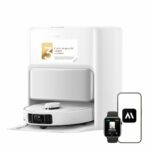
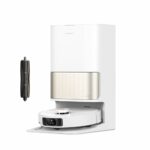
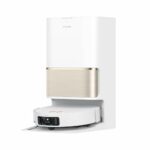
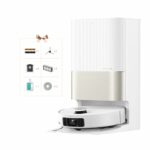
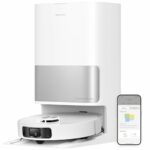
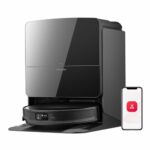
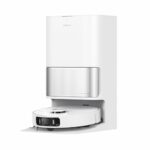
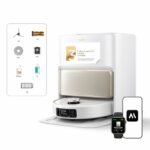
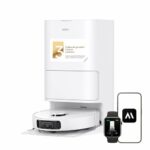
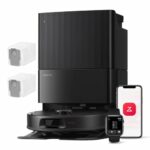
The Dreame L40s Pro Ultra and Roborock Qrevo S5V represent two premium robot vacuum and mop solutions launched in 2025. Both models feature multifunctional cleaning stations and advanced navigation systems, but they approach cleaning with notably different philosophies and capabilities. The Dreame positions itself as a feature-packed powerhouse with cutting-edge artificial intelligence, whilst the Roborock takes a more streamlined approach focusing on core cleaning performance.
These robots target homeowners seeking comprehensive automated cleaning with minimal intervention. The Dreame appeals particularly to those wanting maximum technological integration, including visual monitoring and advanced dirt detection. The Roborock suits users prioritising proven reliability and effective cleaning without necessarily requiring every latest innovation.
Differences at a Glance
- Suction power: 19,000 Pa versus 12,000 Pa
- Dual camera system with remote access only on Dreame
- Mop washing temperature: hot water on Dreame, cold on Roborock
- Automatic mop removal feature exclusive to Dreame
- Self-cleaning base tray (third generation) only on Dreame
- Detergent dispenser included solely with Dreame
- Extendable and liftable side brush unique to Dreame
- Main brush elevation during mopping absent on Roborock
- Runtime: 220 minutes versus 180 minutes
- Robot height: 103.8 mm versus 96.5 mm
Power and Suction
The suction power gap between these models is substantial. The Dreame L40s Pro Ultra delivers 19,000 Pa, significantly outpacing the Roborock Qrevo S5V's 12,000 Pa. In practice, this translates to more effective deep cleaning on carpets and better pickup of embedded debris from textured flooring.
Both employ dual brush systems, though with different designs. The Dreame uses a Double Cepillo HyperStream configuration, whilst the Roborock features its DuoDivide anti-tangle system. Each manufacturer's approach aims to minimise hair wrapping, though the technologies differ in execution.
The Dreame includes brush elevation capabilities that the Roborock lacks entirely. Its main brush lifts during mopping to avoid contaminating wet floors with debris, and the side brush both extends and elevates. The extendable side brush reaches further into corners, whilst elevation prevents the side brush from interfering with mopping operations. The Roborock maintains fixed brush positions throughout all cleaning modes. Both models do include anti-tangle features on their side brushes.
Mopping
Both robots use rotating dual mop systems, but the Dreame takes mopping considerably further. Its mops extend outwards to reach edges and incorporate Roboswing movement for better coverage under furniture lips. The Roborock's mops also extend but without the additional swinging motion.
Mop elevation differs marginally: 10.5 mm on the Dreame versus 10 mm on the Roborock. More significant is the Dreame's ability to automatically remove its mops at the base station when switching to vacuum-only mode. The Roborock requires manual mop removal if you want pure vacuuming without mopping attachments.
The Dreame incorporates dirt detection for both mops and floors, enabling it to identify heavily soiled areas and adjust cleaning accordingly. This includes automatic re-mopping of detected dirty patches. The Roborock lacks these detection capabilities entirely, following predetermined cleaning patterns without adaptive adjustment based on actual dirt levels.
Navigation System
Navigation hardware differs markedly. Both use 3D LiDAR turrets for mapping, but the Dreame adds dual AI cameras, a front-facing 3D laser sensor, and LED lighting for night vision. The Roborock relies on its LiDAR and obstacle avoidance sensors without camera-based recognition.
The Dreame recognises up to 180 different obstacle types, including specific detection for pets and curtains. It offers remote camera access, allowing you to check on your home through the robot's vision system. The Roborock provides obstacle avoidance but without visual object identification or remote viewing capabilities.
AI cleaning intelligence appears on both, though implemented differently. The Dreame uses CleanGenius AI for adaptive cleaning decisions, whilst the Roborock employs SmartPlan 1.0. The Dreame can identify stains visually and adjust its approach; the Roborock follows more standardised cleaning protocols.
Battery and Autonomy
Battery capacity matches at 5,200 mAh for both models, but runtime differs. The Dreame achieves 220 minutes of operation compared to the Roborock's 180 minutes. This 40-minute advantage matters for larger homes or when running multiple cleaning cycles before returning to base.
The extended runtime on the Dreame likely reflects efficiency optimisations despite its higher suction power. For homes exceeding 150 square metres, this additional autonomy reduces mid-clean recharging interruptions.
Smart Functions
Obstacle climbing capability varies: the Dreame handles simple steps whilst the Roborock manages obstacles up to 20 mm. Neither model includes a robotic arm. The Dreame features its own integrated voice assistant alongside compatibility with external assistants like Alexa and Google Home. The Roborock supports external voice assistants but lacks an onboard proprietary assistant.
Multifunctional Cleaning Base
Both stations auto-empty dust and wash mops with hot air drying, but differences emerge in washing and maintenance. The Dreame washes mops with hot water, whilst the Roborock uses cold water. Hot water generally proves more effective at breaking down oils and stubborn residue on the mop pads.
The Dreame includes third-generation self-cleaning for its wash tray, automatically maintaining the base's hygiene. The Roborock requires manual tray cleaning. Only the Dreame provides a detergent dispenser, adding cleaning solution during mop washing for enhanced sanitation.
Storage capacities favour the Dreame: a 3.2-litre dust bag versus 2.7 litres, 4.5 litres clean water versus 4 litres, and 4 litres dirty water versus 3.5 litres. Larger capacities mean less frequent maintenance, particularly valuable in multi-level homes or with pets.
The Dreame offers an optional plumbing connection kit (purchased separately), allowing permanent water hookup. The Roborock doesn't support plumbing connections. Neither includes integrated plumbing as standard.
Dimensions
The Roborock sits lower at 96.5 mm versus the Dreame's 103.8 mm height. This 7.3 mm difference can determine whether a robot fits beneath certain furniture. For homes with low-clearance sofas or beds, the Roborock's slimmer profile provides better access.
Diameter measurements are nearly identical: 350 mm for the Dreame, 353 mm for the Roborock. Base station footprints differ in configuration: the Dreame measures 340 mm wide, 590.5 mm tall, and 456.7 mm deep, whilst the Roborock spans 340 mm wide, 521 mm tall, and 487 mm deep. The Dreame's base stands taller but extends less into the room.
Real-World Usage Experience
For larger homes, the Dreame's extended runtime and larger tank capacities reduce maintenance frequency. The 19,000 Pa suction proves particularly beneficial for homes with carpets or pets, where embedded hair and debris require stronger extraction. The automatic mop removal suits households that frequently switch between mopping and vacuuming-only sessions.
The Roborock's lower profile makes it ideal for homes with furniture clearances around 10 cm. Its simpler feature set may appeal to users wanting effective cleaning without navigating extensive smart functions or camera systems. The cold water mop washing still achieves good results, though perhaps requiring more frequent manual mop replacement than hot water systems.
Pet owners might appreciate the Dreame's specific pet recognition and higher suction, though the Roborock's anti-tangle brush system also handles pet hair effectively. The Dreame's dirt detection ensures heavily trafficked areas receive additional attention automatically, whilst the Roborock requires manual designation of high-traffic zones for extra cleaning passes.
Conclusion: Which to Choose?
Choose the Dreame L40s Pro Ultra if: you want maximum suction power and the longest runtime available, value hot water mop washing and automatic base tray cleaning for reduced maintenance, need camera access for home monitoring, prefer automatic mop removal for seamless switching between cleaning modes, or have larger homes requiring bigger water and dust capacities. It suits tech enthusiasts wanting comprehensive AI features and dirt detection capabilities.
Choose the Roborock Qrevo S5V if: you need a slimmer robot to fit under low furniture, prefer a more straightforward cleaning system without camera integration, want proven Roborock reliability with effective core cleaning functions, or don't require hot water mop washing or detergent dispensing. It's ideal for users prioritising solid performance and ease of use over maximum feature density, particularly in homes where the 7 mm height advantage matters for furniture access.