Introduction
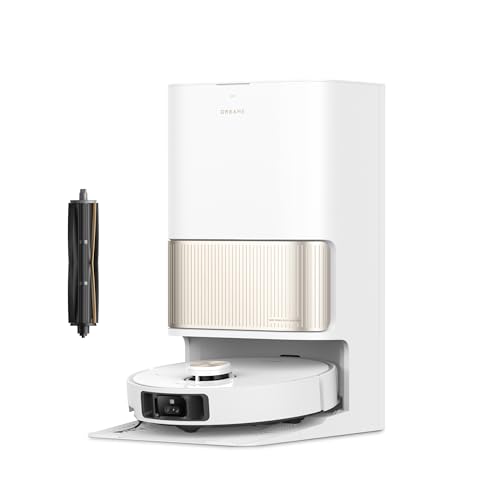
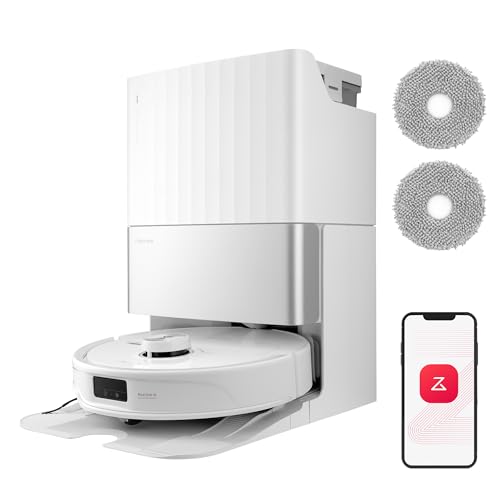
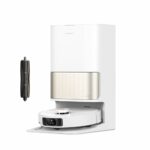
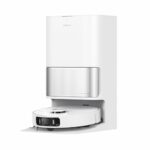
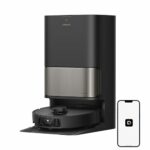
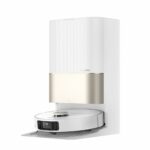
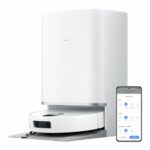
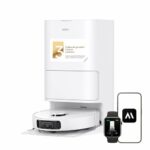
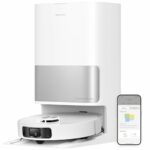
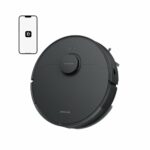
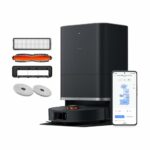
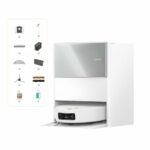
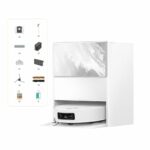
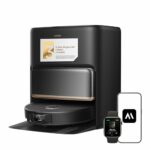
The Dreame L40 Ultra and Roborock Qrevo Master represent two of the most advanced robot vacuum cleaners launched in 2024. Both manufacturers have positioned these models at the premium end of the market, packing them with multifunction bases that handle everything from self-emptying to mop washing and drying. These aren't entry-level devices—they're designed for users who want minimal intervention and maximum automation in their cleaning routines.
Roborock has built its reputation as the global leader in robotic cleaning, known for reliability and an intuitive app experience. Dreame, whilst perhaps less established in some markets, consistently delivers competitive specifications at attractive price points. This particular matchup is interesting because both robots share similar core capabilities, yet differ in several technical details that could influence your decision depending on your home layout and cleaning priorities.
Key Differences at a Glance
- The Dreame L40 Ultra offers 11,000 Pa suction versus 10,000 Pa on the Roborock Qrevo Master
- Dreame features a TriCut 3.0 brush system, whilst Roborock uses a dual-brush DuoDivide design
- Only the L40 Ultra includes an elevating side brush and anti-tangle side brush technology
- The Dreame can lift its mops 10.5 mm compared to 10 mm on the Roborock
- Dreame's base includes a detergent dispenser; the Roborock does not
- The L40 Ultra features second-generation automatic tray cleaning; Roborock has version 1.0
- Dreame recognises 100 different obstacles versus 62 on the Qrevo Master
- The L40 Ultra can climb 22 mm obstacles; the Roborock manages 20 mm
- Dreame offers an optional plumbing connection kit; Roborock does not
- The Dreame's base has larger capacity tanks for both clean and dirty water
Power and Suction
Suction power sits at 11,000 Pa on the Dreame L40 Ultra, giving it a 1,000 Pa advantage over the Roborock Qrevo Master's 10,000 Pa. In practical terms, this translates to better pickup on carpets and more effective removal of embedded dirt from textured surfaces. Both figures are impressive by any standard, but homes with thick rugs or pets that shed heavily will benefit from that extra headroom.
The brush systems take different approaches. Dreame's TriCut 3.0 combines bristles with integrated blades designed to slice through tangled hair before it wraps around the roller. Roborock's DuoDivide system uses a dual-brush configuration that channels hair and debris towards the central suction point, reducing the likelihood of tangles forming in the first place. Both designs aim to minimise maintenance, though the underlying mechanics differ.
Where the L40 Ultra pulls ahead is in side brush technology. Its side brush elevates during mopping—preventing a wet brush from flicking debris around—and includes anti-tangle features. The Qrevo Master's side brush doesn't lift, which could lead to damp spots being disturbed during wet cleaning. Both models extend their side brushes to reach into corners more effectively, but only Dreame's includes the anti-tangle design. For homes with long-haired occupants or pets, this detail matters.
Both robots lift their main brushes when mopping, ensuring wet and dry cleaning don't interfere with each other. This is standard on premium models, but worth confirming given how much it improves mopping results.
Mopping Performance
Mopping setups are similar in principle but differ in execution. Both use rotating mop pads that spin to scrub floors rather than simply dragging a damp cloth behind the robot. The Dreame L40 Ultra adds its RoboSwing feature, which shifts the robot's rear end slightly to push the mop under furniture edges and skirting boards. The Roborock Qrevo Master relies on its extendable mop to reach edges, but without the swinging motion.
Mop lift height is 10.5 mm on the Dreame versus 10 mm on the Roborock. That half-millimetre might sound negligible, but it can determine whether the robot confidently crosses thicker rugs or hesitates. Both figures are strong enough to handle most household transitions, though neither will manage very deep-pile carpets.
The L40 Ultra can automatically detach its mops at the base when you want vacuuming only, avoiding the need to manually remove them. The Qrevo Master doesn't offer this, so you'll need to take the mops off yourself if you're planning a dry-clean session. It's a small convenience, but one that adds up over time.
Both robots detect dirt on their mops and on the floor, triggering additional cleaning passes when needed. This adaptive behaviour ensures stubborn marks get extra attention without you having to intervene.
Navigation System
Navigation hardware is broadly comparable. Both use 3D LiDAR towers for mapping and dual AI cameras for object recognition, supplemented by 3D laser sensors at the front. LED lighting supports night-time operation, and both allow remote camera access through their respective apps—useful for checking on pets or simply seeing what the robot encountered.
The difference lies in the intelligence layer. Dreame's AI Sage 11.0 Qualcomm processor recognises 100 different obstacle types, including specific detection for curtains. Roborock's RR Mason 11.0 identifies 62 obstacles and doesn't call out curtains specifically. In practice, this means the L40 Ultra should navigate more confidently around complex floor clutter, though both systems handle typical household obstacles without issue.
Dreame's CleanGenius AI and Roborock's SmartPlan 1.0 both optimise cleaning routines based on room type and dirt levels. The L40 Ultra adds specific stain recognition, allowing it to identify and target marks that need extra scrubbing. This feature isn't present on the Qrevo Master, which relies on general dirt detection instead.
Battery and Autonomy
Battery capacity is identical at 5,200 mAh, but runtime differs slightly. The Dreame L40 Ultra manages 194 minutes on a full charge, whilst the Roborock Qrevo Master runs for 180 minutes. That 14-minute difference won't matter much in smaller homes, but in larger properties it could mean the Dreame completes a full clean without needing to recharge mid-session.
Neither manufacturer specifies maximum recommended floor area in the provided data, but runtimes of this length typically suit homes up to around 200–250 square metres, depending on floor type and clutter levels.
Smart Features
Both robots clear obstacles up to a point, but the Dreame L40 Ultra handles 22 mm steps compared to the Roborock's 20 mm threshold. That 2 mm can be the difference between smoothly mounting a door threshold and getting stuck. If your home has varied flooring levels or thick door bars, the Dreame has a slight edge.
Both include built-in voice assistants and work with external systems like Alexa and Google Home. Neither features a robotic arm—those remain rare even in premium models—so don't expect either robot to pick up socks or move obstacles out of its path.
Multifunction Base
The cleaning bases are where these robots justify their premium pricing. Both self-empty the dustbin, wash mops with hot water, and dry them with heated air to prevent odours. The Dreame L40 Ultra takes things further with a detergent dispenser, which adds cleaning solution during the mop wash cycle. The Roborock Qrevo Master doesn't include this, so you'd need to add detergent manually to the water tank if you want enhanced cleaning.
Automatic tray cleaning is present on both, but Dreame's second-generation system should handle residue more effectively than Roborock's 1.0 version. In practice, this reduces how often you need to manually scrub the base's wash tray.
Tank capacities favour the Dreame: 4.5 litres of clean water versus 4 litres, and 4 litres of dirty water versus 3.5 litres. The dustbag is also larger at 3.2 litres compared to 2.7 litres. These differences mean less frequent refilling and emptying, which matters if you're cleaning large areas regularly.
The L40 Ultra offers an optional plumbing connection kit, allowing you to hook the base directly to your water supply and drainage. This isn't included as standard—you'll need to purchase it separately—but it's not available at all for the Qrevo Master. For those who want truly hands-off operation, this could be a deciding factor.
Dimensions
The robots themselves are nearly identical in size. The Dreame measures 350 mm in diameter and stands 103.8 mm tall, whilst the Roborock is 353 mm wide and 103 mm high. That extra 0.8 mm in height on the Dreame is irrelevant in real-world use—both will fit under most furniture with similar clearance.
Base dimensions differ more noticeably. The Dreame's base is taller at 590.5 mm versus 521 mm, but slightly shallower at 456.7 mm compared to 487 mm. If you're tight on vertical space—say, under a worktop—the Roborock's lower profile helps. If depth is the constraint, the Dreame takes up less front-to-back room. Both are 340 mm wide.
Real-World Use
For larger homes, the Dreame L40 Ultra's longer runtime, higher suction, and bigger tank capacities make it better suited to covering extensive floor areas without intervention. The optional plumbing kit becomes particularly appealing if you're cleaning 150+ square metres regularly and don't want to think about water management.
Homes with pets benefit from both models' anti-tangle brush designs, though the Dreame's side brush anti-tangle feature and higher suction give it a slight advantage when dealing with shedding. The stain recognition also helps with muddy paw prints and food spills.
If you have varied flooring with transitions between carpet and hard floors, the Dreame's 22 mm obstacle clearance and 10.5 mm mop lift provide a bit more confidence over thresholds. The automatic mop removal is also convenient if you frequently switch between mopping and vacuuming-only modes.
The Roborock Qrevo Master remains a strong choice for those who prioritise brand reliability and a proven app ecosystem. Its lower base height suits installations under counters or in cupboards, and the slightly smaller footprint may fit tighter spaces more easily.
Conclusion: Which Should You Choose?
Choose the Dreame L40 Ultra if: you want maximum suction power and the longest runtime, especially in larger homes. The detergent dispenser, larger tanks, and optional plumbing connection suit those seeking the most hands-off experience possible. Homes with pets will appreciate the anti-tangle side brush and stain recognition. If you have multiple floor transitions or thicker door thresholds, the 22 mm obstacle clearance and automatic mop removal add practical benefits.
Choose the Roborock Qrevo Master if: you value brand heritage and want a compact base that fits under lower furniture. The Qrevo Master delivers excellent cleaning performance with slightly simpler maintenance—no detergent dispenser to refill, and a lower-profile base that's easier to tuck away. It's ideal for medium-sized homes where the shorter runtime isn't a limitation, and where you prefer Roborock's established app experience and customer support network.