✨ VS Analyses · VacuumSpain comparison technology. Explanation created with AI from verified technical data.
Introduction
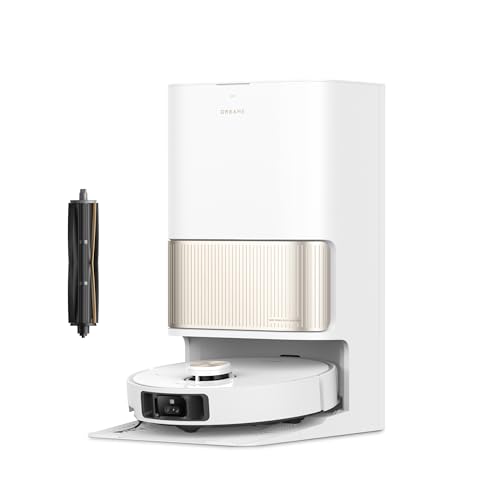
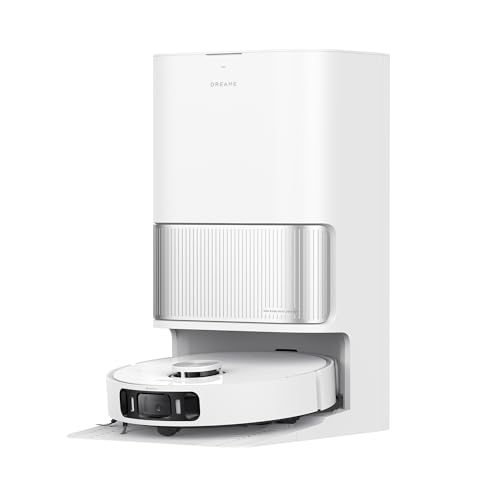
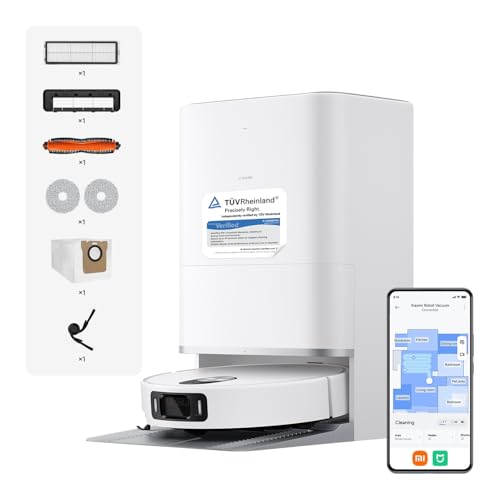
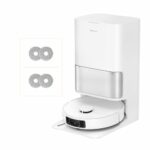
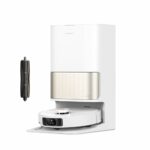
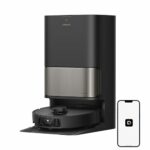
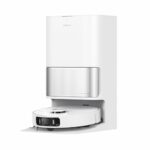
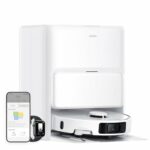
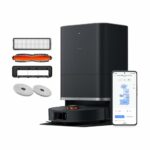
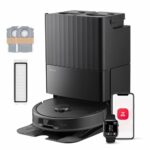
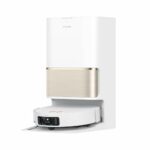
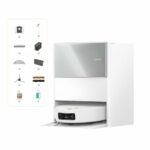
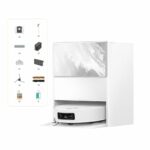
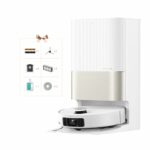
When looking at premium robot vacuums in 2025, Dreame and Xiaomi continue to dominate the conversation. The Dreame L40 Ultra arrived in 2024 as a flagship model, whilst the Dreame L40 Ultra AE and Xiaomi Robot Vacuum 5 Pro represent the latest 2025 releases. All three feature multifunctional bases with mop washing and drying capabilities, making them suitable for homes where proper floor mopping matters as much as vacuuming.
These aren't entry-level devices. Each model targets users who want minimal intervention—homes where the robot handles everything from emptying its own dustbin to cleaning and drying its mops automatically. The differences between them reveal which scenarios each handles best, whether that's navigating around pets, reaching under low furniture, or maximising suction power.
Power and Suction
Suction power separates these models more than almost any other specification. The Xiaomi Robot Vacuum 5 Pro delivers 20,000 Pa, placing it at the top of this comparison and amongst the most powerful consumer robot vacuums available in 2025. The Dreame L40 Ultra AE follows with 19,000 Pa—a substantial jump from the original L40 Ultra's 11,000 Pa. In practice, this means the newer models handle embedded dirt in carpets and rugs with noticeably more authority.
All three use the TriCut 3.0 brush system, which combines bristles with cutting blades to reduce hair tangles. Each can lift this main brush during mopping to avoid dragging a damp roller across carpets. The side brush configuration reveals more variation. The L40 Ultra extends its side brush to reach corners and can lift it clear during mopping, plus features anti-tangle technology. The L40 Ultra AE loses these refinements entirely—no extension, no lifting, no anti-tangle design. The Xiaomi restores the extensible and anti-tangle features but doesn't lift the side brush when mopping.
For homes with pets or long-haired occupants, the anti-tangle side brush on the L40 Ultra and Xiaomi models reduces maintenance frustration. The ability to lift the side brush on the L40 Ultra prevents it dragging wet debris along skirting boards during mopping runs.
Mopping
Each robot uses dual rotating mops with extension capabilities for edge cleaning. The L40 Ultra and L40 Ultra AE both describe their extension system as including movement (likely referring to Dreame's Roboswing feature, which angles the robot body to push mops closer to edges). The Xiaomi simply confirms mop extension without specifying the mechanism.
Mop lift height matters when transitioning between hard floors and carpets. The Xiaomi lifts its mops 15 mm, giving it a 4.5 mm advantage over the 10.5 mm lift on both Dreame models. This extra clearance helps when crossing thicker rugs or door thresholds.
The L40 Ultra offers something neither competitor matches: automatic mop dismounting at the base. When you want a vacuum-only session, it removes the mops entirely rather than just lifting them. This eliminates any risk of damp mops touching carpets during pure vacuuming tasks. The L40 Ultra AE and Xiaomi lack this feature, keeping mops attached permanently.
All three detect dirt on both the mops themselves and the floor surface, adjusting cleaning intensity accordingly. None heat the water used for mopping the floor—all rely on cold water. At the base, however, all three wash mops with hot water and dry them using heated air, which speeds drying and reduces odour development.
Navigation System
Navigation technology shows clear differentiation. The Xiaomi Robot Vacuum 5 Pro uses a retractable LiDAR turret, which lowers when not needed—contributing to its slim 88 mm height. Both Dreame models use traditional fixed LiDAR turrets. The L40 Ultra employs dual AI cameras for object recognition, whilst the L40 Ultra AE and Xiaomi use single cameras. All three include 3D laser sensors at the front and LED lighting for low-light operation.
Object recognition databases vary significantly. The Xiaomi identifies 200 different objects, the L40 Ultra AE recognises 120, and the original L40 Ultra handles 100. More recognition categories generally mean fewer stuck incidents and better route planning around everyday household items.
The L40 Ultra adds pet recognition and curtain detection—features absent from the other two. If you have cats or dogs that move around the house, the L40 Ultra can identify them and adjust behaviour accordingly. Curtain detection prevents the robot getting tangled in floor-length drapes. The L40 Ultra AE loses both these capabilities despite being the newer model, whilst the Xiaomi also omits them.
All three provide remote camera access through their apps and feature night vision LEDs. The L40 Ultra runs Dreame's AI Sage 11.0 processor; specifications for the processors in the L40 Ultra AE and Xiaomi weren't detailed, making direct computational comparisons impossible.
Battery and Autonomy
Battery capacity sits at 5,200 mAh across all three models. Runtime figures appear only for two units: the L40 Ultra manages 194 minutes, whilst the Xiaomi achieves 140 minutes. The L40 Ultra AE doesn't specify runtime. That 54-minute difference between the L40 Ultra and Xiaomi likely reflects the Xiaomi's substantially higher suction power drawing more current. Neither charging times nor recommended maximum floor areas appear in the available data.
Smart Features
Obstacle climbing ability varies slightly. The L40 Ultra clears 22 mm thresholds, whilst both the L40 Ultra AE and Xiaomi handle 20 mm. That 2 mm difference occasionally matters with certain door profiles or thick carpet edges.
The L40 Ultra includes its own voice assistant, allowing direct voice commands without external smart speakers. The L40 Ultra AE and Xiaomi omit proprietary voice assistants but all three integrate with Alexa and Google Home for external voice control.
None of these models feature robotic arms for tasks like opening cupboards or manipulating objects—a technology still largely confined to concept demonstrations rather than production units.
Multifunctional Base
All three bases automatically empty the robot's dustbin, wash mops with hot water, and dry mops using heated air. Each includes second-generation self-cleaning for the washing tray itself, reducing manual maintenance. None offer UV disinfection.
The Dreame models include detergent dispensers; the Xiaomi does not. This means the Dreame units can automatically add cleaning solution during mop washing, whilst Xiaomi owners would need to manually add detergent to the clean water tank if desired.
Dustbag capacity differs: 3.2 litres for both Dreame bases versus 2.5 litres for the Xiaomi. Larger bags mean less frequent replacements, particularly in homes with heavy dust or pet hair. Clean water tanks hold 4.5 litres in the Dreame bases and 4 litres in the Xiaomi. Dirty water tanks measure 4 litres and 3.8 litres respectively. These differences are marginal in real-world use.
Both Dreame models offer optional plumbing connection kits (sold separately) for continuous water supply and drainage. The Xiaomi doesn't offer this accessory. Whilst not essential, plumbed connections eliminate manual tank refilling and emptying for users who want truly hands-off operation.
Dimensions
Height varies considerably. The Xiaomi measures just 88 mm tall, the L40 Ultra AE stands at 97 mm, and the L40 Ultra reaches 103.8 mm. That 15.8 mm difference between the tallest and shortest matters when navigating under sofas, beds, or kitchen cabinets. Homes with furniture clearances below 100 mm will find the Xiaomi the only viable option here.
All three share a 350 mm diameter—standard for premium robot vacuums. The bases show minor size variations: Dreame bases measure 340 mm wide, 590.5 mm tall, and 456.7 mm deep, whilst the Xiaomi base spans 360 mm wide, 572 mm tall, and 470 mm deep. These differences rarely affect placement decisions.
Real-World Experience
For homes with thick carpets or persistent embedded dirt, the Xiaomi Robot Vacuum 5 Pro's 20,000 Pa suction and superior object recognition make it particularly effective. Its slim 88 mm profile suits properties with low-clearance furniture. The trade-off comes in battery life—140 minutes versus the L40 Ultra's 194 minutes—and the lack of automatic mop dismounting means it's always ready to mop rather than offering dedicated vacuum-only convenience.
The Dreame L40 Ultra brings the most comprehensive feature set: automatic mop removal, side brush lifting, dual AI cameras, pet recognition, and curtain detection. The 11,000 Pa suction feels modest compared to its competitors, but remains adequate for hard floors and low-pile carpets. Its 103.8 mm height limits access under lower furniture. This model suits homes with pets where the advanced AI features justify the lower suction figure.
The L40 Ultra AE sits awkwardly between the other two. It delivers 19,000 Pa suction—substantially more than the original L40 Ultra—but strips away features like side brush extension, automatic mop dismounting, pet recognition, and the proprietary voice assistant. It's essentially a simplified version trading convenience features for raw power. This makes sense for users prioritising suction performance over automation refinements, particularly in homes without pets and with furniture clearances above 100 mm.
All three handle detergent differently: the Dreame models dispense it automatically, whilst Xiaomi users add it manually. For weekly deep cleans, automatic dispensing removes one small task from the routine.
Conclusion: Which to Choose?
Choose the Dreame L40 Ultra if you have pets and want the most advanced AI recognition available here, including specific pet detection and curtain avoidance. The automatic mop dismounting suits homes where you frequently alternate between mopping and vacuum-only sessions. Accept that suction sits well below the competition and the 103.8 mm height may prevent access under some furniture.
Choose the Dreame L40 Ultra AE if you want strong 19,000 Pa suction without paying for advanced AI features you won't use. This works for pet-free homes with straightforward layouts where object recognition beyond 120 categories feels excessive. The 97 mm height improves furniture access compared to the original L40 Ultra, though it still can't match the Xiaomi's clearance.
Choose the Xiaomi Robot Vacuum 5 Pro if maximum suction power and getting under low furniture matter most. The 20,000 Pa performance and 88 mm profile make it the best choice for homes with deep-pile carpets and low-clearance beds or sofas. The 200-object recognition database handles complex environments well. You'll lose automatic detergent dispensing and mop dismounting, but gain superior cleaning power and access.