Introduction
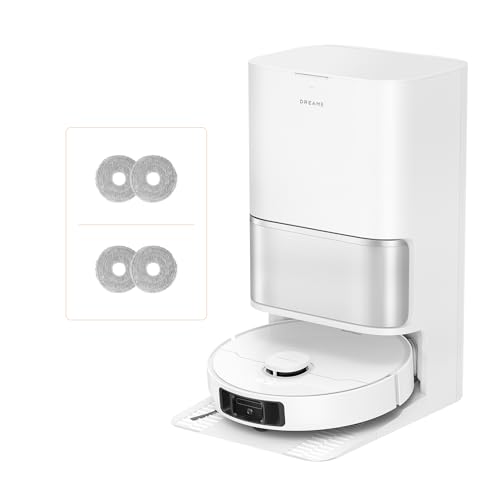
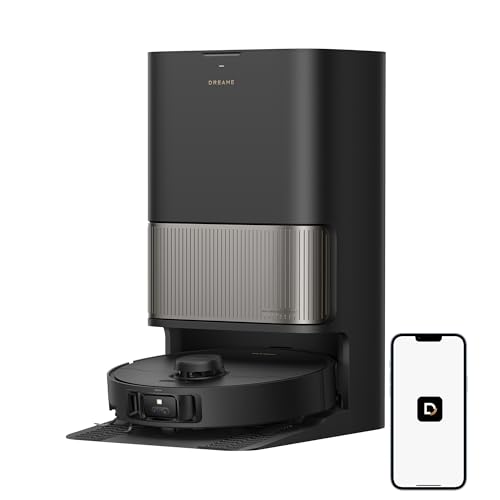
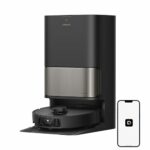
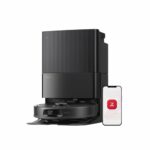
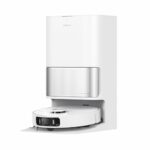
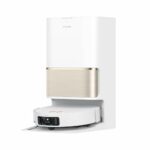
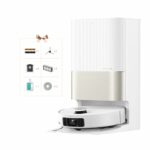
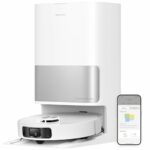
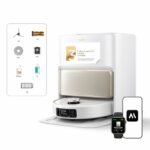
The Dreame L10s Ultra Gen 3 and Dreame L40s Pro Ultra represent two distinct approaches within the same manufacturer's 2025 lineup. Whilst both feature multifunctional bases with mop washing and drying capabilities, they target different user profiles based on their technical specifications and intelligent features.
The L10s Ultra Gen 3, launched in November 2025, positions itself as a powerful cleaning solution with impressive suction capacity. The L40s Pro Ultra takes a more sophisticated route, incorporating advanced artificial intelligence and dual camera systems for enhanced navigation and obstacle recognition. Understanding which features matter most for your home will determine the best choice.
Power and Suction
The suction capability differs significantly between these models. The Dreame L10s Ultra Gen 3 delivers 25,000 Pa, making it one of the more powerful options currently available. This higher suction proves particularly effective on carpets and for homes with pets that shed frequently. The L40s Pro Ultra offers 19,000 Pa, which remains perfectly adequate for most cleaning scenarios but represents a noticeable reduction in raw power.
Where the L40s Pro Ultra compensates is in brush technology. It features the dual HyperStream brush system, with two brushes anchored at one end to minimise hair tangling. The L10s Ultra Gen 3 uses a simpler single brush design, which may require more frequent maintenance if you have long-haired pets or family members.
The L40s Pro Ultra includes brush elevation capabilities that the L10s Ultra Gen 3 lacks entirely. The main brush lifts when mopping, preventing wet carpet contamination. The side brush also elevates during mopping, reducing the risk of flicking dirty water onto walls or furniture. These features enhance cleaning precision, particularly in mixed-floor environments.
Both models include an extendable side brush for improved corner cleaning. However, the L40s Pro Ultra adds anti-tangle technology to its side brush, which the L10s Ultra Gen 3 doesn't offer. For households battling constant hair accumulation, this matters considerably.
Mopping
Both robots employ dual rotating mops with extension capabilities and Roboswing movement, allowing them to reach into edges and slightly under furniture. Mop elevation reaches 10.5 mm on both models, sufficient for low-pile rugs and small thresholds.
The base washing systems differ meaningfully. The L10s Ultra Gen 3 washes mops with cold water, whilst the L40s Pro Ultra uses hot water. Hot water proves more effective at dissolving grease and sanitising the mops between cleaning cycles. Both dry the mops with hot air, which helps prevent odours and bacterial growth.
A practical advantage appears in the L40s Pro Ultra's ability to automatically remove its mops at the base. This means the robot can switch to vacuum-only mode without manual intervention, useful for mixed cleaning routines. The L10s Ultra Gen 3 requires you to remove the mops manually if you want pure vacuuming.
Dirt detection separates these models substantially. The L40s Pro Ultra monitors both floor dirtiness and mop contamination, adjusting its cleaning intensity and returning to the base for mop washing when needed. The L10s Ultra Gen 3 follows predetermined patterns without adaptive cleaning based on actual dirt levels. In practice, this means the more advanced model can deliver more thorough results in genuinely dirty areas whilst conserving resources in cleaner zones.
Navigation System
Both robots utilise 3D LiDAR navigation with frontal laser sensors for obstacle avoidance. This ensures reliable mapping and efficient cleaning paths across various home layouts.
The substantial difference lies in camera integration. The L10s Ultra Gen 3 operates without any camera system, relying purely on laser-based navigation. The L40s Pro Ultra incorporates dual AI cameras that recognise up to 180 different objects. This allows for more nuanced obstacle avoidance and smarter navigation decisions.
The L40s Pro Ultra includes LED lighting for night vision, enabling effective operation even in dim conditions. It also offers remote camera access, allowing you to check on your home whilst the robot cleans. Neither feature exists on the L10s Ultra Gen 3.
Pet owners might appreciate that both models recognise animals, though the L40s Pro Ultra's camera system provides more sophisticated detection. The more advanced model also detects curtains, preventing the robot from becoming entangled in hanging fabrics—a limitation the L10s Ultra Gen 3 doesn't address.
Both robots feature CleanGenius AI for intelligent cleaning optimisation, though the L40s Pro Ultra's camera-based stain recognition gives it an edge in identifying and addressing specific dirty spots.
Battery and Autonomy
Battery capacity matches at 5,200 mAh for both models. The L10s Ultra Gen 3 achieves 231 minutes of runtime, slightly exceeding the L40s Pro Ultra's 220 minutes. This eleven-minute difference proves negligible for most homes, as both provide ample autonomy for large properties.
The marginally longer runtime on the L10s Ultra Gen 3 likely reflects its simpler sensor array consuming less power. For exceptionally large homes or those requiring multiple cleaning sessions, this small advantage exists but rarely becomes decisive.
Intelligent Features
Obstacle-climbing capability differs between the models. The L10s Ultra Gen 3 manages 20 mm thresholds, adequate for standard door frames and minor floor transitions. The L40s Pro Ultra handles simple steps, suggesting improved climbing ability, though specific measurements aren't detailed beyond this description.
Voice control differs meaningfully. The L10s Ultra Gen 3 works with external assistants like Alexa and Google Home. The L40s Pro Ultra includes these integrations but adds its own built-in voice assistant, allowing direct communication with the robot without third-party devices. This proves convenient for quick commands without reaching for your phone or activating another smart speaker.
Multifunctional Base
Both bases offer comprehensive functionality: automatic dust collection into 3.2-litre bags, mop washing and hot-air drying, and third-generation automatic tray cleaning. Water tank capacities match at 4.5 litres for clean water and 4 litres for dirty water, sufficient for multiple cleaning sessions without refilling.
Detergent dispensers feature on both bases, automatically adding cleaning solution during mop washing. Neither includes UV disinfection or integrated water pipe connections, though both support optional connection kits purchased separately. These kits eliminate manual water tank filling, though they're not standard equipment.
The key distinction remains the hot water mop washing on the L40s Pro Ultra versus cold water on the L10s Ultra Gen 3. For homes with stubborn kitchen grease or heavy soiling, hot water delivers noticeably better mop hygiene.
Dimensions
Robot diameter matches at 350 mm for both models. Height differs slightly: the L10s Ultra Gen 3 measures 97 mm, whilst the L40s Pro Ultra stands at 103.8 mm. This 6.8 mm difference could matter if you have particularly low furniture. The shorter L10s Ultra Gen 3 accesses tighter spaces under beds or sofas where the L40s Pro Ultra might struggle.
Base dimensions remain virtually identical, with the L40s Pro Ultra measuring 340 mm wide, 590.5 mm tall, and 456.7 mm deep compared to 340 mm wide, 590 mm tall, and 457 mm deep for the L10s Ultra Gen 3. These negligible differences won't affect placement options.
Real-World Usage
For larger homes, both models provide sufficient battery life and tank capacities. The L10s Ultra Gen 3's superior suction makes it preferable for carpeted properties or homes with shedding pets, where raw power matters more than sophisticated AI.
Households with pets face an interesting choice. The L10s Ultra Gen 3 offers stronger suction but requires more frequent brush maintenance. The L40s Pro Ultra's anti-tangle brushes and dual HyperStream design reduce maintenance time, though with somewhat less suction force. If you prioritise convenience over maximum power, the L40s Pro Ultra makes sense.
The L40s Pro Ultra suits users wanting minimal intervention. Automatic mop removal, dirt detection, and camera-based navigation mean the robot adapts to conditions without constant supervision. The L10s Ultra Gen 3 requires more manual oversight but delivers that extra suction punch.
For homes with low furniture, the L10s Ultra Gen 3's reduced height provides better access. The difference isn't dramatic, but those extra millimetres can determine whether the robot reaches under your sofa or skips that area entirely.
Conclusion: Which to Choose?
Choose the Dreame L10s Ultra Gen 3 if: you need maximum suction power for deep carpet cleaning or heavy pet hair, prefer a slightly lower profile for accessing tight spaces under furniture, don't require camera-based features or remote monitoring, and want strong performance without paying for advanced AI capabilities. This model suits homes prioritising raw cleaning power over smart automation.
Choose the Dreame L40s Pro Ultra if: you value intelligent features like dirt detection and automatic mop removal, want hot water mop washing for better hygiene, appreciate camera-based navigation with remote access, prefer anti-tangle brushes to reduce maintenance, need sophisticated obstacle recognition including curtain detection, or want a built-in voice assistant. This model fits homes seeking comprehensive automation and minimal manual intervention, particularly those with mixed flooring types where brush and mop elevation prove beneficial.