Introduction
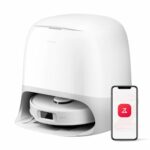
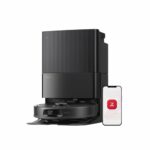
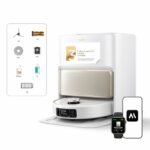
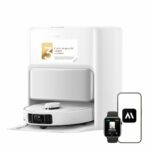
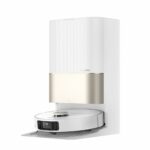
The Dreame L10s Ultra Gen 2 and Roborock QV 35S represent two compelling approaches to automated home cleaning, both launched recently with impressive specifications. The Dreame model arrived in 2024, whilst Roborock's offering is fresh from 2025. These aren't entry-level machines—both feature multifunction bases with mop washing capabilities and deliver 10,000 Pa suction power, positioning them firmly in the premium segment where performance matters.
What makes this comparison particularly interesting is how these two brands tackle similar cleaning challenges with slightly different priorities. Dreame tends to pack in extra features at competitive pricing, whilst Roborock has built its reputation on reliability and refined software. For anyone managing larger homes with mixed flooring or dealing with pet hair, understanding where these models diverge becomes crucial.
Key Differences at a Glance
- The Dreame L10s Ultra Gen 2 offers 240 minutes of battery life versus 180 minutes on the Roborock QV 35S
- Dreame includes mop extension with RoboSwing movement; Roborock does not extend mops
- Roborock features anti-tangle technology on its side brush; Dreame does not
- Dreame dries mops with hot air; Roborock uses cold air drying
- The Dreame base includes a detergent dispenser, absent on the Roborock
- Dreame provides a 3.2L dust bag versus Roborock's 2.7L capacity
- Water tank capacities differ: Dreame holds 4.5L clean and 4L dirty water; Roborock stores 4L clean and 3.5L dirty
- Dreame incorporates a frontal 3D laser sensor and pet recognition; Roborock omits these
- Optional plumbing connection kit available for Dreame (sold separately)
- Roborock measures slightly taller at the robot (96.5mm vs 97mm) but the base is notably shorter (521mm vs 590.5mm)
Suction Power and Brushing System
Both machines deliver identical 10,000 Pa suction, which handles everything from fine dust on hard floors to embedded dirt in carpets. This level of power has become the benchmark for premium robot aspiradores in 2025, and neither model disappoints here.
The main roller design is straightforward on both: a simple brush without anti-tangle features. For households with long hair or shedding pets, this means occasional maintenance will be necessary. Neither model lifts its main brush during mopping, which is typical at this price point.
Where things get interesting is the side brush. The Roborock QV 35S incorporates anti-tangle technology in its side brush, helping prevent hair from wrapping around the mechanism. The Dreame L10s Ultra Gen 2 uses a standard side brush without this feature. In practice, this could mean less frequent manual cleaning for Roborock owners, particularly those with pets. Neither model extends or lifts the side brush, and both lack extensible designs for improved edge cleaning on the brushing side.
Mopping Performance
This is where the Dreame L10s Ultra Gen 2 pulls ahead with some notable advantages. Both robots use dual rotating mops, but Dreame adds RoboSwing—a movement system that extends the mop to reach edges and slightly under furniture overhangs. The Roborock doesn't extend its mops at all, meaning it won't clean quite as close to skirting boards.
Mop lifting is similar: Dreame raises them 10.5mm, Roborock manages 10mm. Either height suffices for transitioning onto medium-pile rugs without dragging wet fabric across them. Both systems wash mops with cold water during cleaning cycles and neither can detect dirt on the mops themselves or adjust cleaning intensity based on floor soiling.
The drying process reveals another difference. Dreame dries mops with hot air, which accelerates drying time and helps prevent bacterial growth and musty odours. Roborock relies on cold air drying, which works but takes longer and may not be quite as hygienic. For anyone in humid climates or who runs cleaning cycles frequently, hot air drying makes a tangible difference.
Neither robot automatically removes its mops at the base when you want vacuum-only operation, so you'll need to detach them manually if you're only tackling carpeted areas.
Navigation System
Both models use 3D LiDAR turrets for mapping and navigation, which creates accurate floor plans and enables efficient cleaning paths. Obstacle avoidance is present on both, though the implementation differs.
The Dreame L10s Ultra Gen 2 adds a frontal 3D laser sensor, giving it enhanced object detection capabilities. This sensor works alongside CleanGenius AI to identify obstacles more precisely. Dreame also includes pet recognition, useful if you'd prefer the robot to avoid disturbing sleeping animals or food bowls. The Roborock QV 35S uses SmartPlan 1.0 AI but lacks the frontal 3D sensor and doesn't specifically recognise pets.
Neither machine includes a camera, LED lighting for night vision, or remote camera access. Both can recognise obstacles, but don't expect specific identification of dozens of object types. For most homes, the navigation capabilities on offer here are more than adequate—you'll get reliable room mapping and sensible cleaning routes.
Battery Life and Autonomy
Battery capacity is identical at 5,200 mAh, but runtime tells a different story. The Dreame L10s Ultra Gen 2 manages 240 minutes on a full charge, whilst the Roborock QV 35S delivers 180 minutes. That's a full hour's difference, which becomes significant in larger properties.
In practical terms, the Dreame can cover more ground before returning to recharge, reducing interruptions during whole-home cleaning sessions. If you're managing a multi-storey house or an open-plan space exceeding 150 square metres, that extra hour matters. Both robots will resume cleaning after recharging if needed, but fewer interruptions mean faster completion times.
Smart Features
Both robots can climb obstacles up to 20mm high, handling raised door thresholds and thick rug edges without getting stuck. Neither includes a robotic arm or proprietary voice assistant, though both integrate with Alexa and Google Home for voice control.
The AI cleaning systems differ in name—CleanGenius for Dreame, SmartPlan 1.0 for Roborock—but both aim to optimise cleaning patterns based on room layout and previous sessions. Roborock's app has earned particular praise for its polish and reliability, whilst Dreame's interface offers extensive customisation options.
Multifunction Base
Both bases handle auto-emptying of the dust bin and washing mops between cleaning cycles, which is essential for maintaining mopping quality. The Dreame base holds a 3.2L dust bag compared to Roborock's 2.7L capacity. That translates to roughly two extra weeks between bag changes, depending on how much debris your home generates.
Water storage favours Dreame as well: 4.5L clean water and 4L dirty water versus Roborock's 4L and 3.5L respectively. These aren't enormous differences, but they do mean slightly less frequent refilling and emptying—convenient if you're running daily cleaning schedules.
The Dreame base includes a detergent dispenser, adding cleaning solution during mop washing for better hygiene. The Roborock lacks this feature entirely. Dreame also offers an optional plumbing connection kit (purchased separately) that automates water supply and drainage, though it's not included as standard. Neither base features automatic bandeja cleaning, UV disinfection, or automatic mop changing.
Physical Dimensions
The robots themselves are virtually identical in size. Dreame measures 350mm diameter and 97mm tall; Roborock is 353mm wide and 96.5mm high. Half a millimetre here or there won't affect which furniture they can navigate under.
Base dimensions diverge more noticeably. Both are 340mm wide, but the Dreame base stands 590.5mm tall compared to Roborock's 521mm, whilst being slightly shallower front-to-back (456.7mm versus 487mm). The Roborock base has a lower profile, which might fit better under certain counters or in tighter spaces, whilst the Dreame base is taller but less deep.
Real-World Usage Scenarios
For larger homes, the Dreame L10s Ultra Gen 2 has clear advantages. The extended battery life handles bigger floor areas in one go, whilst larger water tanks and dust bag mean less frequent maintenance. The hot air mop drying and detergent dispenser deliver better hygiene, particularly valuable in high-traffic households.
Pet owners face a choice: Roborock's anti-tangle side brush reduces hair-related maintenance, but Dreame's pet recognition prevents disturbing animals during cleaning. If you've got long-haired pets shedding constantly, the Roborock's side brush might save more hassle. If your pets are easily startled, Dreame's recognition feature adds value.
The RoboSwing mop extension on the Dreame makes a tangible difference for edge cleaning along skirting boards and into corners—areas where standard round robots typically struggle. Roborock's mopping is perfectly competent, but won't reach quite as thoroughly into these awkward spots.
Both handle mixed flooring well, transitioning from hard surfaces to rugs without issue thanks to adequate mop lifting. Neither excels at deep carpet cleaning—these are primarily hard floor specialists that can maintain rugs rather than deep-clean pile carpets.
Conclusion: Which Should You Choose?
Choose the Dreame L10s Ultra Gen 2 if: you've got a larger home requiring extended runtime, want the most thorough edge mopping with RoboSwing, prefer hot air mop drying for better hygiene, value having a detergent dispenser in the base, or might consider adding plumbing connections later. The larger dust bag and water tanks suit households generating more debris or running frequent cleaning cycles. Pet recognition adds value if you've got animals that need avoiding during cleaning runs.
Choose the Roborock QV 35S if: you prioritise reduced maintenance hassle with the anti-tangle side brush, need a lower-profile base that fits tighter spaces, prefer Roborock's reputation for app reliability and long-term software support, or simply want proven performance from the market leader. The slightly smaller capacity tanks and shorter runtime won't matter in compact to medium-sized homes, and you're getting excellent cleaning capabilities with typically robust build quality.
Both represent strong options in the premium robot aspirador segment. Your choice ultimately depends on whether Dreame's extra features—particularly the battery life, mop extension, and hot air drying—justify any price difference, or whether Roborock's streamlined approach and brand reputation better suit your priorities.