Introduction
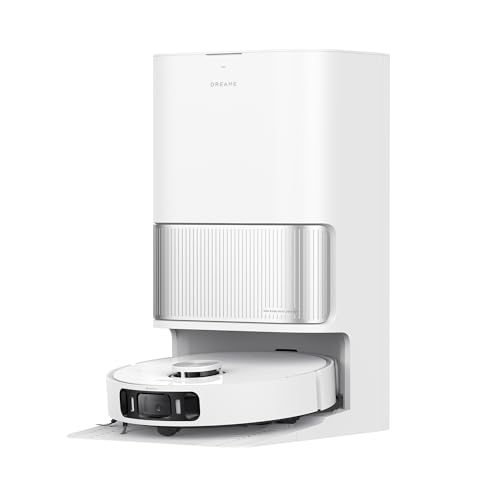
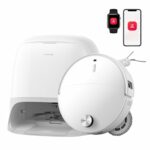
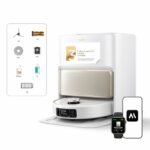
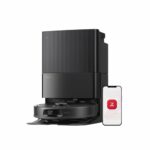
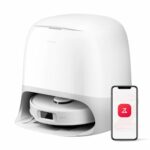
The Dreame L10s Ultra Gen 2 and Dreame L40 Ultra AE represent two generations of premium robot vacuum cleaners from the same manufacturer. The L10s Ultra Gen 2 arrived in 2024, whilst the L40 Ultra AE launched in 2025 with several meaningful upgrades. Both units feature multifunctional bases that handle automatic emptying, mop washing, and hot air drying—capabilities that separate basic models from those capable of genuinely hands-free floor maintenance.
These aren't entry-level devices. They're designed for users who want comprehensive cleaning without constant intervention, making them particularly suitable for larger homes or households with pets where daily vacuuming and mopping would otherwise demand considerable time.
Power and Suction
The most striking difference in this comparison involves raw suction strength. The L10s Ultra Gen 2 delivers 10,000 Pa, which handles everyday dust and debris competently. The L40 Ultra AE nearly doubles that figure with 19,000 Pa—a substantial increase that becomes relevant when dealing with ground-in dirt on hard floors or debris embedded in carpet fibres.
Brush technology differs meaningfully between these models. The earlier L10s uses a simple main brush, whilst the L40 Ultra AE incorporates TriCut 3.0 technology. This system combines bristles with integrated cutting blades that slice through tangled hair as the brush rotates, reducing the maintenance burden for homes with long-haired residents or shedding pets.
Another practical distinction: the L40 Ultra AE can lift its main brush when mopping, preventing the roller from dragging across wet floors or contaminating clean water. The L10s Ultra Gen 2 lacks this function. Neither model offers extendable or liftable side brushes, and both use standard side brush designs without anti-tangle features.
Mopping
Both robots employ dual rotating mops that extend outward to reach edges and corners. They share the Roboswing function, which creates a swaying motion to push mops slightly under furniture overhangs and skirting boards. Mop lifting reaches 10.5 mm on both units, sufficient to climb onto most rugs without dragging wet pads across them.
The base stations handle mop washing differently. The L10s Ultra Gen 2 cleans mop pads with cold water, whilst the L40 Ultra AE uses heated water during the washing cycle. Hot water proves more effective at breaking down greasy residues and sanitising the pads between cleaning runs. Both bases dry the mops with warm air to prevent bacterial growth and musty odours.
Dirt detection represents another advancement exclusive to the newer model. The L40 Ultra AE can identify soiled areas on the floor and automatically increase cleaning intensity or make additional passes. It also monitors mop cleanliness, returning to the base for rewashing when sensors detect excessive contamination. The L10s lacks both capabilities, following predetermined cleaning patterns regardless of actual dirt levels.
Neither robot can automatically detach its mops at the base for vacuum-only sessions, so users must manually remove them when mopping isn't required.
Navigation System
Both models navigate using 3D LiDAR mounted in the top turret, creating detailed maps and planning efficient cleaning routes. They share 3D laser sensors at the front for obstacle avoidance and both recognise pets to adjust behaviour accordingly. Neither detects curtains specifically.
The L40 Ultra AE adds an AI camera to its sensor array, enabling visual recognition of up to 120 different obstacle types. This camera functions in low light thanks to integrated LED illumination and can be accessed remotely through the app, allowing users to check on their home whilst away. The L10s Ultra Gen 2 has no camera, relying entirely on laser and infrared sensors. The number of obstacles it recognises isn't specified.
Both units run CleanGenius AI software that learns household layouts and optimises cleaning strategies over time, though neither offers AI-based stain recognition.
Battery and Autonomy
Battery capacity matches at 5,200 mAh across both models. The L10s Ultra Gen 2 provides 240 minutes of runtime, though the L40 Ultra AE's autonomy figures aren't available. Given the significantly higher suction power on the newer model, runtime likely decreases when operating at maximum settings, though normal cleaning modes should deliver comparable performance.
Neither manufacturer specifies recommended coverage area or charging duration, but batteries of this capacity typically handle homes up to 250-300 square metres on a single charge under normal conditions.
Smart Features
Both robots can climb obstacles up to 20 mm high, managing typical door thresholds and carpet edges without assistance. Neither includes a robotic arm for object manipulation or a proprietary voice assistant, though both integrate with Alexa and Google Home for voice control through external platforms.
The camera on the L40 Ultra AE enables remote monitoring—a feature absent from the L10s. This proves useful for checking on pets or simply verifying the robot hasn't become stuck whilst you're out.
Multifunctional Cleaning Base
Both bases automatically empty the robot's dust bin into 3.2-litre collection bags, wash mop pads, and dry them with heated air. Water tank capacities match: 4.5 litres for clean water, 4 litres for dirty water. Both include detergent dispensers that add cleaning solution during mop washing cycles.
The L40 Ultra AE introduces second-generation self-cleaning for the base tray itself, automatically rinsing the area where mops are washed to prevent residue buildup. The L10s requires manual cleaning of this component. Neither base includes UV disinfection or comes with integrated plumbing connections, though both offer optional kits for connecting directly to water supply and drainage—an accessory purchased separately.
Dimensions
Robot dimensions are identical: 350 mm diameter and 97 mm height. This profile fits under most furniture whilst the sub-10 cm height allows access beneath low-clearance sofas and beds.
Base stations share the same footprint at 340 mm wide, 456.7 mm deep, and 590.5 mm tall. These aren't compact units, so adequate floor space near a power outlet becomes necessary.
The L40 Ultra AE does provide a slightly larger onboard dust bin at 395 ml compared to 300 ml on the L10s, reducing the frequency of returns to the base during extended cleaning sessions. Both carry 80 ml water reservoirs for mopping.
Real-World Usage Experience
For homes with multiple pets or family members with long hair, the TriCut 3.0 brush on the L40 Ultra AE delivers tangible maintenance benefits. The L10s Ultra Gen 2's simple brush requires more frequent manual cleaning to remove tangled hair.
The doubled suction power on the newer model becomes particularly relevant for carpeted areas or homes with textured hard flooring where debris settles into grooves. Smooth tiles or laminate floors won't necessarily reveal the difference as dramatically.
Hot water mop washing on the L40 Ultra AE produces noticeably cleaner results when dealing with kitchen floors or areas prone to grease and sticky residues. Cold water washing on the L10s handles light daily maintenance adequately but struggles with more challenging messes.
The AI camera and dirt detection features mean the L40 Ultra AE adapts to actual conditions rather than following rigid patterns. In practice, this translates to more thorough cleaning in high-traffic zones and less wasted time in areas that remain clean.
Both models suit larger homes thanks to substantial battery capacity and automated base functions that eliminate manual intervention for weeks at a time. The self-cleaning base tray on the L40 Ultra AE extends maintenance intervals further still.
Conclusion: Which Should You Choose?
Choose the Dreame L10s Ultra Gen 2 if you want comprehensive automated cleaning at a lower price point and don't require maximum suction power. It handles daily maintenance in homes without heavy soiling or deep carpets effectively, and the multifunctional base still delivers genuinely hands-free operation for extended periods. Homes with smooth hard flooring and minimal pet hair won't necessarily benefit from the newer model's enhancements.
Choose the Dreame L40 Ultra AE if you need stronger suction for carpets or textured floors, deal with pet hair regularly, or want the most advanced features available. The AI camera with remote access suits anyone who travels frequently or wants to monitor their home. Hot water mop washing and dirt detection produce superior results on challenging floors, whilst the self-cleaning base tray and larger dust bin reduce maintenance frequency. For larger homes with varied flooring types and higher cleaning demands, the improvements justify the premium.