Introduction
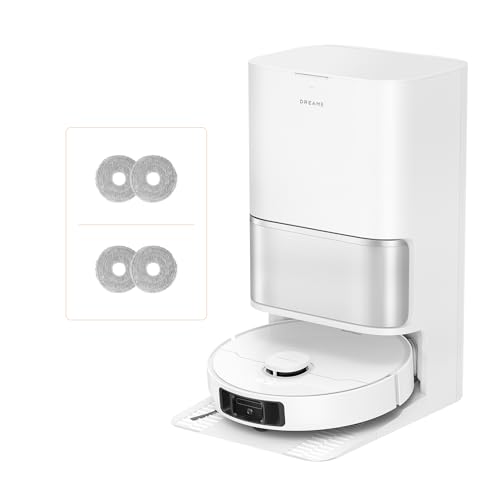
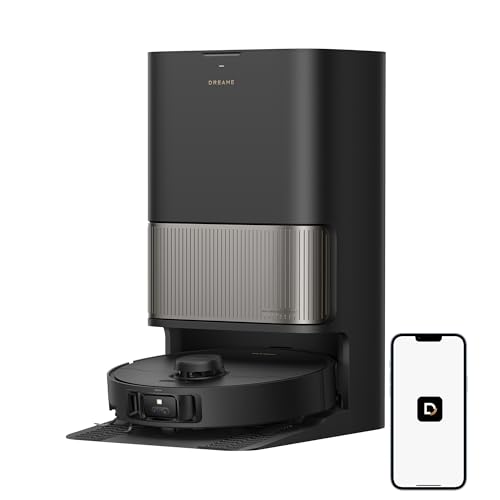
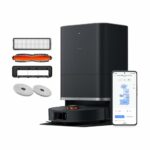
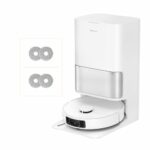
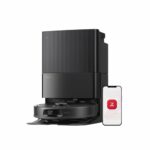
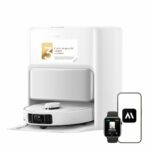
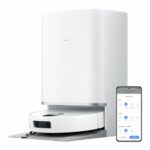
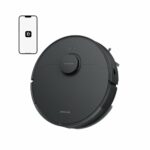
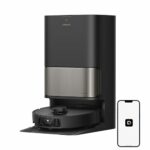
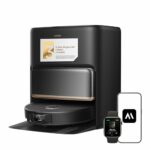
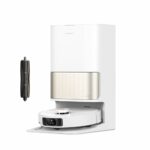
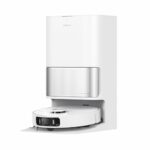
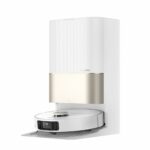
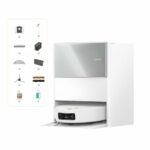
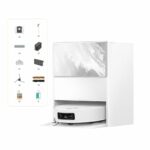
The Dreame L10s Ultra Gen 2, launched in 2024, marked a significant step forward for the brand's premium range. Just over a year later, Dreame introduced the L10s Ultra Gen 3 in November 2025, promising refinements to an already solid formula. Meanwhile, the L40s Pro Ultra arrived in 2025 as a more advanced proposition within the same family. All three share Dreame's multifunctional base approach, combining auto-emptying with mop washing and drying capabilities. They're designed for users seeking minimal intervention in their cleaning routines, particularly those with medium to large homes where automation makes a real difference.
The Gen 2 established the baseline with respectable specifications. The Gen 3 brought notable improvements without changing the overall concept. The L40s Pro Ultra, however, introduces several premium features that set it apart from its siblings. Understanding these distinctions matters when deciding which robot aspirador Dreame fits your household best.
Differences at a glance
- Suction power varies dramatically: 10,000 Pa (Gen 2), 25,000 Pa (Gen 3), 19,000 Pa (L40s Pro Ultra)
- The Gen 3 and L40s Pro Ultra feature an extensible side brush; the Gen 2 does not
- Only the L40s Pro Ultra offers dual cameras with AI recognition
- The L40s Pro Ultra can automatically detach mops at the base for vacuuming-only sessions
- Dirt detection on floors and mops exclusive to the L40s Pro Ultra
- The L40s Pro Ultra includes an integrated voice assistant, LED night vision, and remote camera access
- Brush configuration differs: the L40s Pro Ultra uses a dual HyperStream design; Gen 2 and Gen 3 use a single HyperStream brush
- Both Gen 3 and L40s Pro Ultra feature third-generation self-cleaning wash trays; the Gen 2 lacks this
- The L40s Pro Ultra stands slightly taller at 103.8 mm versus 97 mm for the other two
- Obstacle recognition reaches 180 objects on the L40s Pro Ultra; unspecified on the other models
Power and vacuuming
The suction power figures tell an interesting story. The Gen 2 delivers 10,000 Pa, which handles everyday dust and debris without issue. The Gen 3 leaps to 25,000 Pa—a substantial increase that makes it the most powerful of the three on paper. The L40s Pro Ultra sits at 19,000 Pa, still nearly double the Gen 2 but noticeably below the Gen 3. In practice, the Gen 3's higher suction should prove beneficial for homes with thick carpets or persistent dirt, whilst the L40s Pro Ultra's 19,000 Pa remains more than adequate for most scenarios.
All three models use Dreame's HyperStream brush technology, which minimises hair tangles through its dual-anchor design. The L40s Pro Ultra employs a double HyperStream configuration, potentially offering better coverage and pickup. None of the models feature a liftable main brush during mopping, so all three keep their rollers engaged throughout mixed cleaning sessions.
The side brush situation varies more significantly. The Gen 2 uses a standard side brush without extension or lifting capabilities. The Gen 3 introduces an extensible side brush that reaches further into corners and along edges. The L40s Pro Ultra takes this further with both extension and lifting functions, plus anti-tangle properties. When mopping, the L40s Pro Ultra can raise its side brush to avoid dragging debris across wet floors—a thoughtful detail that prevents streaking.
Mopping system
Each robot employs two rotating mops with Dreame's RoboSwing movement, allowing the unit to nudge mops slightly under furniture edges and skirting boards. All three can extend their mops to reach borders more effectively, and each lifts its mops 10.5 mm when encountering carpets or returning to the base. They all mop with cold water, which suffices for routine cleaning but won't tackle stubborn grime as effectively as heated alternatives.
The L40s Pro Ultra distinguishes itself with automatic mop detachment at the base. When you only need vacuuming, it removes its mops entirely rather than simply lifting them. This prevents any residual dampness from affecting carpets and ensures the mops aren't dragged around unnecessarily. The Gen 2 and Gen 3 lack this feature, keeping their mops attached throughout all cleaning sessions.
Dirt detection represents another exclusive capability of the L40s Pro Ultra. It monitors both floor cleanliness and mop condition, adjusting its approach when it encounters stubborn marks or notices its mops becoming too soiled. The robot can then return to the base for mop washing mid-session or make additional passes over particularly dirty areas. The Gen 2 and Gen 3 follow their programmed routines without this adaptive behaviour.
Navigation system
All three robots use LiDAR turrets for mapping and navigation, creating accurate floor plans and efficient cleaning paths. Each includes a front-facing 3D laser sensor for obstacle avoidance and recognises pets to navigate around them safely. The Gen 2 and Gen 3 rely solely on these sensors without additional visual input.
The L40s Pro Ultra adds dual AI cameras to the mix. This visual intelligence enables it to identify up to 180 different object types, far exceeding the unspecified recognition capabilities of its siblings. It can detect curtains and adjust its approach to avoid entanglement—something the Gen 2 and Gen 3 cannot do. The cameras also enable LED night vision for cleaning in low light and provide remote access, letting you check on your home through the robot's perspective via the app. These features position the L40s Pro Ultra as a more versatile device beyond mere cleaning.
All three models incorporate Dreame's CleanGenius AI for intelligent cleaning patterns, but the L40s Pro Ultra's visual recognition and stain detection give it a more nuanced understanding of its environment.
Battery and autonomy
Battery capacity remains consistent across all three at 5,200 mAh. Runtime varies slightly: the Gen 2 manages 240 minutes, the Gen 3 achieves 231 minutes, and the L40s Pro Ultra runs for 220 minutes. These differences likely reflect the varying power demands of each model's features rather than battery degradation. The Gen 3's higher suction probably draws more power, whilst the L40s Pro Ultra's additional cameras and processing contribute to its shorter runtime.
In real terms, all three provide ample autonomy for homes up to around 200-250 square metres in a single session. Larger properties will see the robots return to recharge automatically before resuming their work. The slight variations in runtime won't significantly impact most users' experiences.
Smart features
Each robot can climb obstacles up to 20 mm high, handling typical door thresholds and minor floor transitions without assistance. The L40s Pro Ultra describes this capability as "simple step climbing," suggesting a similar implementation despite the advanced feature set elsewhere.
The L40s Pro Ultra includes a built-in voice assistant, allowing direct interaction without relying on external smart home systems. All three models support integration with Alexa and Google Home for those who prefer established ecosystems. None of these robots feature robotic arms for additional manipulation tasks.
Multifunctional base
All three bases auto-empty the robot's 300 ml dust bin into 3.2-litre bags, wash mops with hot water, and dry them using warm air. Each base holds 4.5 litres of clean water and 4 litres of dirty water, with a detergent dispenser for automated cleaning solution dosing. Optional kits allow connection to household plumbing, though this requires separate purchase and installation.
The critical difference lies in the wash tray self-cleaning function. The Gen 2 lacks automatic tray cleaning, requiring manual maintenance to prevent buildup and odours. The Gen 3 and L40s Pro Ultra both feature third-generation self-cleaning wash trays that rinse themselves after mop washing cycles, reducing maintenance frequency and ensuring fresher cleaning conditions. This seemingly small upgrade makes a practical difference over weeks of use, particularly for households running daily cleaning schedules.
Dimensions
The Gen 2 and Gen 3 measure 350 mm in diameter and stand 97 mm tall. The L40s Pro Ultra shares the same diameter but rises to 103.8 mm—nearly 7 mm taller. This extra height accommodates the dual camera system but may prevent it from fitting under some low-clearance furniture that the other two models can access. Worth measuring your furniture gaps if you rely on under-sofa cleaning.
Base dimensions remain nearly identical across all three: 340 mm wide, approximately 457 mm deep, and 590 mm tall. They occupy the same floor space and require similar clearance for installation. None of these bases qualify as compact, so ensure you have adequate space in a utility area or corner.
Real-world usage
For smaller homes or flats under 100 square metres, the Gen 2 provides perfectly adequate performance. Its 10,000 Pa suction handles hard floors and low-pile carpets effectively, whilst the mop extension and RoboSwing manage edges reasonably well. The lack of automatic tray cleaning means slightly more hands-on maintenance, but this remains minimal compared to traditional mopping.
The Gen 3 suits households prioritising raw power, particularly those with pets or thick carpets. Its 25,000 Pa suction outmuscles the others, pulling embedded dirt and hair more aggressively. The extensible side brush improves corner coverage, and the self-cleaning wash tray reduces maintenance. It represents a solid middle ground in this comparativa de robots aspiradores—more capable than the Gen 2 without the L40s Pro Ultra's premium price.
The L40s Pro Ultra targets users wanting comprehensive automation and intelligence. The dual cameras and 180-object recognition mean fewer stuck incidents and better navigation around complex floor layouts. Automatic mop detachment benefits homes with mixed flooring, ensuring carpets receive dry vacuuming without manual intervention. Dirt detection and adaptive cleaning provide a more thorough result with less pre-cleaning preparation. The remote camera access and voice assistant add convenience for tech-focused households, though these won't matter to everyone.
Pet owners benefit from all three models' hair-resistant HyperStream brushes, but the L40s Pro Ultra's anti-tangle side brush and higher intelligence reduce maintenance further. Large homes spanning multiple floors will appreciate any of these robots' mapping capabilities, though the L40s Pro Ultra's superior navigation proves most reliable in cluttered environments.
Conclusion: which to choose?
Choose the Dreame L10s Ultra Gen 2 if you want capable automated cleaning without paying for the latest refinements. It handles everyday mess competently, offers the full base functionality, and costs less than its successors. Best suited to smaller homes with straightforward layouts and users comfortable with occasional manual tray cleaning.
Choose the Dreame L10s Ultra Gen 3 if you prioritise maximum suction power and want the self-cleaning wash tray without stepping up to the L40s Pro Ultra's price point. The 25,000 Pa suction makes it the strongest vacuum here, ideal for thick carpets, heavy shedding pets, or households with persistent dirt. The extensible side brush improves edge cleaning over the Gen 2, and the third-generation base reduces maintenance. This robot aspirador Dreame offers excellent value as a mejor robot aspirador 2025 contender for most households.
Choose the Dreame L40s Pro Ultra if you want the most intelligent and autonomous cleaning experience Dreame currently offers. The dual AI cameras, 180-object recognition, automatic mop detachment, and dirt detection create a genuinely hands-off system. Remote camera access and the built-in voice assistant add convenience beyond cleaning. Worth considering for larger homes with complex layouts, mixed flooring, or anyone who values minimal intervention. The slightly taller profile requires checking furniture clearances, but the additional capabilities justify this for the right user.
Ultimately, the diferencias entre these three models reflect Dreame's product maturation. The Gen 2 established solid fundamentals, the Gen 3 refined them with more power and better maintenance, and the L40s Pro Ultra added premium intelligence. Your choice depends on whether you value raw suction, reduced upkeep, or comprehensive automation most highly.