Introduction
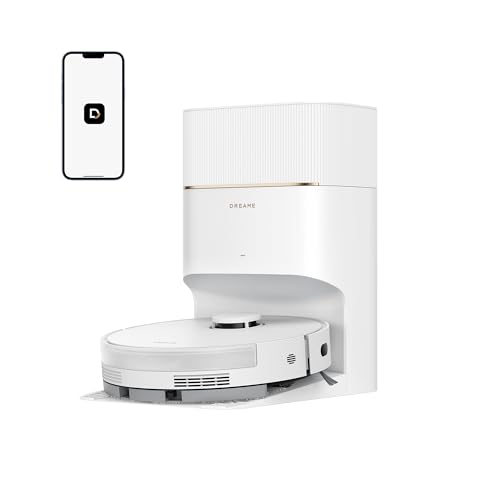
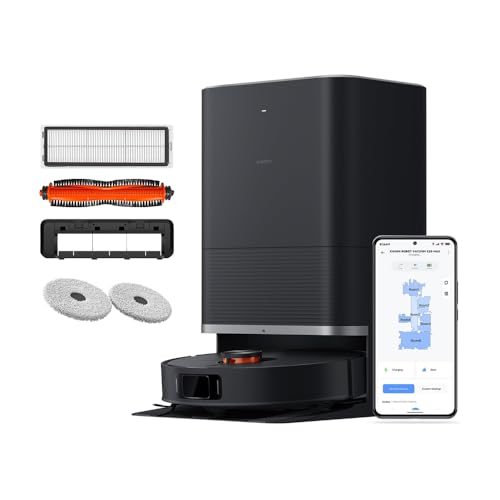
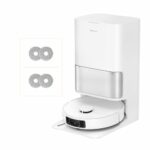
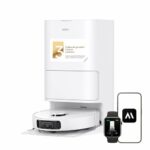
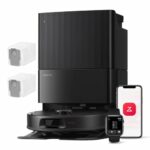
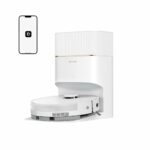
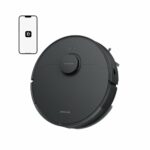
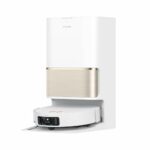
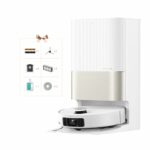
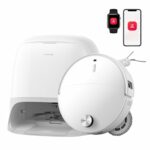
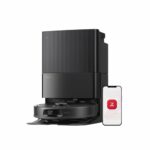
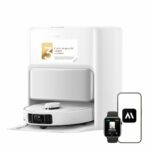
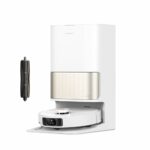
The Dreame D20 Pro Plus arrives in 2025 as a fresh proposition in the mid-range vacuum robot segment, whilst the Xiaomi X20 Max launched in 2024 with a more complete specification on paper. Both models share the same battery capacity at 5,200 mAh and identical dimensions in terms of diameter, but their approach to cleaning differs significantly. The Dreame model focuses on raw suction power and autonomy, reaching 13,000 Pa and 285 minutes of operation. The Xiaomi, meanwhile, opts for a more balanced package with advanced mopping capabilities thanks to its multifunction base station.
These are two vacuum robots suited to different user profiles. The Dreame D20 Pro Plus will appeal to those prioritising long cleaning sessions without interruption, particularly in larger homes where battery endurance matters. The Xiaomi X20 Max targets users who value thorough mopping alongside vacuuming, especially in properties with hard floors requiring regular wet cleaning.
Key Differences at a Glance
- Suction power: 13,000 Pa (Dreame) vs 8,000 Pa (Xiaomi)
- Autonomy: 285 minutes (Dreame) vs 120 minutes (Xiaomi)
- Main brush: Dual HyperStream (Dreame) vs TriCut 3.0 (Xiaomi)
- Mopping system: static mop (Dreame) vs rotating twin mops (Xiaomi)
- Mop lifting: none (Dreame) vs 10 mm (Xiaomi)
- Mop extension for edges: no (Dreame) vs yes (Xiaomi)
- Side brush extension: yes (Dreame) vs no (Xiaomi)
- Side brush anti-tangle: yes (Dreame) vs no (Xiaomi)
- Mop washing at base: no (Dreame) vs yes with hot water (Xiaomi)
- Mop drying at base: no (Dreame) vs yes with hot air (Xiaomi)
- Dust bag capacity: 5 litres (Dreame) vs 2.5 litres (Xiaomi)
- LED night vision: no (Dreame) vs yes (Xiaomi)
- AI cleaning: no (Dreame) vs yes (Xiaomi)
- Clean water tank: not available (Dreame) vs 4 litres (Xiaomi)
- Dirty water tank: not available (Dreame) vs 3.8 litres (Xiaomi)
Power and Vacuuming
The suction power gap is substantial. The Dreame D20 Pro Plus delivers 13,000 Pa compared to the Xiaomi X20 Max's 8,000 Pa. In practical terms, this translates to better performance on carpets and rugs, plus more effective pickup of embedded dirt and pet hair. For homes with multiple floor types or high-pile rugs, the extra grunt from the Dreame makes a tangible difference.
The brushing systems take different approaches. Dreame employs its Dual HyperStream design, which uses two brush rollers anchored at one end to minimise hair tangling. The Xiaomi X20 Max features the TriCut 3.0 brush, combining bristles with integrated blades that cut through tangled hair during operation. Both systems address the common problem of hair wrapping around rollers, though the HyperStream design tends to require less manual intervention.
The Dreame D20 Pro Plus includes an extendable side brush and anti-tangle technology on the side brush itself. This helps with corner cleaning and reduces maintenance, as the side brush won't accumulate debris as quickly. The Xiaomi lacks both features, meaning its edge cleaning won't reach quite as far into corners, and you'll likely need to clean the side brush more frequently if you have pets or long hair in the household.
Neither model offers main brush elevation during mopping, which would prevent the roller from getting wet. This isn't unusual in this price bracket but worth noting if you frequently switch between vacuuming and mopping modes.
Mopping
Here's where the two robots diverge most dramatically. The Dreame D20 Pro Plus uses a static mop pad without any washing or drying functionality at the base. You'll need to manually remove, clean, and reattach the mop after each session. There's no mop extension for edges and no lifting mechanism, so the pad remains at floor level even when the robot transitions to carpets or rugs.
The Xiaomi X20 Max offers a far more sophisticated mopping setup. Its rotating twin mops actively scrub the floor rather than simply dragging a damp cloth across it. The mops extend to reach closer to skirting boards, and they lift by 10 mm when the robot detects carpet, protecting your rugs from unwanted moisture. After cleaning, the robot returns to its base where the mops are washed with hot water and dried using warm air. This automated maintenance cycle keeps the mops hygienic and ready for the next session without any manual intervention.
The base station on the Xiaomi includes 4-litre clean water and 3.8-litre dirty water tanks, handling multiple mopping sessions before requiring a refill or emptying. The Dreame's base lacks these tanks entirely, as it doesn't support automated mop washing. If mopping is a priority in your cleaning routine, this difference alone may be decisive.
Both models use cold water for floor mopping itself, though the Xiaomi heats water specifically for washing the mop pads at the base. Neither robot offers soil detection to trigger extra passes over particularly dirty areas.
Navigation System
Both the Dreame D20 Pro Plus and Xiaomi X20 Max rely on 360-degree LiDAR turrets for mapping and navigation, combined with front-mounted 3D laser sensors for obstacle avoidance. This dual-sensor approach provides reliable room mapping and helps the robots navigate around furniture legs, cables, and other floor-level hazards.
The Xiaomi X20 Max gains an advantage with its LED lighting for night vision, allowing the sensors to function effectively in dim conditions. The Dreame lacks this feature, which could affect navigation accuracy if you run cleaning cycles in the evening or in rooms without much natural light.
The Xiaomi also incorporates AI-powered cleaning intelligence, though the specifics of how this manifests aren't detailed in the available data. Neither robot includes a front-facing camera for visual object recognition, pet detection, or remote viewing capabilities. Neither model identifies curtains to avoid tangling, and neither recognises specific obstacle types beyond basic detection.
Battery and Autonomy
Despite identical 5,200 mAh battery capacities, the Dreame D20 Pro Plus achieves 285 minutes of runtime compared to just 120 minutes from the Xiaomi X20 Max. That's more than double the operating time. This dramatic difference likely stems from the Xiaomi's more power-hungry rotating mops and hot water systems, alongside its AI processing demands.
For larger properties, the Dreame's extended autonomy means fewer interruptions for recharging mid-clean. The robot can cover more ground in a single session, which is particularly valuable in homes exceeding 150 square metres. The Xiaomi's shorter runtime won't trouble owners of smaller flats or houses, but anyone with expansive floor plans may find the robot needs to return to base partway through cleaning.
The Dreame D20 Pro Plus also features a 500 ml onboard dust container, whilst the Xiaomi's capacity isn't specified in the available data. The Dreame's 350 ml water tank for mopping is confirmed, and the Xiaomi does have an onboard water reservoir, though its exact volume isn't listed.
Smart Features
Both robots can climb obstacles up to 20 mm high, which handles most door thresholds and transitions between hard floors and low-pile rugs. Neither model includes a robotic arm for additional cleaning tasks, nor do they feature proprietary voice assistants built into the robot itself. Both do support integration with external voice assistants like Amazon Alexa and Google Home for basic control through your existing smart home ecosystem.
Multifunction Base Station
The base stations reveal perhaps the starkest contrast between these two models. The Dreame D20 Pro Plus base handles automatic dust emptying into a generous 5-litre bag, which should last several weeks before needing replacement. That's where its automation ends. There's no mop washing, no water tanks, no self-cleaning tray, and no UV disinfection.
The Xiaomi X20 Max base is a genuinely multifunction unit. It empties the dust bin into a smaller 2.5-litre bag, washes the robot's mops with hot water during and after cleaning sessions, and dries them with heated air to prevent odours and bacterial growth. The 4-litre clean water tank and 3.8-litre dirty water reservoir mean the base can support multiple mopping cycles autonomously. This transforms the mopping experience from a hands-on chore to a largely automated process.
Neither base offers self-cleaning of the wash tray, UV disinfection, detergent dispensing, or the ability to connect to household plumbing. Neither includes an optional kit for plumbing connection either, so you'll still need to manually fill and empty the tanks.
The practical impact of this difference is significant. If you rarely mop or don't mind manual mop maintenance, the Dreame's simpler base won't feel like a compromise. If you want a genuinely hands-off mopping solution, the Xiaomi's base justifies its existence with every automated wash cycle.
Dimensions
The robots themselves are nearly identical in size. Both measure 350 mm in diameter, and their heights differ by just 0.2 mm—96.8 mm for the Dreame D20 Pro Plus versus 97 mm for the Xiaomi X20 Max. In practical terms, they'll fit under the same furniture and navigate through identical spaces. Neither has a meaningful advantage for squeezing beneath low-clearance sofas or cabinets.
The base stations differ more noticeably. The Dreame base measures 298 mm wide, 452 mm tall, and 440 mm deep. The Xiaomi base is wider at 340 mm, considerably taller at 563 mm, and slightly shallower at 420 mm. The Xiaomi's extra height accommodates its water tanks and mop washing mechanism. You'll need to ensure you have adequate vertical clearance if you plan to tuck the base under a counter or shelf.
Real-World Usage
For homes prioritising vacuuming performance and battery endurance, the Dreame D20 Pro Plus delivers. Its superior suction tackles dirt more aggressively, and the extended runtime suits larger floor plans without the robot needing to pause for recharging. The extendable and anti-tangle side brush reduces maintenance hassles, particularly valuable in households with pets or residents with long hair. The larger 5-litre dust bag in the base means less frequent bag changes.
The trade-off is manual mopping. You'll need to attach a damp mop pad, run the cleaning cycle, then remove and wash the pad yourself. For users who mop infrequently or prefer traditional methods anyway, this isn't necessarily a drawback. The robot still handles the vacuuming autonomously, which is the more time-consuming task for most people.
The Xiaomi X20 Max suits users who want comprehensive floor care with minimal intervention. Its rotating mops and automated washing system mean you can schedule regular mopping sessions and trust the robot to maintain its own cleaning tools. The mop lifting prevents carpet soaking, and the edge extension improves coverage along skirting boards. The LED night vision helps with evening cleaning schedules, and the AI cleaning features may optimise routes and suction levels based on detected conditions.
The shorter battery life limits the Xiaomi to smaller homes or requires mid-clean recharging in larger properties. The lower suction power may struggle with deeply embedded dirt in carpets, though it's perfectly adequate for hard floors and low-pile rugs. The smaller dust bag in the base requires more frequent changes, especially in homes with heavy shedding pets.
Conclusion: Which Should You Choose?
Choose the Dreame D20 Pro Plus if: You live in a large home where extended battery life prevents cleaning interruptions. Vacuuming performance matters more to you than automated mopping. You have carpets or rugs that benefit from stronger suction. You don't mind manually maintaining the mop pad. You want a larger dust bag in the base to reduce maintenance frequency. You prefer a more compact base station footprint.
Choose the Xiaomi X20 Max if: Automated mopping is a priority and you want the robot to handle mop washing and drying without your involvement. You have predominantly hard floors that require regular wet cleaning. Your home is small to medium-sized where 120 minutes of runtime suffices. You value the convenience of a true multifunction base station. You run cleaning cycles in low-light conditions where LED night vision helps. You want rotating mops that actively scrub rather than passively wipe. The mop lifting and edge extension features appeal for mixed flooring types.
The decision ultimately hinges on whether you value vacuuming prowess and autonomy or comprehensive mopping automation. The Dreame excels at the former, the Xiaomi at the latter. Neither is objectively better—they're optimised for different cleaning priorities and household needs.