Introduction
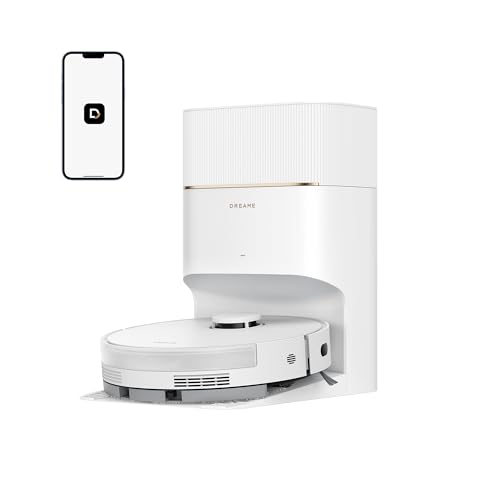
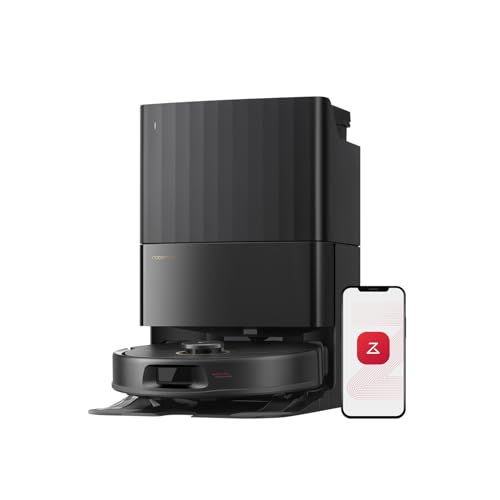
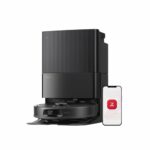
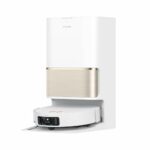
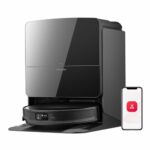
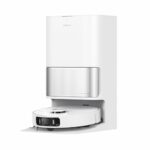
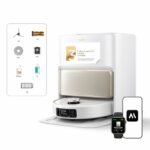
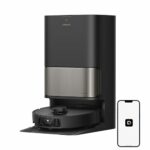
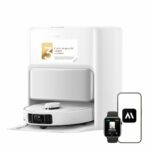
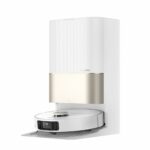
The Dreame D20 Pro Plus and the Roborock Qrevo S5V represent two fresh approaches to automated cleaning from 2025. Whilst the Dreame positions itself as a high-suction model with a simplified base system, the Roborock opts for a complete multifunctional station that handles both vacuuming and mopping maintenance. These aren't just incremental updates—they reflect distinct philosophies about what matters most in daily cleaning.
The Dreame targets users who prioritise raw suction power and extended runtime, particularly in larger homes where battery life matters. The Roborock, meanwhile, appeals to those who want a genuinely hands-off mopping experience, with automatic mop washing and drying built into the base. Understanding which functions you'll actually use makes all the difference when choosing between these two.
Differences at a Glance
- The Dreame delivers 13,000 Pa suction versus 12,000 Pa on the Roborock
- Battery autonomy reaches 285 minutes on the Dreame compared to 180 minutes on the Roborock
- The Roborock features dual rotating mops; the Dreame uses a static mop
- Only the Roborock includes mop washing and hot air drying in its base
- The Dreame has an extendable side brush for corners; the Roborock doesn't
- Mop extension and 10 mm mop lift are exclusive to the Roborock
- The Dreame's dust bag holds 5 litres versus 2.7 litres on the Roborock
- The Dreame uses a dual HyperStream anti-tangle brush; the Roborock employs DuoDivide technology
- The Roborock incorporates SmartPlan 1.0 AI; the Dreame relies on laser navigation alone
Suction Power and Brushwork
Suction figures tell part of the story. The Dreame D20 Pro Plus pushes 13,000 Pa, edging past the Roborock Qrevo S5V's 12,000 Pa. In practice, this translates to slightly better pickup on dense carpets or when dealing with embedded dirt in high-pile rugs. The difference isn't night and day, but it's measurable.
Where things get more interesting is the brush design. Dreame fits its dual HyperStream anti-tangle brush, a system with two brushes anchored at one end to minimise hair wrapping. Roborock counters with its DuoDivide anti-enredos brush, which channels hair towards the central suction gap. Both manufacturers claim reduced maintenance, and both include anti-tangle technology on the side brush as well.
The Dreame's side brush extends outwards to reach into corners more effectively, a feature the Roborock lacks. For homes with lots of skirting detail or furniture edges, this makes a tangible difference. Neither model lifts its main brush or side brush during mopping, so both will still have brushes in contact with damp floors when switching between tasks.
Mopping Systems
This is where the two robots diverge most sharply. The Dreame uses a static mop—a single pad that drags across the floor. It's simple, it works for light maintenance, but it doesn't scrub. There's no mop extension, no lift mechanism, and critically, no automatic washing or drying. You'll need to remove and clean the mop manually after each session.
The Roborock takes a fundamentally different approach. It employs two rotating mops that actively scrub rather than just wipe. These mops extend outwards to reach edges and lift 10 mm when the robot detects carpet or returns to the base. More importantly, the base washes the mops with cold water during cleaning sessions and dries them with hot air afterwards. This keeps the mops fresher and prevents the musty smell that static mops often develop.
For anyone serious about mopping, the Roborock's system is transformational. The robot returns to the base periodically to rinse its mops, meaning it's always cleaning with relatively fresh pads rather than spreading dirty water around. The Dreame can't do this—it has no water tanks in the base at all. The Roborock's base holds 4 litres of clean water and 3.5 litres of dirty water, giving it the capacity to handle multiple mopping runs without refilling.
Navigation Technology
Both robots use a 360-degree LiDAR turret for mapping and navigation, and both include obstacle avoidance. The Dreame adds a 3D laser sensor at the front for more precise detection of low-lying objects. The Roborock doesn't have this sensor but compensates with SmartPlan 1.0, an AI-driven cleaning algorithm that optimises routes and adapts to room layouts over time.
Neither model includes a front-facing camera, LED lighting for night vision, or remote camera access. Pet recognition and curtain detection aren't available on either unit. What you get is solid, reliable laser-based navigation without the privacy concerns that come with onboard cameras. Both handle complex floor plans competently and create accurate maps.
Battery Life and Coverage
The Dreame's 5,200 mAh battery delivers 285 minutes of runtime—nearly five hours. The Roborock has the same battery capacity but manages only 180 minutes. That's a significant gap, likely explained by the Roborock's rotating mops and more frequent base returns for mop washing. For larger properties, the Dreame's extended runtime means fewer interruptions and faster completion of full-home cleans.
Both robots can climb 20 mm obstacles, enough to handle most door thresholds and thick rugs. Neither specifies maximum recommended floor area in the data, but the Dreame's longer runtime suggests it's better suited to expansive homes.
Smart Features
The Roborock's SmartPlan 1.0 brings a degree of intelligence that the Dreame doesn't match. This system learns your home's layout and adjusts cleaning patterns accordingly, potentially improving efficiency over time. The Dreame relies on straightforward laser mapping without adaptive AI.
Both robots support external voice assistants like Alexa and Google Home, but neither includes a proprietary voice assistant. Neither offers a robotic arm for object manipulation—these are cleaning robots, not household assistants. The 20 mm step-climbing ability is identical on both, as is the lack of AI-powered stain recognition.
Multifunctional Base Station
The Roborock's base is a full-service station. It empties the robot's 330 ml dust bin into a 2.7-litre bag, washes the mops with cold water, and dries them using hot air. This is the core difference between the two models. The Dreame's base only handles dust disposal, emptying the robot's larger 500 ml bin into a 5-litre bag. There's no mop maintenance whatsoever.
The Dreame's larger dust bag means less frequent bag changes—potentially important if you have pets or high dust levels. The Roborock's smaller bag will need replacing more often, but you're also getting a base that manages the entire mopping process. Neither base includes UV disinfection, detergent dispensing, or automatic mop replacement. Neither offers integrated plumbing connection or an optional kit for it.
The Roborock's water tanks add bulk to the base, but they're essential for the mop-washing function. The Dreame's simpler base is more compact but offers less automation. The choice comes down to whether you value mop maintenance or prefer a smaller footprint with manual mop care.
Physical Dimensions
The robots themselves are nearly identical in size. The Dreame measures 350 mm in diameter and 96.8 mm tall. The Roborock is 353 mm across and 96.5 mm high. That 0.3 mm height difference is negligible—both will fit under most furniture with similar clearance requirements.
The bases differ more noticeably. The Dreame's station is 298 mm wide, 452 mm tall, and 440 mm deep. The Roborock's base is larger at 340 mm wide, 521 mm tall, and 487 mm deep. Those extra litres of water storage require space. If you're tight on floor area, the Dreame's more compact base might matter. If you want full mop automation, you'll need to accommodate the Roborock's larger footprint.
Real-World Use Scenarios
For homes with primarily hard floors and light mopping needs, the Dreame D20 Pro Plus offers strong suction, excellent battery life, and minimal fuss. The extendable side brush helps with corners, and the large dust bag reduces maintenance frequency. You'll need to wash the mop pad yourself, but if you're already comfortable with that routine, the Dreame delivers solid performance at what's typically a lower price point.
The Roborock Qrevo S5V suits anyone who wants genuinely automated mopping. The rotating mops, mop washing, and hot air drying transform the mopping experience from a chore into something that actually happens reliably. The SmartPlan AI adds a layer of optimisation, and the mop lift prevents wet carpets. The trade-off is shorter battery life and a larger base, but for mixed-surface homes with regular mopping needs, it's worth it.
Homes with pets will appreciate both models' anti-tangle brushes, though the Dreame's higher suction might edge ahead on embedded pet hair. The Dreame's longer runtime also means it's less likely to need a mid-clean recharge in larger properties. The Roborock's mop-washing capability helps if you're dealing with muddy paw prints or frequent spills.
Conclusion: Which One to Choose?
Choose the Dreame D20 Pro Plus if: you have a large home where battery life matters, you're comfortable washing mop pads manually, you want maximum suction power, or you need a more compact base station. The extendable side brush and larger dust bag are practical bonuses for corner-heavy layouts and high-dust environments.
Choose the Roborock Qrevo S5V if: you want hands-off mopping with automatic mop washing and drying, you have mixed flooring that benefits from mop lift, you prefer AI-assisted cleaning optimisation, or you value the active scrubbing action of rotating mops. Accept the shorter runtime and larger base in exchange for genuinely automated floor care.
For maximum convenience and complete automation, the Roborock is the clear choice. For raw power and extended coverage with simpler maintenance, the Dreame delivers. Neither is objectively better—they're built for different priorities.