Introduction
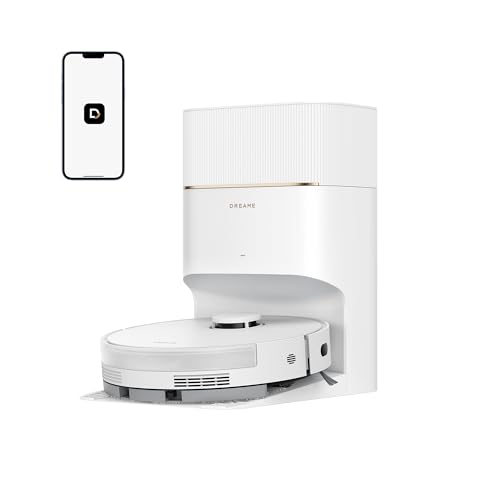
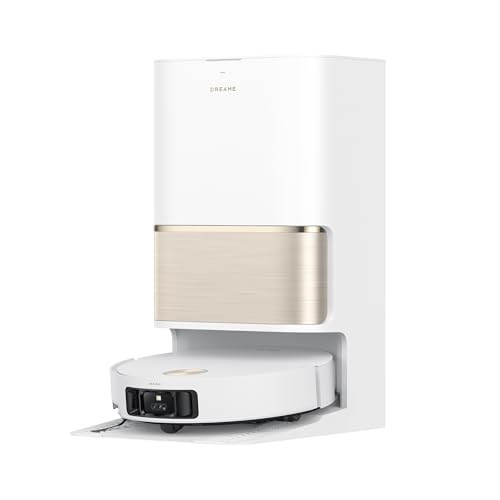
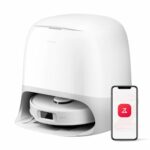
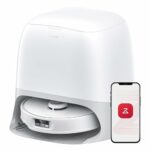
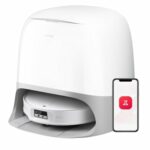
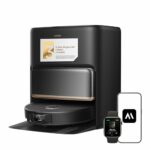
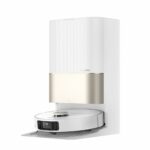
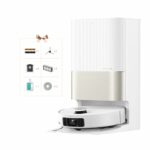
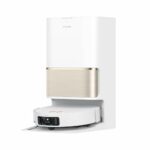
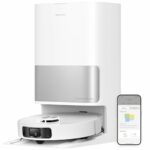
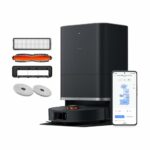
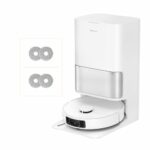
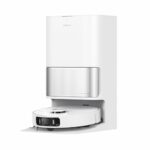
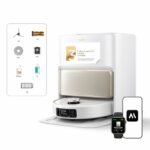
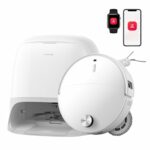
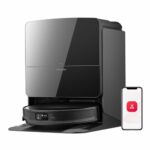
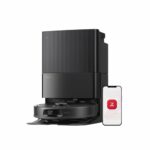
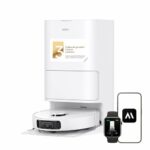
Dreame presents two distinct approaches to automated cleaning in 2025 with the D20 Pro Plus and the L50 Pro Ultra. The D20 Pro Plus positions itself as a capable robot vacuum cleaner with a self-emptying base, whilst the L50 Pro Ultra steps into the premium category with a comprehensive multifunctional cleaning station. Both models share Dreame's commitment to effective navigation and cleaning, yet they're designed for quite different user needs and budgets.
The D20 Pro Plus suits those seeking solid vacuuming performance with minimal maintenance, thanks to its 5-litre dust bag capacity. The L50 Pro Ultra, meanwhile, targets users wanting a completely hands-off experience with advanced mopping capabilities, AI-powered navigation, and a base that handles mop washing and drying automatically.
Key Differences at a Glance
- Suction power: 13,000 Pa versus 19,500 Pa
- Mopping system: static mop versus dual rotating mops with extension and elevation
- Navigation: standard LiDAR tower versus retractable LiDAR with dual AI cameras
- Base functionality: auto-emptying only versus full multifunctional station with mop washing and hot air drying
- Robot height: 96.8 mm versus 89 mm
- Battery capacity and runtime: 5,200 mAh/285 minutes versus 6,400 mAh/200 minutes
- AI features: basic obstacle avoidance versus CleanGenius AI with 180 object recognition
- Built-in voice assistant available only on the L50 Pro Ultra
Power and Suction
The suction gap between these models is substantial. The D20 Pro Plus delivers 13,000 Pa, which handles everyday debris, dust and pet hair across hard floors and carpets effectively. The L50 Pro Ultra pushes this to 19,500 Pa, providing noticeably stronger pickup on carpets and better performance with ground-in dirt.
Both models feature Dreame's Doble Cepillo HyperStream design, which uses twin brushes anchored at one end to minimise hair tangling. This makes maintenance considerably easier for homes with pets or long-haired residents. The side brushes on both units extend to reach into corners and along skirting boards, and both include anti-tangle technology.
A significant difference emerges when mopping. The L50 Pro Ultra can lift both its main brush and side brush during wet cleaning, preventing the brushes from becoming damp or spreading dirty water. The D20 Pro Plus lacks this capability, meaning the brushes remain in contact with the floor throughout mopping sessions. For homes that vacuum and mop simultaneously, this matters considerably.
Mopping
Here lies the most dramatic divide between these robot aspirador Dreame models. The D20 Pro Plus uses a static mop that drags across the floor, suitable for light maintenance cleaning but limited in tackling dried-on stains or sticky spills. There's no mop elevation, so the pad remains in contact with all surfaces including carpets unless manually removed.
The L50 Pro Ultra transforms the mopping experience entirely. Its dual rotating mops actively scrub the floor rather than simply dragging across it. The mops extend outward to clean right up to edges and into corners, complemented by a movement system that allows the robot to reach slightly under furniture edges. When encountering carpets or rugs, the mops lift 10.5 mm to avoid wetting them.
The base station automatically removes and reattaches the mops, allowing pure vacuuming runs without manual intervention. During mopping, the robot returns to the base multiple times to wash the mop pads with hot water, ensuring it's always cleaning with fresh pads rather than spreading dirty water around. After completing the job, the base washes the mops again and dries them with hot air, preventing odours and bacterial growth.
Dirt detection sensors on the L50 Pro Ultra identify particularly soiled areas, triggering additional passes or more intensive scrubbing. This level of automation simply isn't present on the D20 Pro Plus, which requires manual mop maintenance and can't adapt its cleaning intensity to floor conditions.
Navigation System
The D20 Pro Plus employs a third-generation LiDAR tower to map your home and plan efficient cleaning routes. It includes frontal 3D laser sensors to detect and avoid obstacles in real-time. This setup works reliably for structured navigation and basic obstacle avoidance.
The L50 Pro Ultra takes navigation to another level with retractable LiDAR that lowers the robot's profile, combined with dual AI cameras and the AI Sage 13.0 octa-core processor. This system recognises up to 180 different object types, including pets, curtains, and various household items. The cameras provide remote access through the app, allowing you to check on your home whilst away.
LED lighting enables the L50 Pro Ultra to navigate effectively in darkness, whilst its CleanGenius AI learns your home's layout and adapts cleaning patterns accordingly. The D20 Pro Plus lacks these AI-driven features, sticking to more traditional mapping and navigation methods. For most homes, this proves perfectly adequate, but the L50 Pro Ultra's intelligence becomes valuable in complex environments with numerous obstacles or changing layouts.
Battery and Autonomy
An interesting trade-off emerges here. The D20 Pro Plus packs a 5,200 mAh battery delivering 285 minutes of runtime—sufficient for very large homes in a single session. The L50 Pro Ultra's larger 6,400 mAh battery provides only 200 minutes of operation. This apparent contradiction likely reflects the L50 Pro Ultra's higher suction power and energy-intensive mopping system, which drain the battery faster despite its greater capacity.
In practice, most homes won't exhaust either robot's battery in a single cleaning cycle. The difference becomes relevant for exceptionally large properties or those requiring multiple rooms cleaned in succession without returning to the base. The D20 Pro Plus holds an advantage here for pure coverage on a single charge.
Smart Features
Both models can climb obstacles up to 20 mm, handling typical door thresholds and carpet edges without difficulty. They also integrate with Alexa and Google Home for voice control through external assistants.
The L50 Pro Ultra adds its own built-in voice assistant, allowing direct communication with the robot without requiring a smart speaker. This proves convenient for quick commands or status checks whilst moving around the house. The AI-powered spot recognition and adaptive cleaning strategies further distinguish the L50 Pro Ultra as a genuinely intelligent cleaning device rather than simply a programmable one.
Multifunctional Cleaning Base
The D20 Pro Plus base handles one task: emptying the robot's 500 ml dust container into a generous 5-litre bag. This capacity means changing the bag roughly every two months in typical households, minimising maintenance.
The L50 Pro Ultra's base is essentially a compact cleaning station. Beyond auto-emptying into a 3.2-litre bag, it manages the complete mop washing and drying cycle. The base uses hot water to clean the mop pads, includes a detergent dispenser for proper floor cleaning, and features third-generation self-cleaning for its own washing tray to prevent odour buildup.
The water tanks measure 4.5 litres for clean water and 4 litres for dirty water, providing sufficient capacity for multiple mopping sessions before requiring attention. A connection kit for plumbing integration is available separately, though not included as standard. The robot's onboard water tank is just 80 ml on the L50 Pro Ultra compared to 350 ml on the D20 Pro Plus, because the former returns frequently to the base for mop washing rather than carrying water for an entire session.
Dimensions
The L50 Pro Ultra measures 89 mm tall, making it 7.8 mm lower than the D20 Pro Plus at 96.8 mm. This might seem trivial, but those extra millimetres can determine whether a robot fits beneath certain furniture. Both share a 350 mm diameter, standard for robot vacuum cleaners of this class.
The base stations differ considerably in footprint. The D20 Pro Plus base measures 298 mm wide, 452 mm tall, and 440 mm deep—relatively compact for a self-emptying station. The L50 Pro Ultra's multifunctional base spans 340 mm wide, 590.5 mm tall, and 456.7 mm deep, requiring more floor and vertical space to accommodate its additional tanks and washing mechanisms. Consider available space near power outlets when choosing between these models.
Real-World Usage Experience
The D20 Pro Plus excels in homes prioritising vacuuming over mopping, particularly larger spaces where its extended battery life proves beneficial. The 5-litre dust bag capacity suits pet owners who'd otherwise empty smaller bags weekly. Its static mop handles light floor maintenance—wiping up minor spills or refreshing hard floors between proper cleaning sessions.
For households wanting comprehensive floor care without manual intervention, the L50 Pro Ultra delivers. Its rotating mops and hot water washing system genuinely clean floors rather than merely wiping them. Homes with pets benefit from its ability to recognise and navigate around animals, whilst the remote camera access provides peace of mind when away. The lower profile helps it access spaces the D20 Pro Plus might miss.
The trade-off comes in complexity and maintenance. The L50 Pro Ultra requires monitoring water levels and detergent, though far less frequently than manually mopping. Its base demands more space and the initial investment is considerably higher. The D20 Pro Plus offers simplicity: empty the bag periodically, rinse the mop pad occasionally, and it continues working reliably.
Conclusion: Which to Choose?
Choose the Dreame D20 Pro Plus if you're primarily concerned with vacuuming performance, have a large home benefiting from extended battery life, want minimal base station footprint, or prefer straightforward operation without advanced features. It suits those who mop manually anyway or need only light floor wiping between proper cleaning sessions. The lower price point makes it sensible for anyone questioning whether they'll actually use advanced mopping features.
Choose the Dreame L50 Pro Ultra if you want genuinely automated floor washing, have pets or complex home layouts benefiting from AI recognition, value remote monitoring through the camera, or simply want the most capable robot aspirador available from Dreame in 2025. Its lower profile helps in homes with low-clearance furniture, whilst the multifunctional base justifies its footprint through comprehensive automation. This is the better robot aspirador for those seeking a complete hands-off cleaning solution and willing to invest in that convenience.
The right choice ultimately depends on whether you view mopping as essential or supplementary to vacuuming. The D20 Pro Plus handles the latter brilliantly at a more accessible price point, whilst the L50 Pro Ultra delivers both tasks to a professional standard with minimal human involvement.