Introduction
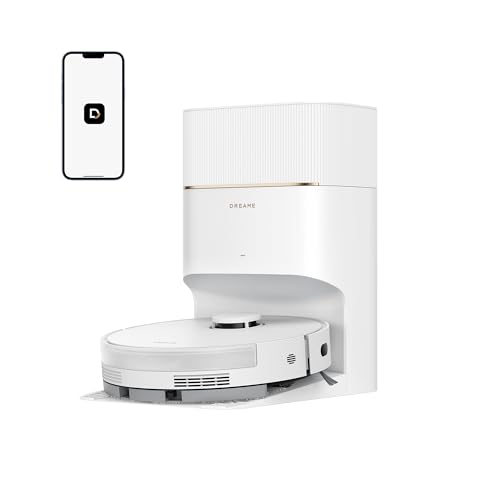
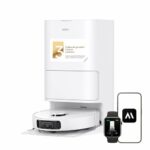
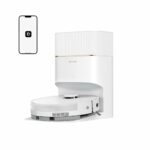
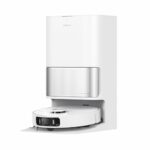
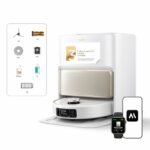
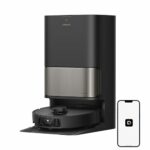
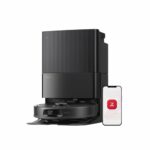
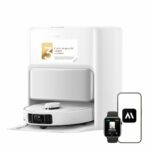
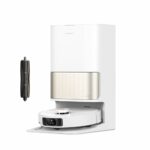
The Dreame D20 Pro Plus arrives in 2025 as a model focused on raw suction power and extended runtime, whilst the Dreame L10s Ultra Gen 2 from 2024 positions itself as a more complete solution with its multifunctional base. These are two distinct approaches from the same manufacturer, each targeting different priorities when it comes to floor care.
The D20 Pro Plus relies on a simpler self-emptying base and emphasises vacuuming performance. The L10s Ultra Gen 2, meanwhile, delivers a comprehensive cleaning system that handles both vacuuming and mopping with automatic mop washing and drying. Understanding these fundamental differences helps clarify which households will benefit most from each design.
Key Differences at a Glance
- The D20 Pro Plus delivers 13,000 Pa suction versus 10,000 Pa on the L10s Ultra Gen 2
- The D20 Pro Plus features a dual HyperStream anti-tangle brush; the L10s Ultra Gen 2 uses a single conventional brush
- Only the D20 Pro Plus includes an extendable and anti-tangle side brush
- The L10s Ultra Gen 2 offers rotating mops with extension, 10.5 mm lift, and automatic washing with hot air drying
- The D20 Pro Plus uses a static mop without lift or washing capabilities
- The L10s Ultra Gen 2 recognises pets and includes CleanGenius AI cleaning intelligence
- Battery autonomy reaches 285 minutes on the D20 Pro Plus compared to 240 minutes on the L10s Ultra Gen 2
- The D20 Pro Plus has a larger 5-litre dust bag versus 3.2 litres on the L10s Ultra Gen 2
Power and Suction
Suction power separates these models clearly. The D20 Pro Plus pushes 13,000 Pa, a significant step up from the 10,000 Pa delivered by the L10s Ultra Gen 2. This translates to better performance on carpets and rugs, plus improved pickup of embedded debris in textured flooring.
The brush system reveals another major distinction. The D20 Pro Plus employs a dual HyperStream design, which uses two brushes anchored at one end to actively prevent hair tangles. This design proves particularly useful in homes with pets or long-haired residents. The L10s Ultra Gen 2 sticks with a single conventional brush, which requires more frequent maintenance to remove wrapped hair.
The side brush configuration also differs. The D20 Pro Plus includes an extendable side brush that stretches out to reach into corners more effectively, and it features anti-tangle properties. The L10s Ultra Gen 2 uses a standard fixed side brush without these enhancements. For edge cleaning during vacuuming, the D20 Pro Plus has a clear advantage.
Neither model lifts its main brush when mopping, and neither lifts the side brush either. Both share the same 20 mm obstacle-climbing capability and 5,200 mAh battery capacity, though runtime differs due to efficiency variations.
Mopping
The mopping systems couldn't be more different. The L10s Ultra Gen 2 uses dual rotating mops that extend outwards to reach edges and skirting boards more effectively. These mops lift 10.5 mm when the robot detects carpet or rugs, preventing unwanted moisture transfer. After mopping, the robot returns to its base where the mops are washed with cold water and dried using hot air to prevent odours and bacterial growth.
The D20 Pro Plus takes a minimalist approach with a static mop pad. There's no mop lift, no extension for edges, and no automatic washing or drying. The robot's 350 ml water tank is larger than the L10s Ultra Gen 2's 80 ml capacity, but without the ability to refresh the mop during cleaning, the practical advantage diminishes on larger floor areas.
In practice, the L10s Ultra Gen 2 delivers proper mopping performance because the mops stay clean throughout the job. The base handles the dirty work, washing mops multiple times during a cleaning session and drying them afterwards. The D20 Pro Plus requires manual mop maintenance, making it less suitable for anyone wanting a hands-off mopping experience.
Neither model offers hot water mopping, soil detection for targeted cleaning, or automatic mop removal when switching to vacuum-only mode. Both use cold water for floor cleaning.
Navigation System
Navigation hardware remains similar across both models. Each uses a 360-degree LiDAR turret for mapping and 3D laser sensors at the front for obstacle detection. Both create accurate floor plans and navigate methodically around furniture.
The L10s Ultra Gen 2 gains an edge with pet recognition and CleanGenius AI cleaning intelligence, which adapts cleaning patterns based on room type and dirt levels. The D20 Pro Plus lacks these AI-driven features, sticking to more straightforward navigation without contextual awareness.
Neither robot includes a front-facing camera, LED lighting for night vision, or remote camera access. Both integrate with Alexa and Google Home for voice control but don't feature proprietary voice assistants. For most users, the navigation differences won't dramatically affect day-to-day performance, though the pet recognition on the L10s Ultra Gen 2 helps avoid disturbing animals or their belongings.
Autonomy and Battery
Both models share the same 5,200 mAh battery, but runtime differs. The D20 Pro Plus manages 285 minutes on a single charge, whilst the L10s Ultra Gen 2 reaches 240 minutes. The difference likely stems from the L10s Ultra Gen 2's more complex mopping system and AI processing demands.
The extra 45 minutes on the D20 Pro Plus proves useful in larger homes, reducing the likelihood of mid-clean recharging breaks. For properties exceeding 150 square metres, this extended runtime becomes more relevant, especially when tackling multiple rooms in one session.
Intelligent Functions
Both robots handle 20 mm obstacles equally well, managing door thresholds and low-profile transitions without assistance. Neither includes a robotic arm or proprietary voice assistant.
The L10s Ultra Gen 2's CleanGenius AI represents the main intelligent feature difference, adjusting cleaning intensity and patterns based on room function and detected dirt levels. This makes the robot slightly more autonomous in decision-making. The D20 Pro Plus follows programmed routines without adaptive intelligence.
Multifunctional Cleaning Base
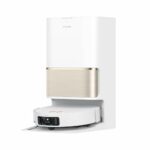
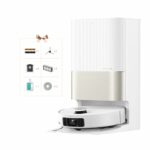
The base stations differ fundamentally. The D20 Pro Plus features a self-emptying base that automatically empties the robot's 500 ml dust bin into a 5-litre disposable bag. That's the extent of its automation—no mop washing, no water management, no detergent dispensing.
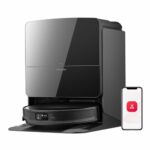
The L10s Ultra Gen 2's base handles significantly more. It empties the smaller 300 ml dust bin into a 3.2-litre bag, washes the rotating mops with cold water from a 4.5-litre clean water tank, and dries them using hot air. Dirty water collects in a 4-litre waste tank. A detergent reservoir automatically dispenses cleaning solution during mop washing. An optional pipe connection kit can be purchased separately for continuous water supply, though this isn't included as standard.
The D20 Pro Plus base measures 298 mm wide, 452 mm tall, and 440 mm deep—noticeably more compact than the L10s Ultra Gen 2's base at 340 mm wide, 590.5 mm tall, and 456.7 mm deep. If space is limited, the D20 Pro Plus's smaller footprint may matter.
Neither base offers UV disinfection, automatic tray cleaning, or integrated pipe connection. The D20 Pro Plus requires less frequent bag changes thanks to its larger capacity, which benefits households generating more dust and debris.
Dimensions
The robots themselves measure almost identically: 350 mm diameter for both, with the D20 Pro Plus standing 96.8 mm tall and the L10s Ultra Gen 2 at 97 mm. This 0.2 mm difference is negligible. Both should fit under most furniture with similar clearance requirements.
Base dimensions tell a different story. The D20 Pro Plus base sits lower and narrower, making it easier to tuck into tighter spaces. The L10s Ultra Gen 2's base stands nearly 14 cm taller due to the water tanks and mop washing mechanism. Consider available floor space when choosing between these models.
Real-World Usage Experience
The D20 Pro Plus suits homes prioritising vacuuming performance and extended runtime. The 13,000 Pa suction and anti-tangle dual brush system handle pet hair effectively, whilst the 285-minute battery life covers larger properties without interruption. The extendable side brush improves edge cleaning during vacuuming. However, mopping remains basic—expect to maintain the mop pad manually and accept less thorough results compared to automated systems.
The L10s Ultra Gen 2 targets users wanting comprehensive automated cleaning with minimal intervention. The multifunctional base removes the burden of mop maintenance, making it practical for regular mopping schedules. The rotating mops with edge extension deliver better coverage than static pads. Pet recognition helps the robot navigate around animals more considerately. The trade-offs include lower suction power, a conventional brush requiring more frequent hair removal, and a larger base footprint.
For homes with substantial carpeted areas or thick rugs, the D20 Pro Plus's extra suction power and longer runtime provide tangible benefits. For hard floors requiring regular mopping, the L10s Ultra Gen 2's automated mop washing justifies its higher complexity. Mixed flooring households need to weigh whether vacuuming or mopping takes priority.
Conclusion: Which Should You Choose?
Choose the Dreame D20 Pro Plus if: you prioritise maximum suction power and longer battery life, your home has extensive carpeting or rugs, you deal with significant pet hair, you need extended runtime for larger properties, you prefer a more compact base station, or you're comfortable maintaining mops manually and don't require automated mopping capabilities.
Choose the Dreame L10s Ultra Gen 2 if: you want a hands-off mopping experience with automatic mop washing and drying, your floors are predominantly hard surfaces requiring regular mopping, you value edge mopping and mop lift for mixed flooring, you want AI-driven cleaning intelligence and pet recognition, or you're willing to accommodate a larger base station for the convenience of full automation.
The D20 Pro Plus delivers stronger vacuuming at the expense of mopping sophistication. The L10s Ultra Gen 2 provides complete floor care automation with slightly less raw power. Your flooring type and maintenance preferences should guide this decision more than any single specification.