Introduction
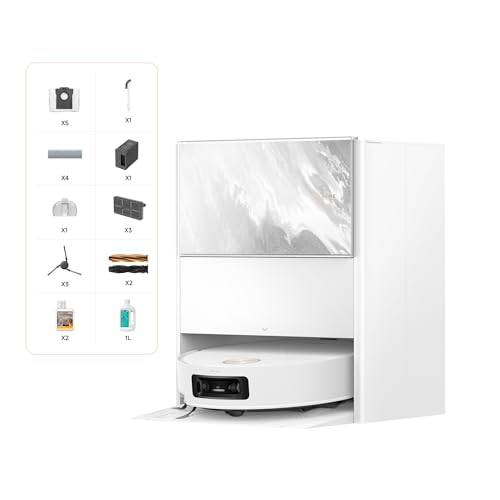
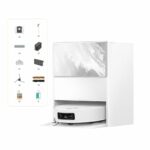
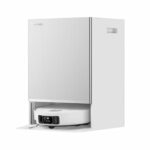
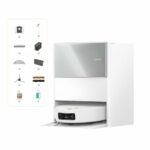
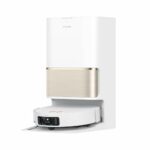
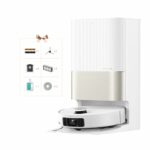
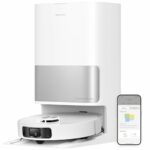
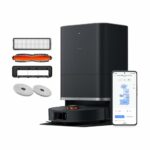
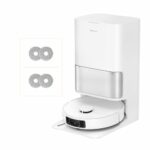
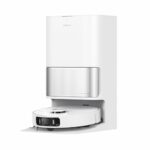
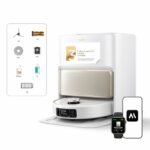
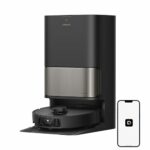
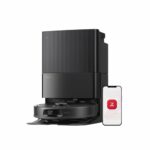
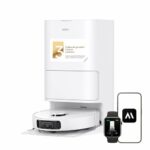
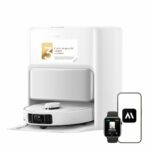
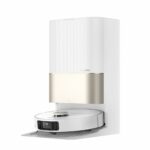
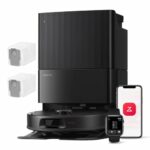
The Dreame Aqua10 Ultra Track Complete and the Roborock Saros Z70 represent two distinct approaches to premium robotic cleaning in 2025. Both manufacturers have equipped these models with multifunctional bases, hot water mopping systems, and advanced AI navigation, yet each takes a different path to achieve thorough cleaning results.
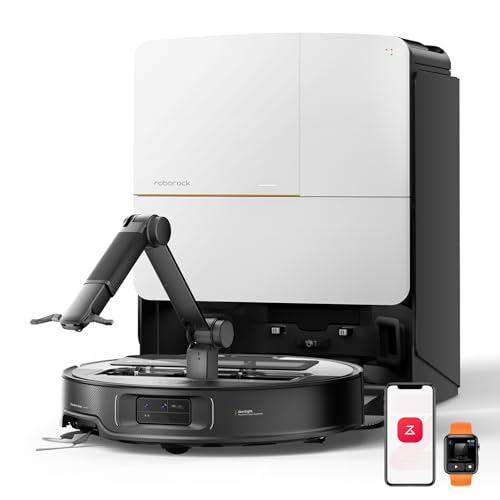
The Dreame model stands out with its dual roller mopping system and impressive 25,000 Pa suction power, whilst the Roborock introduces a mechanical arm—the OmniGrip—capable of handling small objects during cleaning. These are flagship devices designed for larger homes where automation and minimal user intervention matter most.
Key Differences at a Glance
- The Dreame offers 25,000 Pa suction versus 22,000 Pa on the Roborock
- Dreame uses a wide dual roller for mopping; Roborock employs twin rotating mops
- The Roborock can automatically remove its mops at the base; the Dreame cannot
- Only the Roborock features a robotic arm (OmniGrip) for picking up small items
- The Dreame reaches 97.5 mm in height; the Roborock sits at just 79.8 mm
- Dreame includes UV disinfection in the base; Roborock has auto-cleaning tray 2.0
- Dreame recognises 280 objects; Roborock identifies 108
- Dreame detects curtains; the Roborock does not
- Dreame has a larger dust bag capacity at 3.2 litres versus 2.5 litres
Power and Suction
Suction performance favours the Dreame Aqua10 Ultra Track Complete with 25,000 Pa, a noticeable step up from the Roborock Saros Z70's 22,000 Pa. In practice, this difference becomes relevant on carpets or when dealing with embedded dirt in high-traffic areas.
The main brush systems differ fundamentally. Dreame employs a dual HyperStream anti-tangle design, where two brushes anchored at one end work to prevent hair wrapping. Roborock uses its own anti-tangle brush, equally effective at reducing maintenance but structured differently. Both robots can lift their main brushes during mopping to avoid dragging debris across wet floors.
When it comes to side brushes, both models feature extensible and liftable designs with anti-tangle properties. This ensures corners receive proper attention without the brushes scattering dirt when mopping mode is active.
Mopping
Here the contrast becomes sharper. The Dreame relies on a wide 180 mm roller that rotates continuously, applying consistent pressure across a broader path. The Roborock uses two circular rotating mops that spin independently. Each approach has merit: rollers excel at scrubbing stubborn marks, whilst dual mops can adapt to uneven surfaces more flexibly.
Both extend their mopping pads to reach edges and corners. Mop elevation differs slightly—Dreame lifts between 7 and 17 mm, whilst Roborock raises its mops from 12 to 22 mm. The extra clearance on the Roborock may help when transitioning onto thicker rugs.
Water temperature during mopping also varies. The Dreame heats water to 45°C for floor cleaning, which helps dissolve grease and sticky residues. The Roborock uses warm water but doesn't specify the exact temperature. Both models wash their mops with hot water at the base and detect dirt on mops and floors to trigger additional cleaning passes.
A practical advantage appears with the Roborock: it can automatically detach its mops at the base, allowing vacuum-only runs without manual intervention. The Dreame requires you to remove the roller manually if you want to skip mopping altogether.
Navigation System
Navigation technology is sophisticated on both fronts. The Dreame uses a retractable LiDAR system paired with dual RGB cameras and 3D laser sensors. The Roborock employs its StarSight 2.0 navigation, also combining dual cameras with frontal 3D sensors and LED night vision.
Object recognition capacity tilts heavily towards the Dreame, which can identify 280 different obstacles compared to the Roborock's 108. This broader recognition database includes curtain detection, absent on the Roborock. For homes with floor-length drapes or complex furniture arrangements, this could reduce the need for manual boundary setting.
Both robots recognise pets, allow remote camera access via their apps, and use AI-driven cleaning logic—CleanGenius AI on the Dreame, SmartPlan 2.0 on the Roborock. Processing power differs: Dreame runs AI Sage 15.0 with an octa-core CPU, whilst Roborock uses RR Mason 12.0.
Battery and Autonomy
Battery capacity is identical at 6,400 mAh for both models. Neither manufacturer provides specific runtime figures in minutes or maximum coverage area in the available data, but given the same cell capacity, performance should be comparable under similar conditions.
Smart Functions
Obstacle climbing ability is rated at simple steps for both robots, meaning they can handle standard door thresholds and minor level changes without assistance.
The defining feature here is the Roborock's OmniGrip robotic arm. This mechanical appendage can pick up lightweight objects—socks, small toys, charging cables—and move them aside or place them in a collection area. The Dreame lacks this function entirely. For households where floor clutter is common, the arm adds a layer of convenience that goes beyond typical obstacle avoidance.
Both robots include proprietary voice assistants and support external platforms like Alexa and Google Home.
Multifunctional Base
Each base empties the robot's dust bin, washes mops with hot water, and dries them using heated air. The Dreame dries mops at 50°C; the Roborock also uses hot air but doesn't specify the exact temperature.
The Roborock features auto-cleaning tray 2.0, which keeps the mop washing area hygienic without manual scrubbing. The Dreame instead includes UV disinfection within the base to sanitise surfaces and reduce bacterial growth.
Detergent dispensing is available on both, though the Dreame offers dual detergent tanks for different cleaning solutions or floor types. The Roborock has a single detergent reservoir.
Dust bag capacity favours the Dreame at 3.2 litres versus 2.5 litres on the Roborock, meaning fewer bag changes over time. Clean water tanks are identical at 4 litres, but the Dreame's dirty water tank holds 3.5 litres compared to 3 litres on the Roborock.
The Dreame includes an optional plumbing connection kit, sold separately, for those who want to automate water refilling and drainage. The Roborock does not offer this option.
Dimensions
Height is where the Roborock gains a clear advantage. At 79.8 mm, it can slip under furniture that the 97.5 mm Dreame cannot reach. This nearly 18 mm difference opens up access to low-clearance sofas, beds, and cabinets.
Diameter is nearly identical—350 mm for the Dreame, 353 mm for the Roborock—so manoeuvrability in tight spaces should be comparable.
Base dimensions reveal the Dreame is slightly wider (420 mm versus 381 mm) and taller (500 mm versus 488 mm), whilst the Roborock extends deeper (475 mm versus 440 mm). Consider available floor space when planning base placement.
Real-World Use
For larger homes with mixed flooring, the Dreame's higher suction and larger dust bag reduce maintenance frequency. The dual roller mopping system excels on hard floors with sticky spills or greasy kitchen zones, particularly with 45°C water temperature.
Homes with low furniture benefit significantly from the Roborock's slimmer profile. The automatic mop removal also suits households that alternate between vacuum-only and full mopping schedules without wanting to handle wet components.
Pet owners will find both models capable, thanks to anti-tangle brushes and strong suction. The Dreame's broader object recognition may help avoid pet toys or feeding bowls more reliably.
If floor clutter is a persistent issue—children's toys, scattered clothing, cables—the Roborock's robotic arm can clear small items autonomously, something the Dreame simply cannot do.
Conclusion: Which to Choose?
Choose the Dreame Aqua10 Ultra Track Complete if you prioritise maximum suction power, prefer roller-based mopping for stubborn floor stains, and want UV disinfection in the base. It suits larger homes where dust bag capacity and dual detergent tanks add practical value. The broader object recognition and curtain detection are useful in complex layouts.
Choose the Roborock Saros Z70 if you need a robot that fits under low furniture, want the convenience of automatic mop removal for vacuum-only sessions, and value the unique capability of a robotic arm to handle small objects. The auto-cleaning tray 2.0 reduces manual base maintenance, and the slimmer profile makes it ideal for homes with tight clearances.
Both represent top-tier options for 2025. The Dreame leans towards raw cleaning power and comprehensive object detection, whilst the Roborock introduces innovative automation with the OmniGrip arm and excels in accessibility beneath furniture.