Introduction
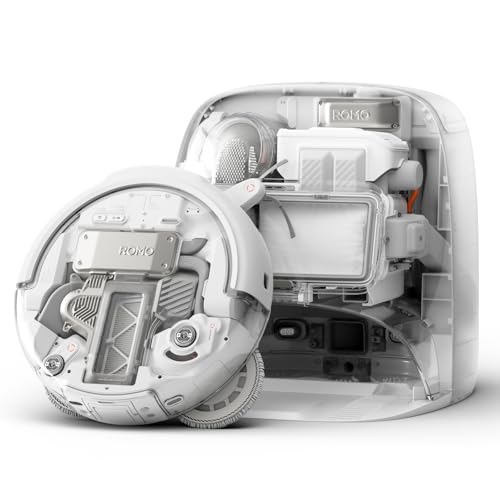
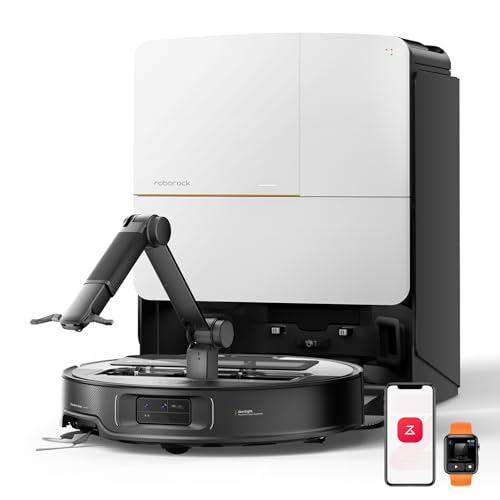
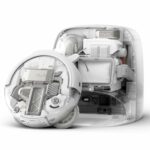
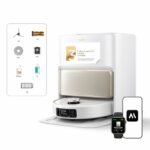
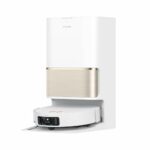
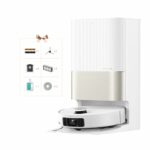
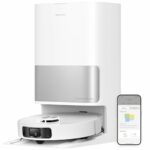
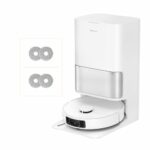
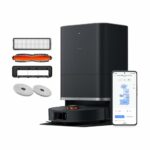
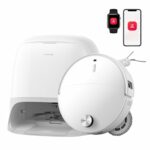
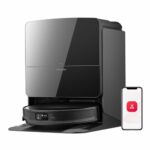
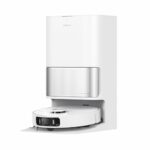
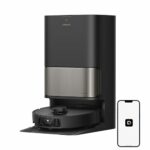
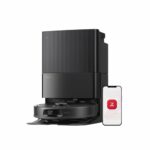
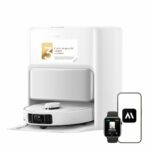
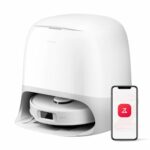
The DJI Romo P and the Roborock Saros Z70 represent two of the most advanced cleaning solutions launched in 2025. DJI, a brand recognised globally for its drone technology, has entered the robot vacuum market with the Romo P, featuring a distinctive transparent base design. Roborock, the world's leading manufacturer in this sector, counters with the Saros Z70, a model packed with innovative features including a robotic arm.
These are premium multifunctional robots designed for users seeking comprehensive automation. The DJI Romo P delivers 25,000 Pa of suction power with dual detergent tanks and UV disinfection. The Saros Z70 responds with its OmniGrip robotic arm, dual AI cameras, and an ultra-low 79.8 mm profile. Both feature rotating dual mop systems, self-cleaning bases with hot air drying, and advanced navigation systems.
Power and Vacuuming Performance
Suction power is where the DJI Romo P takes a clear lead, delivering 25,000 Pa compared to the Saros Z70's 22,000 Pa. That's a noticeable 3,000 Pa advantage, which translates to better performance on carpets and when dealing with stubborn debris embedded in textile fibres.
The brushing systems differ in their approach. The Romo P uses a divided brush design, whilst the Saros Z70 employs an anti-tangle brush. Both manufacturers have focused on reducing hair entanglement, a critical concern for households with long-haired residents or pets. The DJI features a dual side brush system with anti-tangle properties, and the Saros Z70 also incorporates anti-tangle technology in its side brush.
A significant difference emerges with the side brush capabilities. The Saros Z70 can elevate its side brush when mopping, preventing it from interfering with the wet cleaning process. The Romo P lacks this function. Both models feature extendable side brushes for improved edge cleaning, and both can raise their main brushes during mopping to avoid contaminating wet surfaces.
Mopping System
Both robots feature rotating dual mop systems with extension capabilities for better edge coverage. The mop elevation differs slightly: the Saros Z70 raises its mops between 12-22 mm, whilst the Romo P also elevates its mops, though the specific height isn't detailed. This elevation is essential when the robot transitions from hard floors to carpets or rugs.
The mopping temperature presents a meaningful distinction. The Saros Z70 mops floors with warm water, which helps dissolve grease and stubborn stains more effectively. The Romo P uses cold water for floor mopping. Both bases wash the mops with hot water during their cleaning cycles, ensuring the pads remain hygienic throughout the cleaning session.
The Saros Z70 automatically removes its mops at the base when you want vacuum-only operation. This feature isn't confirmed for the Romo P. Both robots detect dirt on their mops and on the floor itself, triggering re-cleaning passes when necessary. This intelligent approach ensures genuinely clean floors rather than simply spreading dirt around.
Navigation System
Navigation technology separates these models considerably. The DJI Romo P uses solid-state LiDAR, whilst the Roborock Saros Z70 employs its StarSight 2.0 system. The Saros Z70 features dual AI cameras compared to a single camera on the Romo P, and Roborock's system recognises 108 different obstacles. Both include front-facing 3D laser sensors and LED lighting for low-light operation.
The Saros Z70 specifically identifies pets, which can be useful for homes with animals, allowing the robot to adjust its behaviour accordingly. Both models support remote camera access, letting you check on your home whilst away. The Roborock runs on its RR Mason 12.0 algorithm with SmartPlan 2.0 intelligence, whilst the DJI's specific processing system isn't detailed in the specifications.
Battery and Autonomy
Battery capacity favours the Roborock Saros Z70 significantly, with 6,400 mAh versus the DJI Romo P's 5,000 mAh. That's a 28% larger battery, which should translate to longer cleaning sessions before requiring a recharge. The Romo P specifies 180 minutes of autonomy, giving you a solid three-hour cleaning window.
For larger homes, the Saros Z70's bigger battery becomes increasingly relevant. The robot can cover more ground in a single session, reducing the likelihood of needing mid-clean recharging cycles. Neither model specifies charging times in the available data.
Smart Features
The ability to climb obstacles differs between these robots. The DJI Romo P can overcome 20 mm obstacles, whilst the Saros Z70 handles simple steps. In practical terms, this affects how well each robot transitions between rooms with different floor levels or manages thick rugs.
The standout feature of the Saros Z70 is its OmniGrip robotic arm. This mechanical appendage can manipulate small objects, potentially moving lightweight obstacles out of the cleaning path. The Romo P doesn't include this technology. The Saros Z70 also features its own voice assistant, whilst both robots integrate with external assistants like Alexa and Google Home.
Multifunctional Cleaning Base
Both bases offer comprehensive maintenance features. They automatically empty the robot's dust bin, wash the mops with hot water, and dry them with hot air to prevent odours and bacterial growth. The DJI Romo P's base includes UV disinfection, an additional hygiene layer that the Saros Z70 lacks.
The Romo P features dual detergent tanks, potentially allowing different cleaning solutions for various floor types or cleaning tasks. The Saros Z70 has a single detergent dispenser. Both bases include advanced self-cleaning systems for their washing trays: the Romo P uses a retractable nozzle system, whilst the Saros Z70 employs version 2.0 of its self-cleaning technology.
Storage capacities are nearly identical. The Romo P has a 2.4-litre dust bag versus 2.5 litres for the Saros Z70. Both feature 4-litre clean water tanks. The dirty water capacity differs slightly: 3.2 litres for the DJI and 3 litres for the Roborock. Neither offers integrated water pipe connections, and optional kits aren't available.
Dimensions
Height is where these robots diverge most dramatically. The Roborock Saros Z70 measures just 79.8 mm tall, making it exceptionally low-profile. The DJI Romo P stands at 98 mm. That 18.2 mm difference is substantial when considering furniture clearance. The Saros Z70 will access spaces under sofas, beds, and cabinets that the Romo P simply cannot reach.
Diameter is nearly identical: 351 mm for the DJI versus 353 mm for the Roborock. Base dimensions vary more noticeably. The Romo P's base measures 453 mm wide, 440 mm tall, and 425 mm deep. The Saros Z70's base is more compact at 381 mm wide but taller at 488 mm and deeper at 475 mm. The DJI base has a broader footprint, whilst the Roborock base is narrower but extends further back and upward.
Real-World Usage Experience
For homes with low-clearance furniture, the Saros Z70's 79.8 mm profile makes it the obvious choice. It'll clean areas the Romo P physically cannot access. The DJI's greater suction power (25,000 Pa) proves more valuable in homes with thick carpets or pets that shed heavily, where maximum extraction force matters.
The Saros Z70's larger battery suits expansive properties where cleaning sessions might otherwise require mid-clean recharging. The Romo P's 180-minute autonomy still provides ample time for most homes, but the Roborock's 6,400 mAh capacity offers greater margin. The robotic arm on the Saros Z70 adds convenience if you have small items frequently left on floors—though it's worth noting this feature works best with lightweight objects.
The dual detergent tanks and UV disinfection on the Romo P appeal to users particularly concerned with hygiene. The warm water mopping on the Saros Z70 delivers better cleaning results on greasy kitchen floors. Both robots handle the complete cleaning cycle autonomously, washing and drying their own mops without manual intervention.
Conclusion: Which Should You Choose?
Choose the DJI Romo P if maximum suction power is your priority, particularly if you have thick carpets or heavy pet shedding. The 25,000 Pa performance exceeds the Roborock's capability. Select this model if UV disinfection matters to you, or if you want dual detergent tanks for different cleaning solutions. The transparent base design offers a unique aesthetic if that appeals to you.
Choose the Roborock Saros Z70 if you have furniture with limited clearance—its 79.8 mm height accesses spaces the DJI cannot reach. Pick this model for larger homes where the 6,400 mAh battery provides extended cleaning sessions. The robotic arm adds functionality not available on the Romo P. Choose the Saros Z70 if you prefer warm water mopping for better grease removal, or if obstacle recognition (108 objects) and dual AI cameras matter for your home layout. Roborock's established reputation and proven app reliability make this the safer choice for those prioritising brand trust.
The Saros Z70's ability to lift its side brush during mopping and automatically remove mops for vacuum-only operation demonstrates more refined automation. For households with pets, the Saros Z70's specific pet recognition could prove useful. Ultimately, the choice depends on whether you value raw suction power and UV disinfection (DJI) or advanced features like the robotic arm, superior navigation, and ultra-low profile (Roborock).