✨ VS Analyses · VacuumSpain comparison technology. Explanation created with AI from verified technical data.
\
Introduction\
\
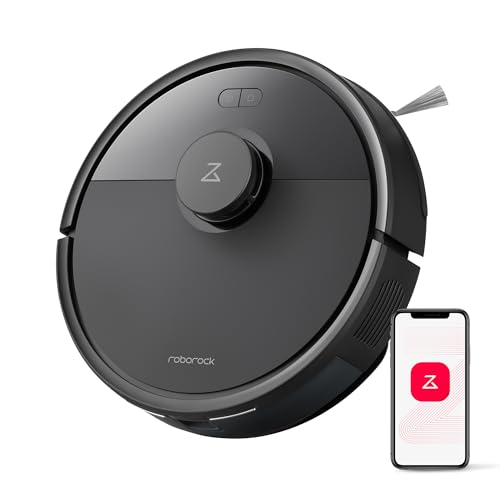
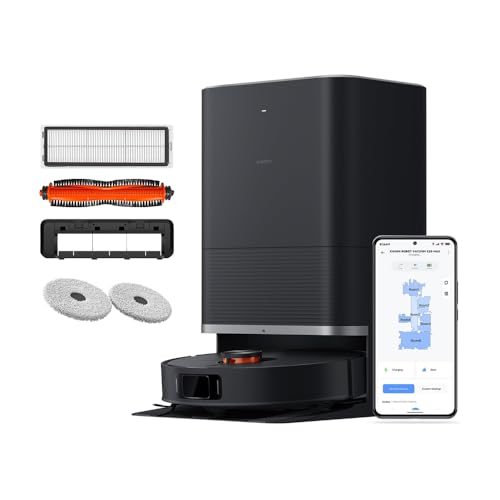
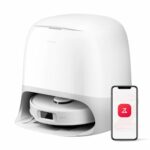
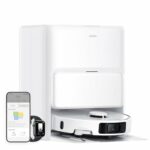
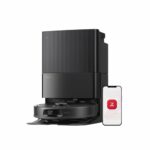
The Roborock Q7 L5 or BF and the Xiaomi X20 Max represent two different philosophies within the world of robot vacuum cleaners. The Roborock model, launched in 2025, focuses on a more compact and affordable design, dispensing with a multifunction dock to concentrate on the essentials. The Xiaomi X20 Max, introduced in 2024, positions itself as a more complete option with a station that washes and dries the mops using hot water and hot air.\
\
This robot vacuum comparison highlights differences that go beyond price and extend to the overall concept of use. The Roborock is designed for users who want autonomy without relying on a bulky dock, while the Xiaomi targets those who prioritise fully automated mopping.\
\
Suction Power and Vacuuming\
\
Both models share the same suction power of 8,000 Pa, enough for medium-pile carpets and floors with embedded dirt. However, the similarities end there.\
\
The main brush makes an important difference in homes with pets. The Roborock Q7 L5 or BF uses a conventional bristle brush, which tends to accumulate hair and requires frequent manual cleaning. The Xiaomi X20 Max features the TriCut 3.0 system, which combines bristles with integrated blades that cut tangled hair during operation. In practice, this means less maintenance and greater effectiveness in homes with animals.\
\
Neither model offers an extendable or liftable side brush, slightly limiting their ability to clean corners or move between vacuuming and mopping areas without dragging dirt.\
\
Mopping\
\
This is where we find one of the most significant differences in this robot vacuum comparison. The Roborock Q7 L5 or BF uses a static mop with no lifting capability, meaning the mop remains continuously in contact with the floor while mopping. This system works well for daily maintenance on less demanding surfaces, but it lacks versatility.\
\
The Xiaomi X20 Max completely changes the scenario with two rotating mops that extend to reach edges and lift by up to 10 mm when carpets are detected or when the robot only needs to vacuum. This lifting function prevents unwanted surfaces from getting wet and allows the robot to move between different floor types without manual intervention.\
\
The absence of a multifunction dock on the Roborock means the mops are not washed automatically. The user must remove them, wash them by hand and reinstall them. The Xiaomi, on the other hand, washes the mops with hot water during and after cleaning, then dries them with hot air. This not only saves effort but also ensures more hygienic mopping and helps prevent unpleasant odours.\
\
Neither model detects dirt on the floor to revisit problematic areas, but the difference in the mopping system is decisive for users looking for professional-looking results with minimal effort.\
\
Navigation System\
\
Both robot vacuum cleaners use a LiDAR 3.0 turret to map the home and plan efficient routes. However, the Xiaomi X20 Max adds a front-facing 3D laser sensor that improves real-time obstacle avoidance, as well as a night-vision LED that helps detect objects in low-light conditions.\
\
The Roborock Q7 L5 or BF does not include these additional systems, which may result in a greater risk of collisions with small objects or cables on the floor. In uncluttered homes this is not a major issue, but in homes with children or lots of furniture, Xiaomi's more advanced navigation provides extra peace of mind.\
\
Neither model includes a camera with remote access or specific recognition of pets or curtains, features usually reserved for higher-end ranges.\
\
Runtime and Battery\
\
The Xiaomi X20 Max battery is almost twice the size of the Roborock's: 5,200 mAh compared with 3,200 mAh. This is reflected in the Xiaomi's claimed runtime of 120 minutes, enough to cover large homes in a single session. Roborock does not specify runtime in minutes, but its lower battery capacity suggests that it is aimed at smaller areas.\
\
In practice, this means the Xiaomi robot vacuum can complete cleaning sessions in homes larger than 150 m² without needing to recharge, while the Roborock will probably need to return to the dock in spaces larger than 100 m².\
\
Smart Features\
\
Both robots can cross obstacles up to 20 mm high, such as door tracks or small height differences between rooms. This capability is identical and sufficient for most homes.\
\
The Xiaomi X20 Max includes AI-powered intelligent cleaning features that adjust parameters according to floor type or detected dirt levels. The Roborock Q7 L5 or BF does not include these capabilities, maintaining a more traditional operation based on user programming.\
\
Both models are compatible with external voice assistants such as Alexa or Google Home, allowing control via voice commands without opening the mobile app.\
\
Multifunction Cleaning Dock\
\
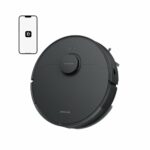
This is probably the most important difference in the entire comparison. The Roborock Q7 L5 or BF does not include a self-emptying dock or mop washing system. It uses a conventional charging dock that takes up very little space but requires the user to empty the 400 ml dustbin and clean the mops manually after each use.\
\
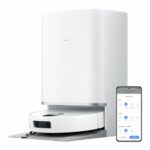
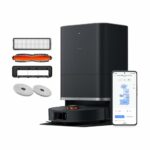
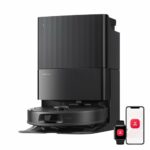
The Xiaomi X20 Max includes a complete multifunction station with a 2.5-litre dust bag, a 4-litre clean water tank and a 3.8-litre dirty water tank. It washes the mops with hot water during and after cleaning, then dries them with hot air. This drastically reduces maintenance and improves mopping quality, as the mops remain clean throughout the process.\
\
The Xiaomi dock measures 340 mm wide, 563 mm high and 420 mm deep, a considerable size that requires some planning when choosing its location. The Roborock dock, at just 160 mm wide, 101 mm high and 70 mm deep, can be placed almost anywhere.\
\
Dimensions\
\
The Roborock Q7 L5 or BF measures 99 mm in height and 325 mm in diameter, allowing it to move under low furniture and cabinets more easily. The Xiaomi X20 Max, at 97 mm high and 350 mm in diameter, is slightly lower but considerably wider.\
\
That 2 mm difference in height may seem insignificant, but with furniture that has very tight clearance the Xiaomi has the advantage. However, its larger diameter can make it more difficult to access narrow corners or gaps between furniture.\
\
The Roborock dustbin has a capacity of 400 ml, while Xiaomi does not specify its robot dustbin capacity because it is automatically emptied into the dock. The Roborock water tank holds 270 ml, enough for areas of up to 80 m² on a single fill.\
\
Real-World User Experience\
\
The best robot vacuum cleaner in 2025 depends entirely on the user profile. The Roborock Q7 L5 or BF is ideal for small or medium-sized flats where full automation is not required. Its compact size and lack of a bulky dock make it perfect for users who value space or do not mind spending a few minutes on manual maintenance.\
\
The Xiaomi X20 Max is designed for large homes with pets and users who want to forget almost entirely about cleaning maintenance. The TriCut 3.0 brush reduces hair tangles, the multifunction dock eliminates almost all maintenance and the larger battery allows it to cover extensive areas without interruptions.\
\
For users with a combination of carpets and hard floors, the Xiaomi has a clear advantage thanks to automatic mop lifting. The Roborock, with its static mop, requires manual removal if you do not want to wet the carpets.\
\
Conclusion: Which One Should You Choose?\
\
\Choose the Roborock Q7 L5 or BF if:\ you live in a flat under 100 m², value space and prefer a compact solution without a bulky dock, do not mind emptying the dustbin and washing the mops manually, are looking for a reliable Roborock robot vacuum at an affordable price, or simply do not need fully automated mopping.\
\
\Choose the Xiaomi X20 Max if:\ you have a large home of more than 120 m², live with pets and need an anti-tangle brush, want to forget about maintenance thanks to the multifunction dock with hot-water washing and hot-air drying, have a mix of carpets and hard floors and need automatic mop lifting, or are looking for a more complete Xiaomi robot vacuum with advanced navigation and longer runtime.\
\
Ultimately, the Roborock focuses on simplicity and compact dimensions, while the Xiaomi offers a premium experience with full automation. Which robot vacuum to choose depends on whether you prioritise space and simplicity or convenience and advanced features.\