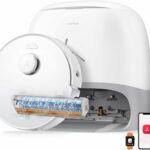
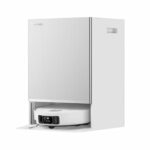
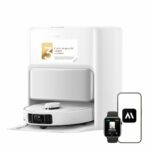
✨ VS Analyses · VacuumSpain comparison technology. Explanation created with AI from verified technical data.
Introduction
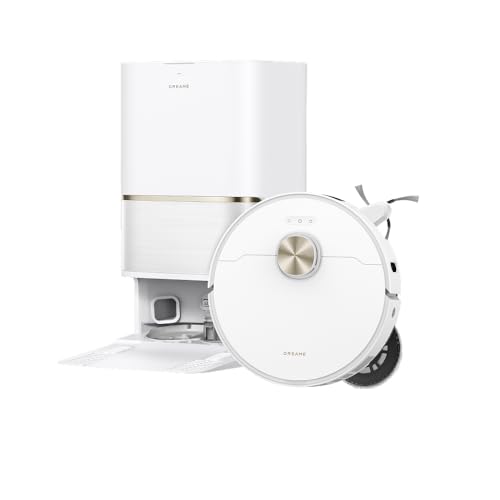
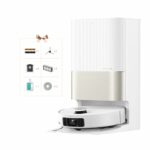
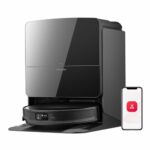
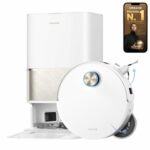
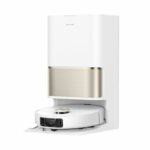
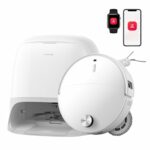
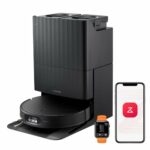
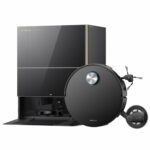
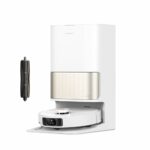
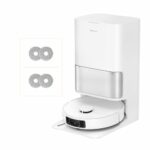
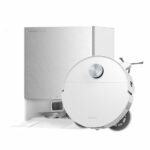
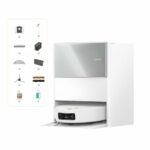
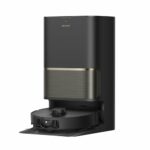
The Dreame Aqua 10 Ultra Roller and Dreame L50 Ultra AE represent two different approaches within the Chinese brand's robot vacuum range. The former, launched in 2025, uses a central roller mopping system and advanced navigation with dual RGB cameras. The latter, released in March 2026, retains the more traditional rotating mop-pad design and simplifies some artificial-intelligence components, while introducing improvements to dock self-cleaning.
Both are robot vacuums with fully featured multifunction docks, including automatic dust emptying, hot-water mop washing and drying. They are designed for users looking for greater autonomy in everyday cleaning, although the Aqua 10 Ultra Roller is more focused on intelligent dirt detection and object recognition, while the L50 Ultra AE prioritises convenience with automatic mop-pad removal.
Suction Power and Vacuuming
Suction power provides the first difference: 30,000 Pa on the Aqua 10 Ultra Roller and 28,000 Pa on the L50 Ultra AE. In practice, both figures are firmly within the current high-end segment, although the 2,000 Pa difference may be noticeable on medium-pile carpets or when vacuuming heavier debris such as sand or small gravel.
The main brush systems differ more significantly. The Aqua 10 Ultra Roller uses the dual HyperStream anti-tangle brush system, specifically designed to reduce long-hair tangles through a configuration of two rollers anchored at one end. The L50 Ultra AE uses TriCut 3.0, which combines bristles with integrated blades to cut tangled hair while operating. Both main brushes can be lifted during mopping.
The side brush also differs. Both models feature an extendable anti-tangle side brush, but only the Aqua 10 Ultra Roller lifts it while mopping. This prevents the side brush from dragging dirty water onto areas that have already been cleaned, which may improve results on delicate flooring such as parquet.
Mopping
This is where the biggest conceptual difference appears. The Aqua 10 Ultra Roller uses a central roller that applies a constant 12N of pressure to the floor, a system similar in principle to traditional roller floor cleaners. The L50 Ultra AE retains two rotating mop pads spinning at 180 RPM, a more conventional solution among mid- to high-end robot vacuums.
Both extend their mopping systems to improve edge cleaning, but they do so differently. The L50 Ultra AE features RoboSwing, a sideways movement that moves the mop towards skirting boards. The Aqua 10 Ultra Roller extends the roller directly without this swinging motion.
Mop lifting is greater on the Aqua 10 Ultra Roller at 14 mm, alongside a roller cover that protects the system when the robot is vacuuming only. The L50 Ultra AE lifts its mop pads by 10.5 mm, enough for short-pile carpets. However, the L50 Ultra AE can automatically detach the mop pads at the dock, leaving the robot ready to vacuum without carrying any moisture. The Aqua 10 Ultra Roller does not detach its mopping system, although the roller cover serves a similar purpose.
The Aqua 10 Ultra Roller detects dirt on both the mopping system and the floor, automatically adjusting mopping intensity or repeating passes when required. The L50 Ultra AE does not include this feature, meaning the user needs to set mopping intensity manually depending on the condition of the floor.
Navigation System
The Aqua 10 Ultra Roller features retractable 360° LiDAR combined with dual RGB cameras, allowing it to recognise up to 240 types of obstacles. This setup includes pet recognition, cleaning behind curtains, remote camera access and a night-vision LED. CleanGenius 3.0 and the AI Sage 15.0 Octa-core processor manage navigation and cleaning decisions in real time.
The L50 Ultra AE uses a 360° LiDAR turret and front-facing 3D laser sensor, but does not include an AI camera. This means it does not recognise pets, cannot specifically clean behind curtains and does not provide remote camera access. Navigation relies entirely on laser mapping and 3D sensor-based obstacle detection, an effective but less versatile approach.
For homes with pets or young children, this difference may be particularly relevant. The Aqua 10 Ultra Roller can identify objects such as toys, cables or pet waste and actively avoid them. The L50 Ultra AE detects obstacles based on their physical presence but does not classify them.
Battery Life and Battery
The Aqua 10 Ultra Roller has a 6,400 mAh battery with a claimed runtime of 160 minutes. The L50 Ultra AE uses a 5,200 mAh battery, with no official runtime figure specified. In practice, the larger battery capacity suggests the Aqua 10 Ultra Roller may cover larger areas without returning to the dock to recharge, which can be useful in homes larger than 150 m².
Both models support fast charging, helping reduce waiting times between cleaning cycles. The robot's internal dustbin is slightly larger on the L50 Ultra AE at 250 ml compared with 220 ml, although the difference is marginal. The Aqua 10 Ultra Roller's internal water tank is twice the size of the L50 Ultra AE's: 160 ml versus 80 ml. This may reduce water-related interruptions when mopping larger areas.
Smart Features
Threshold-crossing capability varies considerably. The Aqua 10 Ultra Roller can cross single thresholds up to 42 mm and double thresholds up to 80 mm, allowing it to access areas with substantial level changes, such as terraces or raised transitions between rooms. The L50 Ultra AE is limited to 20 mm, enough for thicker carpets or small raised edges but not for genuine steps.
The Aqua 10 Ultra Roller includes its own built-in voice assistant as well as Alexa and Google Home compatibility. The L50 Ultra AE only supports external voice assistants. Both support Matter, making integration into smart-home ecosystems easier.
Multifunction Cleaning Dock
Both docks include automatic dust emptying, mop washing with 100°C hot water and a detergent tank. Dust bag capacity is identical at 3.2 litres. Clean- and dirty-water capacities are also similar: 4 litres of clean water and 3.5 litres of dirty water on the Aqua 10 Ultra Roller, compared with 4.5 litres and 4 litres respectively on the L50 Ultra AE.
The L50 Ultra AE features third-generation washing tray self-cleaning, reducing the amount of manual dock maintenance required. The Aqua 10 Ultra Roller does not specify this feature. The L50 Ultra AE also dries its mop pads using 45°C warm air, while drying temperature for the Aqua 10 Ultra Roller is not available in the technical information.
The Aqua 10 Ultra Roller includes dual detergent tanks, which can be useful if you want to use different cleaning products for different flooring types or areas of the home. The L50 Ultra AE has a single detergent tank. Both models support an optional plumbing connection kit sold separately.
Dimensions
The robots are almost identical in height: 97.5 mm for the Aqua 10 Ultra Roller and 97 mm for the L50 Ultra AE. Both can fit underneath standard furniture with around 10 cm of clearance. Their diameter is identical at 350 mm.
The docks differ more noticeably. The Aqua 10 Ultra Roller dock measures 420 mm wide, 500 mm high and 440 mm deep. The L50 Ultra AE dock is narrower at 340 mm, but taller at 590 mm and slightly deeper at 457 mm. In tighter spaces, the L50 Ultra AE dock may fit better into narrow areas, although it requires more vertical clearance.
Real-world user experience
The Aqua 10 Ultra Roller is better suited to homes with pets thanks to its HyperStream anti-tangle brush and visual obstacle recognition. Dirt detection on both the mopping system and floor automatically adapts cleaning, reducing the need to manually reprogramme cycles. Its ability to cross thresholds up to 42 mm also expands the areas it can reach, particularly in homes with terraces or internal level changes.
The L50 Ultra AE stands out for the convenience of automatic mop-pad removal. If you frequently switch between vacuuming and mopping, this feature reduces manual intervention. Third-generation washing tray self-cleaning also reduces dock maintenance over the long term. Its rotating mop system with RoboSwing performs well along edges and skirting boards, although the Aqua 10 Ultra Roller's roller can apply greater pressure to embedded stains.
For larger homes, the Aqua 10 Ultra Roller's bigger 6,400 mAh battery and 160-minute runtime can make a difference. The L50 Ultra AE, with 5,200 mAh, may require recharging on areas larger than 120-130 m². The robot's internal water tank also matters: 160 ml on the Aqua 10 Ultra Roller compared with 80 ml on the L50 Ultra AE, potentially resulting in fewer interruptions while mopping.
Conclusion: Which one should you choose?
Choose the Dreame Aqua 10 Ultra Roller if: You have pets or young children and value visual obstacle recognition. You want automatic dirt detection to adjust mopping intensity without manual input. Your home has thresholds or level changes up to 42 mm. You prefer a roller mopping system with constant pressure. You want a larger battery and internal water tank. You also want remote camera access and advanced artificial-intelligence features.
Choose the Dreame L50 Ultra AE if: You prefer a traditional rotating mop system with RoboSwing for edges. You value automatic mop-pad removal at the dock so you can switch between vacuuming and mopping without manual intervention. Third-generation washing tray self-cleaning is important to you for reducing maintenance. You do not need pet recognition or remote camera access. You want a narrower dock that fits into tighter spaces. Your home does not have thresholds higher than 20 mm and you do not need the robot to overcome significant level changes.