Introduction
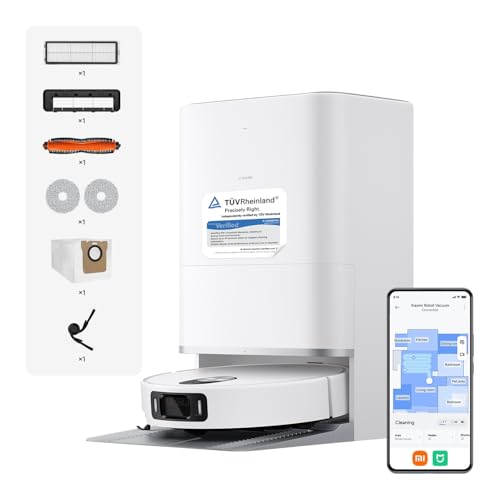
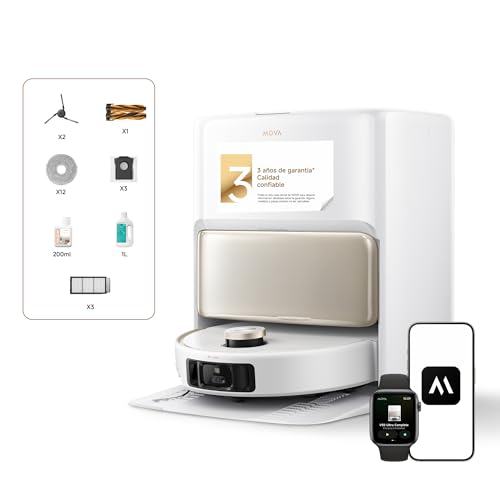
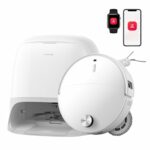
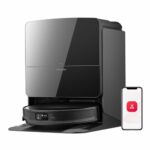
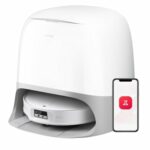
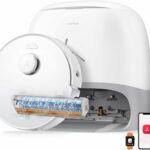
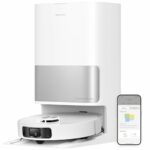
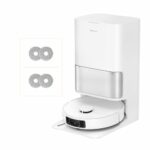
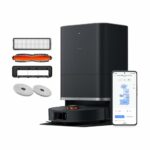
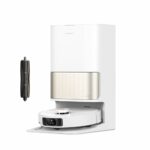
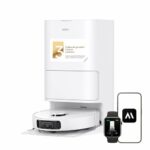
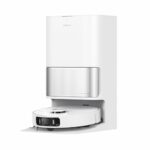
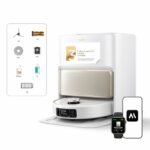
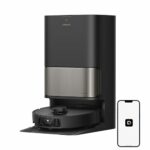
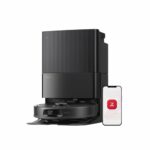
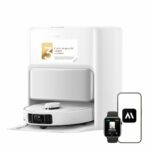
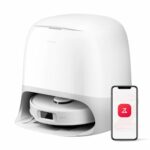
The Xiaomi Robot Vacuum 5 Pro and the Mova V50 Ultra represent two compelling options within the 2025 robot vacuum landscape. Both models arrive equipped with multifunction bases capable of washing and drying mops, alongside powerful suction systems designed to handle the demands of modern homes. The Xiaomi model positions itself as a robust all-rounder with considerable battery capacity and advanced cleaning intelligence, whilst the Mova V50 Ultra pushes the envelope further with enhanced suction power, extended autonomy, and several premium features that set it apart in the upper echelons of the market.
For households seeking comprehensive automated cleaning with minimal intervention, these robots deliver impressive specifications. The choice between them hinges on specific needs: whether you prioritise hot water mopping, pet recognition, or simply require the longest possible runtime between charges.
Differences at a Glance
- The Mova V50 Ultra delivers 24,000 Pa suction versus 20,000 Pa on the Xiaomi model
- Battery capacity differs significantly: 6,400 mAh in the Mova against 5,200 mAh in the Xiaomi
- Autonomy reaches 220 minutes with the Mova V50 Ultra compared to 140 minutes for the Xiaomi Robot Vacuum 5 Pro
- The Mova features a dual camera AI system and includes pet and curtain recognition
- Hot water floor mopping at 55°C is exclusive to the Mova V50 Ultra
- Only the Mova can automatically detach its mops at the base for vacuum-only sessions
- The Mova V50 Ultra includes UV disinfection and a dual detergent tank system
- Third-generation self-cleaning tray technology appears in the Mova base
- The Mova's side brush can elevate during mopping; the Xiaomi's cannot
- Voice assistant functionality is built into the Mova V50 Ultra
- Dust bag capacity is larger in the Mova at 3.2 litres versus 2.5 litres
- Base dimensions vary considerably between the two models
Suction Power and Brushing
Suction performance sees the Mova V50 Ultra taking a clear lead with 24,000 Pa compared to the 20,000 Pa offered by the Xiaomi Robot Vacuum 5 Pro. In practical terms, this translates to more effective deep cleaning on carpets and better pickup of embedded debris from textured surfaces.
The brush systems diverge notably. Xiaomi employs its TriCut 3.0 design, which combines bristles with integrated blades to slice through tangled hair. The Mova V50 Ultra opts for a double anti-tangle brush configuration, a HyperStream-style arrangement that minimises hair wrap by design. Both robots can elevate their main brushes during mopping to prevent cross-contamination, and both feature extendable side brushes that reach into corners more effectively.
Where they differ is in side brush elevation. The Mova V50 Ultra can lift its side brush when mopping, preventing it from flicking dirty water onto cleaned areas. The Xiaomi model lacks this refinement. For homes with multiple floor types or frequent mopping routines, this distinction matters more than it might initially appear.
Mopping Performance
Both robots deploy dual rotating mops that extend to reach edges and skirting boards. The Xiaomi Robot Vacuum 5 Pro lifts its mops 15 mm when crossing carpets or returning to base, whilst the Mova V50 Ultra manages 10.5 mm of elevation. Despite the smaller lift height, the Mova compensates with its ability to automatically detach mops entirely at the base, allowing pure vacuuming sessions without any mopping hardware dragging behind.
The standout difference emerges in water temperature. The Mova V50 Ultra heats water to 55°C for floor mopping, a feature absent from the Xiaomi model which relies on cold water. Hot water proves significantly more effective at dissolving grease and stubborn residues, particularly in kitchens. This alone can transform mopping results from adequate to genuinely impressive.
Both systems detect dirt on mops and floors, triggering re-washing or additional passes as needed. The Mova's mop extension includes a swinging motion that helps reach slightly under furniture edges, matching the Xiaomi's approach. Base washing occurs with hot water in both cases, and both dry mops using heated air to prevent odours and bacterial growth.
Navigation System
Retractable LiDAR forms the foundation of navigation for both robots, allowing precise room mapping and efficient path planning. Each model integrates front-facing 3D laser sensors for obstacle detection and can recognise up to 200 different object types.
The Mova V50 Ultra distinguishes itself with dual AI cameras rather than a single unit. This dual-camera setup enhances depth perception and object recognition accuracy. Crucially, the Mova specifically identifies pets and curtains, adjusting its behaviour accordingly—gentler around animals, more cautious near hanging fabrics. The Xiaomi Robot Vacuum 5 Pro lacks these specific recognition capabilities.
Both robots offer remote camera access via their respective apps and include LED lighting for low-light navigation. The Mova's CleanGenius AI system provides an additional layer of intelligent cleaning adaptation, though the Xiaomi model also features AI-driven spot recognition and cleaning adjustments.
Battery and Autonomy
Battery specifications reveal a substantial gap. The Mova V50 Ultra houses a 6,400 mAh cell delivering 220 minutes of runtime, whilst the Xiaomi Robot Vacuum 5 Pro contains a 5,200 mAh battery good for 140 minutes. This 80-minute difference becomes critical in larger properties where a single charge needs to cover extensive floor areas.
For homes exceeding 150 square metres, the Mova's extended autonomy reduces the likelihood of mid-clean returns to base for recharging. The Xiaomi model remains perfectly adequate for typical two or three-bedroom properties but may require multiple charging cycles in sprawling open-plan layouts or multi-storey homes.
Smart Features
Obstacle climbing capabilities differ slightly. The Xiaomi Robot Vacuum 5 Pro manages 20 mm steps, whilst the Mova V50 Ultra handles similar single-step obstacles. In practice, both navigate typical door thresholds and low-pile carpet transitions without difficulty.
The Mova V50 Ultra incorporates its own voice assistant, allowing direct voice commands without relying on external ecosystems. Both robots integrate with Alexa and Google Home for smart home routines, but the Mova's onboard assistant offers an additional control layer that some users may find more responsive or convenient.
Multifunction Base
Both bases handle automatic dust emptying, mop washing with hot water, and mop drying with heated air. The Mova V50 Ultra advances further with third-generation self-cleaning technology for its washing tray, UV disinfection to sanitise components, and a dual detergent tank system that allows separate cleaning solutions for different floor types or cleaning tasks.
The Xiaomi base lacks UV disinfection and includes no detergent dispenser at all, relying solely on water for mop cleaning. For households prioritising hygiene or dealing with stubborn floor soiling, the Mova's detergent system and UV treatment provide measurable advantages.
Dust bag capacity sits at 3.2 litres in the Mova base versus 2.5 litres in the Xiaomi unit. Clean water tanks match at 4 litres, whilst dirty water capacity slightly favours the Xiaomi at 3.8 litres against 3.5 litres. Neither base offers integrated plumbing connections, though this remains a rarity outside ultra-premium models.
Dimensions
The robots themselves measure identically at 350 mm diameter. Height differs marginally: 88 mm for the Xiaomi Robot Vacuum 5 Pro and 89.5 mm for the Mova V50 Ultra. Both slip beneath most furniture with standard clearance, though the Xiaomi's fractionally lower profile might occasionally prove useful under particularly low-slung sofas or bed frames.
Base dimensions diverge more noticeably. The Xiaomi base stands taller at 572 mm versus 470 mm for the Mova, but the Mova base is wider at 420 mm compared to 360 mm. Depth measurements are similar: 470 mm for the Xiaomi and 458 mm for the Mova. The Xiaomi base occupies a narrower but taller footprint, which may suit alcoves or tight spaces better, whilst the Mova's lower, broader stance fits more easily under wall-mounted units or shelving.
Real-World Usage
The Mova V50 Ultra suits larger homes where extended runtime proves essential. Its 220-minute autonomy handles expansive floor plans without interruption, whilst hot water mopping delivers superior results on kitchen tiles and high-traffic areas. The dual detergent system and UV disinfection appeal to households with young children, pets, or heightened hygiene concerns. Pet owners benefit specifically from the dedicated animal recognition, which adjusts cleaning behaviour around furry companions.
The Xiaomi Robot Vacuum 5 Pro serves medium-sized homes efficiently. Its 140-minute runtime covers typical three-bedroom properties comfortably, and the TriCut 3.0 brush manages pet hair effectively despite lacking specific pet recognition software. The more compact base fits neatly into smaller utility spaces or kitchen corners. For users prioritising straightforward, reliable cleaning without needing every premium feature, this model delivers solid performance.
Both robots handle mixed flooring well, with brush and mop elevation preventing carpet soaking or cross-contamination. The Mova's side brush elevation during mopping refines the experience further, particularly on hard floors where water flicking can otherwise create streaks.
Conclusion: Which Should You Choose?
Choose the Xiaomi Robot Vacuum 5 Pro if: you live in a property up to 150 square metres, prefer a narrower base footprint, and don't require hot water mopping or detergent dispensing. It offers comprehensive automated cleaning at a more accessible price point, with effective hair management and solid all-round performance. The slightly lower profile may help in homes with very low furniture clearances.
Choose the Mova V50 Ultra if: you need maximum autonomy for larger homes, want the most thorough mopping results with hot water and detergent, or live with pets and value specific animal recognition. The dual camera system, UV disinfection, third-generation base cleaning, and voice assistant functionality position this as the more feature-complete option. It's ideal for users seeking minimal maintenance and maximum automation, particularly in households where hygiene and deep cleaning matter most.