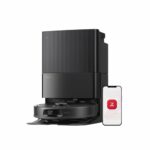
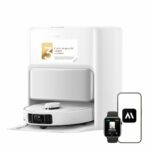
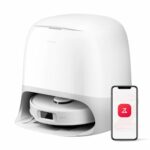
Introduction
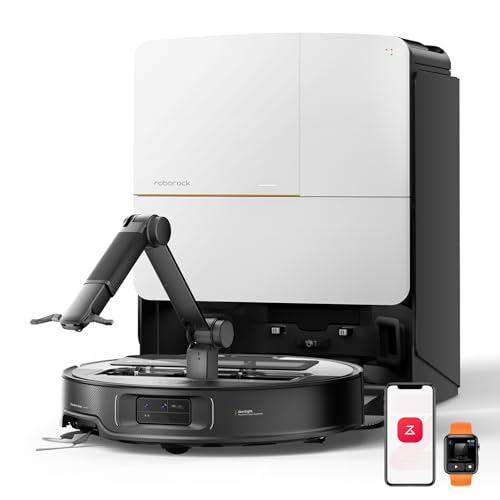
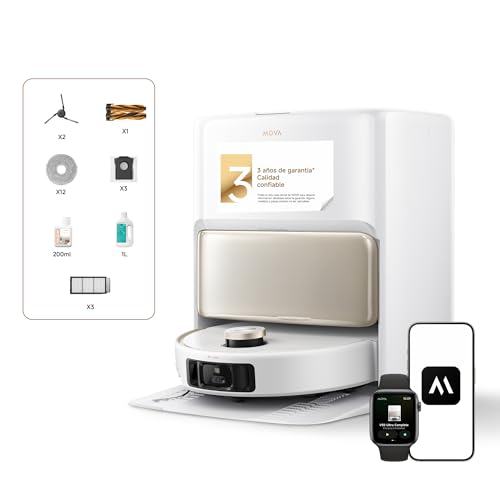
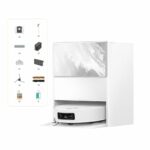
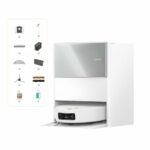
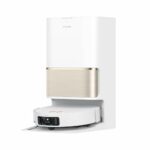
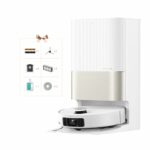
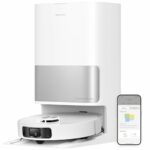
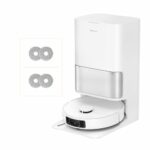
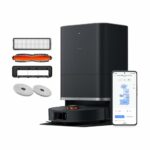
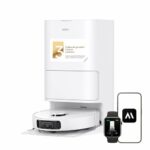
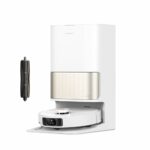
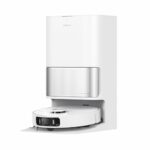
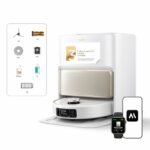
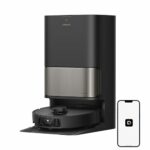
The Roborock Saros Z70 and Mova V50 Ultra represent two flagship models launched in 2025, both designed to deliver comprehensive cleaning with advanced mopping and vacuuming capabilities. These aren't entry-level machines—they're built for users who want minimal intervention and maximum performance across larger homes with varied flooring types.
The Saros Z70 comes from Roborock, widely regarded as the world's leading brand in robot vacuum technology, known for reliability and refined software. Mova, meanwhile, is a sub-brand of Dreame, offering competitive specs often at more accessible price points. Both models feature multifunctional bases that handle auto-emptying, mop washing, and drying, making them suitable for households seeking a truly hands-off cleaning experience.
Power and Suction
Suction power sits at 24,000 Pa on the Mova V50 Ultra, giving it a slight edge over the Saros Z70's 22,000 Pa. In practice, this difference might be noticeable on thick carpets or when dealing with embedded pet hair, though both figures are more than adequate for most household debris.
The brushing systems differ in design philosophy. The Saros Z70 uses an anti-tangle main brush, while the Mova V50 Ultra employs a dual anti-tangle brush setup. Both configurations aim to minimise hair wrapping, which can be a persistent issue in homes with long-haired occupants or pets. The dual brush approach on the Mova may offer slightly better coverage in a single pass.
Both models lift their main brushes when mopping and feature side brushes that extend to reach corners and also elevate during wet cleaning. The side brushes on each unit are anti-tangle as well, reducing maintenance frequency. These shared features mean neither model will drag dirty brushes across freshly mopped floors or leave corners untouched.
Mopping
Each robot uses dual rotating mops, but the Mova V50 Ultra adds a movement mechanism to its mop extension, potentially improving edge coverage along skirting boards. The Saros Z70 also extends its mops but without the additional articulation.
Mop lift is where the Saros Z70 pulls ahead significantly. It raises its pads between 12 mm and 22 mm, allowing it to climb onto thicker rugs or avoid dragging wet mops onto carpets. The Mova V50 Ultra lifts to 10.5 mm, which handles low-pile rugs but may struggle with taller transitions.
Water temperature during floor mopping differs notably. The Mova V50 Ultra heats water to 55°C for mopping, which can help dissolve grease and sticky residues more effectively. The Saros Z70 uses warm water but doesn't specify the temperature. For kitchens or homes with young children where spills are frequent, hotter water can make a tangible difference.
Both models wash their mops with hot water at the base and dry them using heated air, preventing odours and bacterial growth. They also detect dirt on the mops and the floor, triggering rewashes or additional passes as needed. Each can automatically detach mops at the base when switching to vacuum-only mode, streamlining operation across mixed floor types.
Navigation System
The Saros Z70 uses Roborock's StarSight 2.0 navigation, whilst the Mova V50 Ultra relies on a retractable LiDAR system. Both incorporate dual AI cameras and 3D laser sensors at the front, enabling precise obstacle detection and room mapping.
Object recognition is more extensive on the Mova V50 Ultra, which identifies 200 different obstacles compared to 108 on the Saros Z70. This broader database can improve real-world navigation in cluttered spaces, reducing the chance of getting stuck on unfamiliar items like charging cables or toys.
The Mova V50 Ultra also detects curtains, adjusting its cleaning behaviour to avoid tangling. The Saros Z70 lacks this specific feature, which could matter in homes with floor-length drapes. Both models recognise pets and allow remote camera access, useful for checking in on animals or monitoring cleaning progress from another location. LED lighting assists night-time navigation on both units.
AI-driven cleaning strategies differ slightly: the Saros Z70 uses SmartPlan 2.0, while the Mova V50 Ultra employs CleanGenius AI. Both systems analyse room layouts and adjust suction or mopping intensity based on detected dirt levels, though the underlying algorithms and processors vary—the Saros Z70 runs on RR Mason 12.0, whilst Mova's CPU details aren't specified.
Battery and Autonomy
Battery capacity is identical at 6,400 mAh for both models. The Mova V50 Ultra provides 220 minutes of runtime, though the Saros Z70's autonomy figure isn't listed. Given the similar battery size, expect comparable endurance, likely sufficient for homes up to 250–300 m² on a single charge.
Neither model specifies charging time, but with batteries of this capacity, a full recharge typically takes three to four hours. Auto-resume functionality means they'll return to the base mid-clean if needed, then pick up where they left off once recharged.
Smart Features
Both robots handle simple obstacles like low thresholds, but the Saros Z70 includes an OmniGrip robotic arm—a mechanical appendage that can manipulate small objects or assist with specific tasks. The Mova V50 Ultra doesn't feature this hardware, which may limit its versatility in homes where moving lightweight items (like pet bowls or slippers) is desirable.
Each model includes its own voice assistant alongside compatibility with Alexa and Google Home. This allows for hands-free control and scheduling, useful when you're carrying shopping or simply want to start a clean without reaching for your phone.
Multifunctional Base
Both bases auto-empty dust, wash mops with hot water, and dry them using heated air. The Mova V50 Ultra adds UV disinfection to its base, sanitising components after cleaning—a feature absent on the Saros Z70. For households particularly concerned about hygiene, this extra layer can provide peace of mind.
Self-cleaning of the wash tray is present on both, though the Saros Z70 uses version 2.0 and the Mova V50 Ultra employs third-generation technology. In practice, newer iterations typically mean more thorough rinsing and reduced manual intervention.
Detergent handling differs: the Saros Z70 has a single detergent reservoir, whilst the Mova V50 Ultra features dual tanks, potentially allowing separate solutions for different floor types or cleaning intensities. Clean water tanks hold 4 L on both, but the Mova V50 Ultra's dirty water tank is slightly larger at 3.5 L versus 3 L, meaning fewer trips to empty it during extended cleans.
The Mova V50 Ultra also has a bigger dust bag capacity—3.2 L compared to 2.5 L—which translates to longer intervals between bag changes, especially helpful in homes with shedding pets. Neither model supports plumbed water connections, either integrated or via an optional kit.
Dimensions
The Saros Z70 measures 79.8 mm in height, making it noticeably slimmer than the Mova V50 Ultra's 89.5 mm. This 9.7 mm difference can be critical for navigating under low-clearance furniture like sofas or bed frames. If your home has tight spaces, the Saros Z70's profile gives it a clear advantage.
Diameter is nearly identical—353 mm for the Saros Z70 and 350 mm for the Mova V50 Ultra—so turning radius and manoeuvrability in narrow hallways will be comparable.
Base dimensions vary more. The Saros Z70's station is 381 mm wide, 488 mm tall, and 475 mm deep. The Mova V50 Ultra's base is wider at 420 mm, slightly shorter at 470 mm, and less deep at 458 mm. Depending on your available floor space, the Mova's footprint may be easier to accommodate in shallower alcoves, whilst the Saros Z70's narrower width suits tighter corners.
Real-World Use
For larger homes, the Mova V50 Ultra's bigger dust bag and dirty water tank reduce maintenance frequency, which can be a practical benefit during busy weeks. Its higher suction and extensive obstacle database also suit cluttered environments or households with multiple pets.
The Saros Z70's slimmer profile makes it ideal if you have low furniture, and the greater mop lift handles thicker rugs more gracefully. The robotic arm adds a layer of versatility not found on the Mova, potentially useful for moving lightweight obstacles autonomously.
Homes prioritising hygiene may lean towards the Mova V50 Ultra for its UV disinfection and hotter mopping water. Conversely, if you value brand reputation and software refinement, Roborock's track record and the Saros Z70's advanced SmartPlan 2.0 offer reassurance.
Both models handle mixed flooring well, with automated mop detachment and brush lifting ensuring carpets stay dry and hard floors get thorough mopping. Pet owners will appreciate the anti-tangle brushes and strong suction on either unit, though the Mova's dual brush system may edge ahead for heavy shedders.
Conclusion: Which to Choose?
Choose the Roborock Saros Z70 if: you have low-clearance furniture requiring a slimmer robot, want the versatility of a robotic arm, or prefer greater mop lift for thicker rugs. It's also the natural pick if you value Roborock's established reputation and refined app experience, or if a narrower base fits your space better.
Choose the Mova V50 Ultra if: you need the highest suction power, want UV disinfection and hotter mopping water for enhanced hygiene, or prefer dual detergent tanks for flexible cleaning. Its larger dust bag and dirty water capacity suit bigger homes or those with multiple pets, and the broader obstacle recognition handles cluttered environments more confidently. It's also a strong contender if you're looking for flagship features at a potentially more competitive price point.