

Introduction
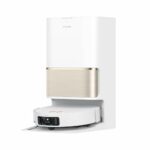
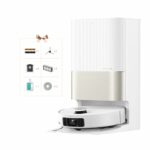
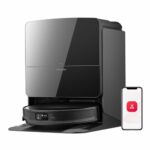
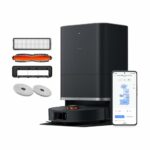
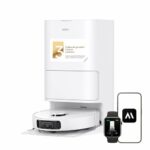
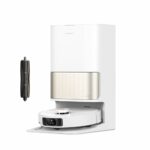
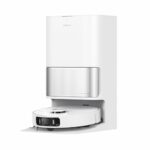
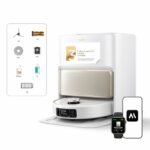
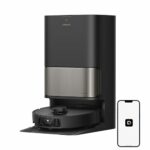
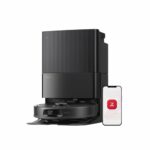
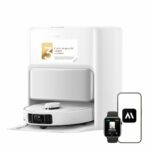
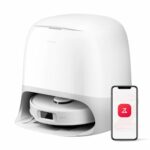
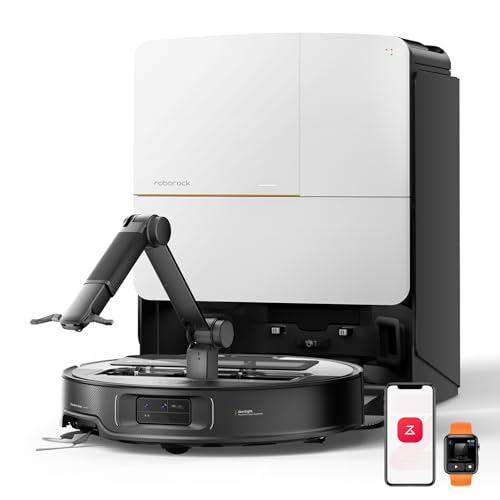
The Dreame X50 Ultra Blanca and the Roborock Saros Z70 represent the cutting edge of what's available in 2025. These aren't entry-level machines; they're flagship models packed with advanced cleaning technology, multifunctional bases, and AI-driven navigation systems. The X50 Ultra comes from Dreame's latest generation, whilst the Saros Z70 showcases Roborock's continued dominance in the premium segment.
What sets these apart from mid-range alternatives is their comprehensive approach to floor maintenance. Both handle vacuuming and mopping simultaneously, return to their bases to clean their own mops during sessions, and feature intelligent obstacle avoidance powered by dual cameras and laser sensors. They're designed for households that want minimal intervention—larger homes, busy families, pet owners who need consistent cleaning without constant supervision.
The differences between them reveal distinct design philosophies. Dreame has focused on raw suction capacity, obstacle recognition breadth, and UV disinfection. Roborock counters with a robotic arm, superior mop lift height, and warm water mopping. Understanding these distinctions matters when deciding which suits your specific cleaning challenges.
Differences at a Glance
- Suction power: 20,000 Pa (Dreame) vs 22,000 Pa (Roborock)
- Main brush type: Dual HyperStream design vs anti-tangle DuoDivide
- Mop lift: 10.5 mm vs 12-22 mm
- Floor mopping temperature: cold water vs warm water
- UV disinfection: included on Dreame, absent on Roborock
- Robotic arm: exclusive to Saros Z70
- Obstacle recognition: 200 objects vs 108
- Curtain detection: only on X50 Ultra
- Robot height: 89 mm vs 79.8 mm
- Dust bag capacity: 3.2 L vs 2.5 L
- Clean water tank: 4.5 L vs 4 L
- Plumbing kit availability: optional purchase for Dreame, not available for Roborock
Suction and Brushing Performance
The Roborock Saros Z70 edges ahead with 22,000 Pa suction compared to the Dreame X50 Ultra's 20,000 Pa. In practical terms, this translates to marginally better performance on deep-pile carpets or when extracting embedded debris from textured surfaces. The difference isn't dramatic, but it exists.
Where things get more interesting is the main brush design. Dreame employs its Dual HyperStream system—two independently anchored brushes that actively prevent hair from wrapping around the roller. Roborock uses its DuoDivide anti-tangle brush, which channels hair toward the central suction point. Both approaches work well for pet owners, though the mechanisms differ fundamentally.
Both models lift their main brushes when mopping and feature extendable, liftable side brushes that retract when cleaning wet floors. The side brushes also incorporate anti-tangle technology. For edge cleaning, both extend their side brushes to sweep corners more effectively—a feature that makes a noticeable difference along skirting boards and furniture edges.
Mopping Systems
Both use dual rotating mops, but the execution varies. The Dreame X50 Ultra extends its mops and incorporates RoboSwing—a subtle swaying motion that helps the mop reach slightly under furniture overhangs. The Saros Z70 also extends its mops for edge coverage but doesn't include the swaying function.
Mop lift height matters when transitioning from hard floors to carpets. The X50 Ultra raises its mops 10.5 mm, whilst the Saros Z70 achieves between 12-22 mm depending on the surface. That extra clearance on the Roborock means better protection for medium-pile rugs and less risk of dampening carpet edges during mixed-floor cleaning.
Temperature plays a role here. The Dreame mops with cold water, whereas the Roborock uses warm water for floor mopping. Warm water cuts through grease and sticky residues more effectively—particularly useful in kitchens or high-traffic areas. Both wash their mops with hot water at the base and dry them using heated air, which prevents odours and bacterial growth.
Dirt detection works similarly on both. Sensors identify heavily soiled areas and trigger additional mopping passes or return to the base for mop washing mid-session. Both can automatically remove their mops at the base when you want vacuuming only, which saves unnecessary wear on the mopping pads.
Navigation and Intelligence
The Dreame X50 Ultra uses a retractable LiDAR system paired with dual AI cameras and 3D laser sensors. It recognises 200 different obstacle types, including specific detection for curtains—useful if you have floor-length drapes that could entangle a robot. The Roborock Saros Z70 employs StarSight 2.0 navigation with dual cameras and frontal 3D sensors, recognising 108 obstacles. Both identify pets and adjust cleaning patterns accordingly.
Processing power differs: Dreame runs AI Sage 13.0 Octa-core, whilst Roborock uses RR Mason 12.0. The X50 Ultra's CleanGenius AI competes with Roborock's SmartPlan 2.0 for intelligent route planning and spot recognition. In practice, both navigate complex layouts reliably, though Dreame's broader obstacle library may offer slightly better avoidance in cluttered environments.
Both provide remote camera access via their apps and include LED lighting for low-light navigation. Voice assistants are built into each model, alongside compatibility with Alexa and Google Home.
Battery and Coverage
Identical 6,400 mAh batteries power both robots. Dreame specifies 180 minutes of runtime, which should comfortably handle larger homes in a single session. Roborock doesn't publish a specific runtime figure, though the battery capacity suggests comparable performance.
The capacity to recharge mid-clean and resume means battery life rarely becomes a limiting factor for either model, even in properties exceeding 200 square metres.
Smart Features
Both robots climb single-level obstacles—useful for transitioning between rooms with slight threshold differences or mounting low-profile door bars.
The standout difference: the Roborock Saros Z70 includes the OmniGrip robotic arm. This mechanical appendage can manipulate small objects, potentially moving lightweight items out of the cleaning path. The Dreame X50 Ultra doesn't have this feature. Whether the arm proves genuinely useful or remains a novelty depends on your household layout and clutter levels, but it's a distinctive capability unique to the Saros Z70.
Multifunction Base
Both bases auto-empty dust, wash mops with hot water, and dry them using heated air. The Dreame features third-generation self-cleaning for its washing tray, whilst Roborock uses a 2.0 system. Both include detergent dispensers for automated cleaning solution dosing.
The Dreame X50 Ultra incorporates UV disinfection within the base—an additional hygiene layer that sanitises components after cleaning. The Saros Z70 doesn't include UV.
Storage capacity favours Dreame: a 3.2 L dust bag versus 2.5 L, 4.5 L clean water tank versus 4 L, and 4 L dirty water capacity versus 3 L. These differences mean less frequent maintenance—particularly relevant for larger homes or multi-storey properties where you'd prefer longer intervals between emptying and refilling.
Dreame offers an optional plumbing connection kit (purchased separately) that allows direct water supply and drainage. Roborock doesn't currently provide this option. Whilst not essential, permanent plumbing integration appeals to those wanting truly hands-off operation over extended periods.
Physical Dimensions
The Roborock Saros Z70 measures 79.8 mm tall—nearly a centimetre lower than the Dreame X50 Ultra's 89 mm. That difference determines whether the robot fits beneath low-clearance furniture like certain sofas, bed frames, or kitchen cabinets. If you have furniture hovering around 8-9 cm clearance, the Roborock slips underneath whilst the Dreame might not.
Diameter is nearly identical: 350 mm for Dreame, 353 mm for Roborock. Neither has a meaningful advantage in tight spaces.
Base dimensions vary more noticeably. The Dreame base stands taller at 590.5 mm versus 488 mm, though it's narrower at 340 mm compared to 381 mm. The Roborock base has a smaller footprint overall but requires slightly more width. Consider where you'll position the base—taller homes with utility cupboards might prefer Dreame's vertical design, whilst those with limited height but available floor space may favour Roborock's lower profile.
Real-World Performance
For homes with pets, both handle hair effectively thanks to their anti-tangle brush systems. The Roborock's slightly higher suction gives it a marginal edge on carpets where pet hair embeds deeply, but the difference won't be dramatic in daily use.
Larger properties benefit from the Dreame's bigger consumable capacities—less time spent maintaining the base. The 180-minute battery specification also provides reassurance for extensive floor plans, though both should manage most homes without issue.
Mixed flooring with medium-pile rugs suits the Roborock better due to its superior mop lift. If you frequently transition between hard floors and thicker carpets, that 12-22 mm clearance reduces the risk of damp transfer.
Kitchens and areas prone to greasy spills favour the Roborock's warm water mopping. The temperature difference genuinely affects cleaning efficacy on stubborn residues.
Low furniture environments clearly suit the Roborock's 79.8 mm height. Measure your furniture clearances before committing if this matters to your layout.
The robotic arm on the Saros Z70 adds a unique dimension for households with occasional small obstacles—shoes, pet toys, charging cables. Whether this feature justifies a purchasing decision depends on how much clutter typically occupies your floors.
Conclusion: Which to Choose?
Choose the Dreame X50 Ultra Blanca if: You want maximum consumable capacity for extended hands-off operation, UV disinfection appeals for hygiene reasons, curtain detection matters in your home, or you value the option to add plumbing connectivity later. It suits larger homes where less frequent base maintenance is desirable, and where furniture clearance isn't restrictive.
Choose the Roborock Saros Z70 if: You need the lowest possible profile to clean under furniture, prefer warm water mopping for better grease removal, want the robotic arm feature, or require maximum mop lift for thicker carpets. It's ideal for mixed flooring environments and homes where the base footprint needs to be compact vertically.
Both represent excellent choices in the premium robot vacuum category for 2025. The decision ultimately hinges on whether Dreame's capacity advantages and UV feature outweigh Roborock's height advantage, robotic arm, and warm mopping capability for your specific household needs.