Introduction
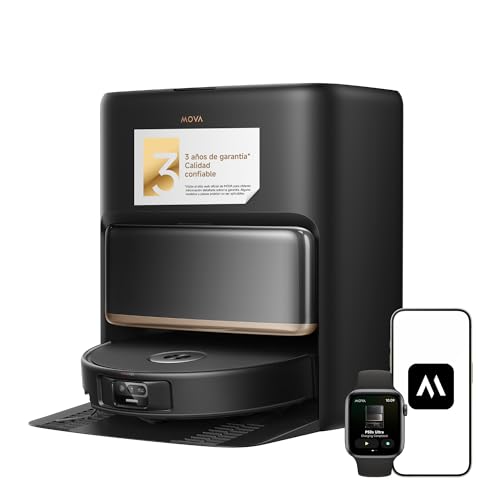
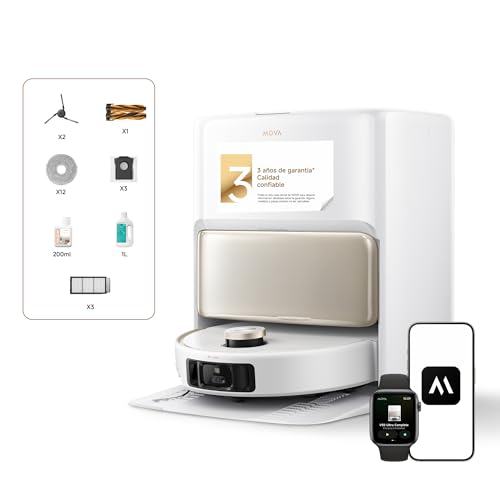
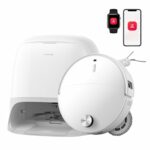
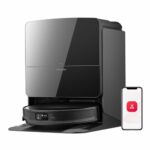
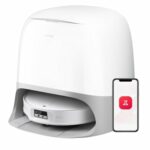
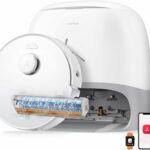
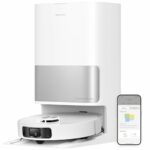
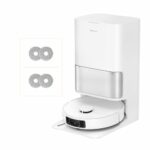
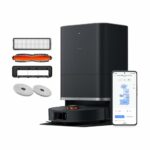
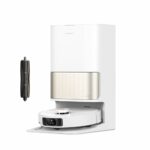
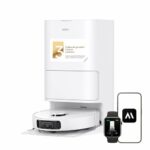
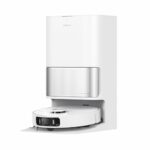
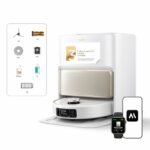
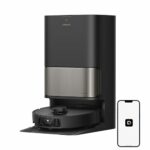
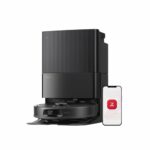
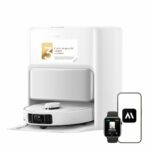
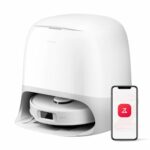
When looking at the latest releases from Mova for 2025, the P50s Ultra and V50 Ultra represent two compelling options in the premium robot vacuum segment. Both models share the same powerful 24,000 Pa suction and feature advanced dual rotating mops with extension capabilities, placing them firmly in the high-end category for households seeking comprehensive floor cleaning automation.
These aren't entry-level devices. The multifunctional base stations, dual AI cameras, and sophisticated obstacle recognition systems make them suitable for users who want minimal intervention in their cleaning routine. The differences between them, whilst subtle in some areas, reveal distinct approaches to navigation and floor mopping that could influence your choice depending on your home layout and cleaning priorities.
Key Differences at a Glance
- The P50s Ultra uses FlashPulse navigation, whilst the V50 Ultra features retractable LiDAR
- V50 Ultra heats water to 55°C for mopping floors; P50s Ultra uses cold water
- V50 Ultra includes dual detergent tanks versus single tank in P50s Ultra
- P50s Ultra stands 82.5mm tall; V50 Ultra measures 89.5mm in height
- V50 Ultra specifies 220 minutes of autonomy; P50s Ultra data not available
Power and Suction
Both models deliver identical 24,000 Pa suction power, which places them among the more capable options when dealing with embedded dirt in carpets or stubborn debris on hard floors. This level of performance handles most household cleaning scenarios without difficulty.
The dual anti-tangle brush system appears on both robots. This HyperStream design from Mova reduces hair wrapping significantly compared to traditional bristle rollers, making maintenance less frequent for homes with long-haired residents or pets. The brushes lift during mopping mode to prevent cross-contamination between wet and dry cleaning.
Side brush functionality is comprehensive on both. The extensible and elevating side brush reaches into corners more effectively than fixed designs, then lifts when mopping to avoid flinging water droplets. The anti-tangle feature extends to the side brush as well, maintaining consistent edge cleaning without manual intervention to remove wrapped fibres.
Mopping Performance
Here we encounter the first significant divergence. Whilst both robots use dual rotating mops that extend outward for edge cleaning and incorporate the Roboswing movement to reach under furniture lips, the V50 Ultra heats water to 55°C for floor mopping. The P50s Ultra relies on cold water.
Heated mopping makes a tangible difference with greasy residues or sticky spills, particularly in kitchens. Cold water handles general dust and light soiling adequately, but struggles with substances that require thermal energy to break down effectively.
Both systems elevate mops 10.5mm when crossing carpets or rugs, sufficient clearance to prevent moisture transfer in most situations. The automatic mop removal at the base station allows pure vacuuming sessions without manual intervention, useful for homes with extensive carpeted areas.
Dirt detection operates at two levels: sensors monitor mop cleanliness and floor soiling. When the system identifies stubborn marks, it increases passes or adjusts cleaning intensity automatically. This adaptive approach reduces the need for manual spot cleaning after the robot completes its cycle.
Navigation System
The navigation divergence represents perhaps the most fundamental technical difference. The P50s Ultra employs FlashPulse technology, whilst the V50 Ultra uses retractable LiDAR. Both approaches map environments accurately, but LiDAR traditionally excels in low-light conditions and provides slightly more precise distance measurements for furniture placement.
Retractable LiDAR on the V50 Ultra means the sensor tower lowers when not actively mapping, potentially allowing the robot to fit under furniture where the P50s Ultra cannot reach. Given the P50s Ultra already sits 7mm lower at 82.5mm versus 89.5mm, this creates an interesting trade-off worth considering if you have low-clearance sofas or cabinets.
Both models incorporate dual AI cameras and frontal 3D laser sensors, recognising up to 200 different obstacle types including pets and curtains. The LED illumination enables vision in darkness, and remote camera access through the app allows checking on pets or monitoring rooms when away from home.
Battery and Autonomy
Identical 6,400 mAh batteries power both robots. The V50 Ultra specifies 220 minutes of runtime, which translates to substantial coverage for most homes. The P50s Ultra likely achieves similar performance given the identical battery capacity and suction power, though specific figures aren't provided in available specifications.
In practice, autonomy rarely limits cleaning sessions unless you're dealing with properties exceeding 200 square metres. Both robots return to base automatically when battery runs low, recharge, then resume where they left off until the job completes.
Smart Features
Obstacle climbing capability reaches simple thresholds on both models, handling standard door strips and minor level changes without assistance. Neither incorporates a robotic arm for object manipulation, keeping the focus on core cleaning rather than experimental features.
Voice assistant functionality includes both proprietary systems and compatibility with external platforms like Alexa and Google Home. This allows control through existing smart home ecosystems or direct voice commands to the robot itself.
The CleanGenius AI system operates identically on both, learning room layouts, traffic patterns, and soiling levels to optimise cleaning schedules and intensity. The stain recognition adjusts behaviour when encountering concentrated dirt, increasing dwell time or switching to intensive scrubbing patterns.
Multifunctional Base Station
Base functionality remains largely consistent between models. Both auto-empty dust into 3.2-litre bags, wash mops with heated water, and dry them using warm air to prevent bacterial growth and odours. The third-generation self-cleaning bandeja system maintains hygiene without manual scrubbing.
The distinction appears in detergent storage. The V50 Ultra provides dual tanks, allowing separate cleaning solutions for different floor types or cleaning intensities. The P50s Ultra includes a single detergent reservoir. For homes with varied flooring—perhaps sealed wood in living areas and tiles in bathrooms—the dual-tank system offers more tailored cleaning without manually swapping solutions.
UV disinfection features on both bases, sanitising cleaned water and contact surfaces. Water capacity matches at 4 litres clean and 3.5 litres waste, sufficient for approximately 200 square metres before requiring refills. Neither model offers integrated plumbing connection, though this remains uncommon outside ultra-premium segments.
Physical Dimensions
The P50s Ultra's 82.5mm height gives it an advantage navigating under low furniture compared to the V50 Ultra's 89.5mm profile. That 7mm difference, combined with the V50 Ultra's retractable LiDAR, creates a nuanced situation: the P50s Ultra fits under more furniture continuously, whilst the V50 Ultra can potentially duck lower momentarily when the LiDAR retracts.
Both measure 350mm in diameter, standard for modern robot vacuums and narrow enough for most furniture leg spacing. Base stations share identical footprints at 420mm wide, 470mm tall, and 458mm deep—requiring roughly half a square metre of floor space in a location with accessible power.
Weight specifications aren't provided, but the similar construction and component lists suggest comparable heft. Neither should present handling difficulties during initial setup or when moving between floors manually.
Real-World Usage Experience
For larger homes, the V50 Ultra's confirmed 220-minute autonomy provides peace of mind, though the P50s Ultra's equivalent battery likely performs similarly. The heated floor mopping on the V50 Ultra proves more beneficial in active households where kitchen floors accumulate cooking residue or homes with young children prone to sticky spills.
Pet owners benefit equally from both models. The anti-tangle brush system, 24,000 Pa suction, and comprehensive obstacle recognition handle fur, kibble, and litter tracking without favouring either option. The remote camera access allows checking on pets during the day, though this feature appears on both robots.
The P50s Ultra's lower profile suits homes with Scandinavian-style furniture or platform beds where clearance sits below 90mm. Conversely, if your furniture provides adequate clearance, the V50 Ultra's navigation precision from retractable LiDAR may deliver slightly more consistent performance in complex layouts.
Maintenance demands remain minimal on both. The dual detergent tanks on the V50 Ultra add slight complexity if you choose to use different solutions, but also provide flexibility that single-tank systems cannot match. The third-generation self-cleaning base reduces manual intervention to occasional detergent refills and monthly bag changes for average-sized homes.
Conclusion: Which to Choose?
Choose the Mova P50s Ultra if: you have furniture with clearance between 82.5mm and 89.5mm where every millimetre matters, prefer a simpler single-detergent system, or don't specifically need heated water for floor mopping. The FlashPulse navigation handles most homes capably, and the lower profile provides tangible benefits in tightly furnished spaces. This represents excellent value if heated mopping isn't a priority.
Choose the Mova V50 Ultra if: you want heated water mopping for more effective grease and stain removal, appreciate the flexibility of dual detergent tanks for different floor types, or prefer the proven precision of LiDAR navigation. The retractable sensor partially compensates for the taller profile, and the confirmed 220-minute autonomy specification provides certainty for larger properties. The extra investment delivers meaningful functional improvements for households with demanding cleaning requirements.
Both represent sophisticated cleaning solutions for 2025. Your decision ultimately hinges on whether the V50 Ultra's heated mopping and dual detergent system justify the selection over the P50s Ultra's lower profile and streamlined approach. Neither disappoints in core cleaning performance, making this choice more about specific household needs than overall capability.