Introduction
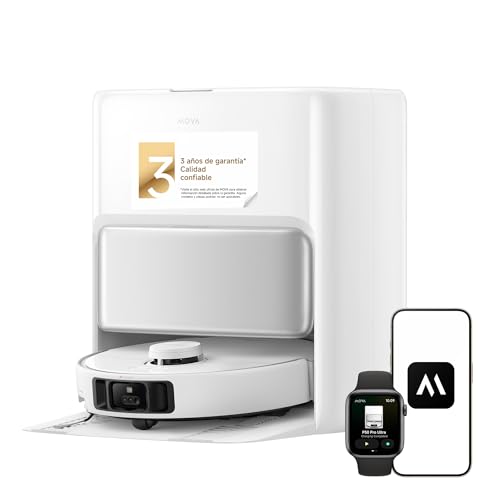
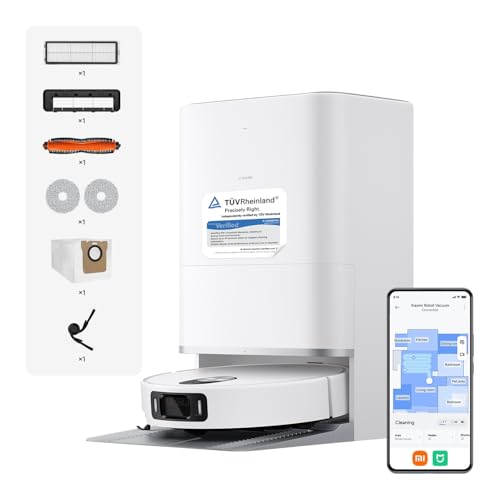
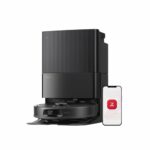
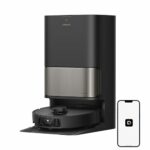
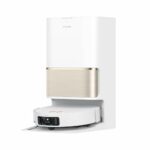
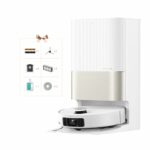
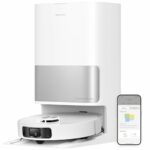
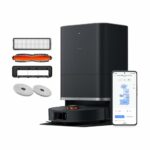
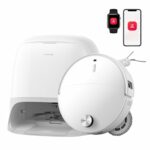
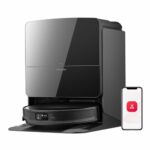
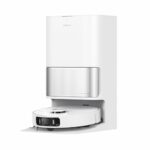
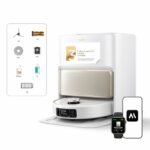
The Mova P50 Pro Ultra and Xiaomi Robot Vacuum 5 Pro represent two of the most advanced cleaning solutions launched in 2025. Both models share substantial similarities in their core technology, yet key differences emerge when examining their specifications in detail. The Mova P50 Pro Ultra positions itself as a comprehensive cleaning system with extended autonomy and additional features, whilst the Xiaomi Robot Vacuum 5 Pro focuses on raw suction power and a more compact base design.
These are premium robot vacuum cleaners equipped with multifunctional bases capable of auto-emptying, mop washing, and drying. They're designed for households seeking minimal maintenance and thorough cleaning across both hard floors and carpets.
Power and Suction
The Xiaomi Robot Vacuum 5 Pro edges ahead with 20,000 Pa of suction power compared to the Mova P50 Pro Ultra's 19,000 Pa. In practical terms, this 1,000 Pa difference might prove noticeable when tackling deeply embedded dirt in carpets or dealing with stubborn debris, though both figures represent excellent performance for 2025 standards.
Both models feature the TriCut 3.0 main brush, which combines bristles with integrated blades designed to slice through tangled hair. This system reduces maintenance time significantly, particularly valuable for homes with pets or long-haired residents. The main brush lifts automatically during mopping on both robots, preventing wet carpets and ensuring optimal cleaning mode selection.
Where the Mova P50 Pro Ultra distinguishes itself is in side brush functionality. It includes an elevable side brush that lifts when mopping, preventing the brush from dragging dirty water across clean floors. The Xiaomi model lacks this feature. Both robots incorporate extensible side brushes that reach further into corners, and both include anti-tangle technology on the side brush to minimise hair wrap.
Mopping
Both robots employ dual rotating mops for thorough floor scrubbing. The Mova P50 Pro Ultra incorporates RoboSwing technology alongside standard mop extension, allowing the robot to perform a swaying motion that pushes the mop slightly under furniture edges and skirting boards. The Xiaomi model offers mop extension but without the additional swaying movement.
Mop lift height differs between the two. The Xiaomi Robot Vacuum 5 Pro achieves 15 mm of elevation, whilst the Mova reaches 10.5 mm. Higher lift capacity matters when transitioning onto thick carpets or rugs, as it ensures the wet mops don't make contact with textile surfaces. For most UK homes with standard carpet heights, both should perform adequately, though the Xiaomi offers slightly more clearance.
A practical advantage of the Mova P50 Pro Ultra emerges in its ability to automatically remove mops at the base station. This means when you want the robot to perform a vacuum-only session, it can demount the mop pads without manual intervention. The Xiaomi requires you to remove them yourself if you want pure vacuuming without mopping attachments.
Both models detect dirt on their mops and on the floor, triggering additional cleaning passes or mop washing cycles when necessary. This adaptive cleaning proves particularly useful in kitchens or high-traffic areas where spills and grime accumulate.
Navigation System
The Mova P50 Pro Ultra uses a third-generation 3D LiDAR turret for mapping and navigation, whilst the Xiaomi Robot Vacuum 5 Pro employs a retractable LiDAR system. Both approaches deliver precise room mapping and efficient cleaning routes, with the retractable design potentially offering a slight advantage in clearance under extremely low furniture.
Camera systems differ slightly: the Mova features dual AI cameras, whereas the Xiaomi has a single AI camera. Both include frontal 3D laser sensors and LED lighting for night-time navigation. Remote camera access is available on both models, allowing you to check on your home whilst away.
Object recognition capabilities tilt in favour of the Xiaomi, which identifies 200 different obstacles compared to the Mova's 160. However, the Mova P50 Pro Ultra includes specific recognition for pets and curtains, features absent from the Xiaomi. For households with cats or dogs, the pet recognition allows the robot to navigate more carefully around animals and their belongings. Curtain detection prevents the robot from becoming entangled in floor-length drapes.
Battery and Autonomy
Both robots house identical 5,200 mAh batteries, yet runtime differs substantially. The Mova P50 Pro Ultra delivers 210 minutes of operation, whilst the Xiaomi Robot Vacuum 5 Pro manages 140 minutes. This 70-minute difference translates to significantly larger coverage areas for the Mova, making it better suited to expansive homes or properties with multiple floors.
For typical UK homes ranging from 100 to 150 square metres, either robot should complete a full clean on a single charge. The extended runtime of the Mova becomes advantageous in larger properties or when running multiple cleaning cycles throughout the day without returning to base.
Smart Features
The Mova P50 Pro Ultra can climb obstacles up to 22 mm high, whilst the Xiaomi manages 20 mm. This 2 mm difference might seem marginal, but it can determine whether the robot successfully mounts thick door thresholds, certain rug edges, or transitions between flooring types without becoming stuck.
The Mova includes CleanGenius AI for intelligent cleaning decisions, whilst the Xiaomi features its own AI cleaning system. Both recognise stains and adjust cleaning intensity accordingly. A notable distinction is the Mova's built-in voice assistant, allowing direct interaction with the robot without relying on external smart home systems. Both models support Alexa and Google Home integration for those who prefer ecosystem connectivity.
Multifunctional Cleaning Base
Both bases auto-empty the robot's dust container, wash mops with hot water, and dry them using warm air. This combination ensures minimal user intervention and maintains hygiene between cleaning sessions. The warm water washing and hot air drying help eliminate bacteria and prevent unpleasant odours from developing on the mop pads.
The Mova P50 Pro Ultra features third-generation automatic tray cleaning, whilst the Xiaomi includes standard tray self-cleaning. Both systems prevent the base station itself from becoming a source of dirt or smells. The Mova adds a detergent dispenser, automatically adding cleaning solution during mop washing cycles. The Xiaomi lacks this feature, relying solely on water for mop maintenance.
Dust bag capacity differs: the Mova holds 3.2 litres compared to the Xiaomi's 2.5 litres. This 0.7-litre difference means less frequent bag changes with the Mova, potentially reducing running costs and maintenance intervals. Both bases feature 4-litre clean water tanks. The dirty water tank on the Mova holds 3.5 litres, whilst the Xiaomi's accommodates 3.8 litres.
Dimensions
The most significant dimensional difference lies in robot height. The Xiaomi Robot Vacuum 5 Pro measures just 88 mm tall, considerably slimmer than the Mova P50 Pro Ultra's 103.8 mm. This 15.8 mm difference substantially impacts furniture clearance. The Xiaomi can access spaces under sofas, beds, and cabinets that the Mova simply cannot reach. For homes with low-clearance furniture, this becomes a decisive factor.
Both robots share a 350 mm diameter, standard for this class of device. Base station dimensions vary noticeably. The Mova base measures 420 mm wide, 470 mm tall, and 458 mm deep. The Xiaomi base is narrower at 360 mm but taller at 572 mm, with a depth of 470 mm. The Mova's wider footprint requires more floor space, whilst the Xiaomi's height might pose issues if placing it under counters or in cupboards.
Real-World Usage
For larger properties exceeding 150 square metres, the Mova P50 Pro Ultra's extended 210-minute runtime provides clear advantages, potentially completing the entire home in one session without recharging. The Xiaomi's 140 minutes suffices for most standard-sized homes but might require mid-clean charging in expansive properties.
Homes with low furniture benefit enormously from the Xiaomi's 88 mm height. The ability to clean under beds, sofas, and cabinets without manual intervention reduces overall cleaning time and ensures these often-neglected areas receive regular attention. The Mova's additional height limits access to such spaces.
Pet owners gain specific advantages with the Mova P50 Pro Ultra through dedicated pet recognition and the detergent dispenser for more thorough mop cleaning. The ability to automatically remove mops also streamlines switching between vacuuming pet hair and mopping, without handling potentially dirty mop pads.
The Xiaomi's superior suction power and higher mop lift make it marginally better for homes with thick carpets or multiple floor transitions, whilst the Mova's RoboSwing and larger dust bag suit households prioritising edge cleaning and reduced maintenance frequency.
Conclusion: Which to Choose?
Choose the Mova P50 Pro Ultra if: You have a large home requiring extended runtime, want automatic mop removal for vacuum-only sessions, value the detergent dispenser for enhanced mop hygiene, prefer less frequent dust bag changes, need specific pet and curtain recognition, or want a built-in voice assistant. The larger dust bag and longer battery life reduce maintenance intervals, making it ideal for busy households or those who travel frequently.
Choose the Xiaomi Robot Vacuum 5 Pro if: Your home features low-clearance furniture requiring a slimmer robot profile, you prioritise maximum suction power for deep carpet cleaning, need higher mop lift for thick rugs, prefer a narrower base station footprint, or want the most advanced object recognition system with 200 identifiable obstacles. The 88 mm height makes it the superior choice for thorough whole-home coverage in properties with standard UK furniture heights.
Both represent excellent investments for 2025, with the decision ultimately hinging on your specific home layout, furniture clearances, and whether extended runtime or maximum suction takes priority in your cleaning routine.