Introduction
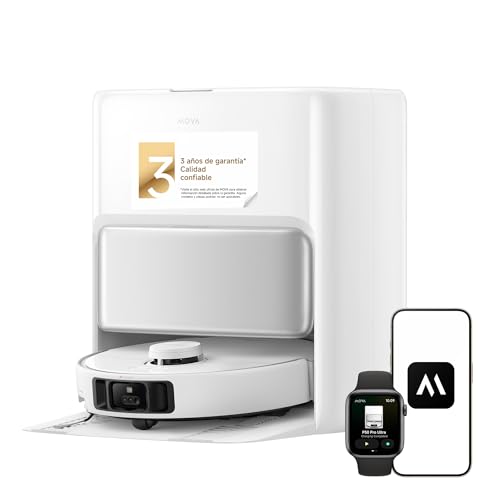
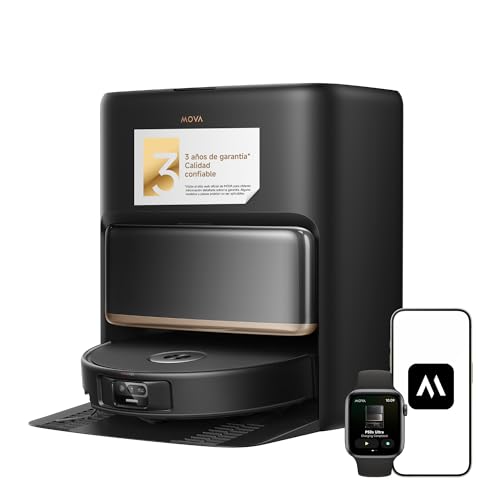
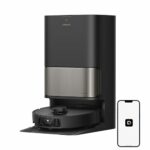
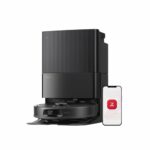
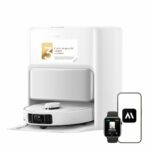
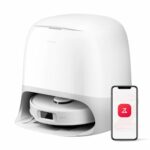
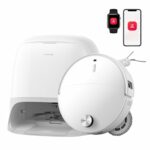
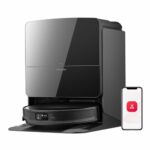
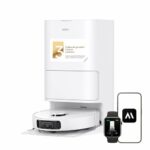
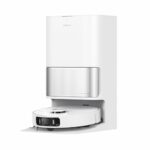
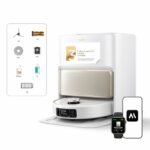
The Mova P50 Pro Ultra and Mova P50s Ultra represent the brand's 2025 flagship offerings in the premium robot vacuum segment. Both models arrive with comprehensive cleaning stations and advanced navigation systems designed for homes that demand thorough floor maintenance with minimal intervention. Whilst they share the same manufacturer and release year, several technical distinctions separate these two machines, particularly in navigation technology, suction power, and battery capacity.
These are clearly positioned for users seeking complete automation. The multifunctional bases handle mop washing with hot water and drying with heated air, whilst both robots can remove their mops automatically when transitioning to carpet areas. For households with mixed flooring, pets, or simply those wanting a genuinely hands-off cleaning experience, either model warrants serious consideration.
Differences at a Glance
- The P50s Ultra delivers 24,000 Pa suction versus 19,000 Pa on the Pro Ultra
- Navigation systems differ: LiDAR 3D turret on the Pro Ultra, FlashPulse technology on the P50s Ultra
- Battery capacity reaches 6,400 mAh in the P50s Ultra compared to 5,200 mAh in the Pro Ultra
- The Pro Ultra stands 103.8 mm tall; the P50s Ultra measures just 82.5 mm
- Main brush technology varies: TriCut 3.0 on the Pro Ultra, dual brush anti-tangle system on the P50s Ultra
- Obstacle recognition expands from 160 objects (Pro Ultra) to 200 (P50s Ultra)
- UV disinfection features exclusively on the P50s Ultra's base station
- The P50s Ultra handles stepped obstacles up to 40 mm; the Pro Ultra manages 22 mm
Suction Power and Brushwork
Suction capability shows a substantial gap between these models. The P50s Ultra generates 24,000 Pa, a figure that places it firmly in the upper echelon of current robot vacuum specifications. The Pro Ultra's 19,000 Pa remains competitive but trails by a noticeable margin. In practice, this difference becomes apparent on carpets and when extracting embedded debris from textured flooring. Both machines elevate their main brushes during mopping to prevent wet fibres dragging across cleaned areas.
The brush systems take different approaches. The Pro Ultra employs TriCut 3.0 technology, which combines bristles with integrated cutting blades to slice through tangled hair before it wraps around the roller. The P50s Ultra opts for a dual brush anti-tangle design, where two independent brush sections work to prevent hair accumulation altogether. Either system should cope well with pet hair, though the mechanisms differ fundamentally.
Side brush functionality remains identical across both models. Each features an extendable arm that reaches into corners, elevates when mopping to avoid dragging wet pads along skirting boards, and incorporates anti-tangle design elements. This consistency means edge cleaning performance should match closely between the two machines.
Mopping Systems
Both robots deploy dual rotating mop pads that extend outward to reach edges and employ a swinging motion to push slightly under furniture overhangs. Mop elevation reaches 10.5 mm on each model, sufficient clearance for low-pile rugs but not thick carpeting. When the robots detect carpeted areas, they return to base and automatically detach the mop assembly entirely, ensuring truly dry vacuuming across soft flooring.
Dirt detection operates at two levels. Sensors in the mop pads identify when they're heavily soiled, triggering a return to base for washing. Simultaneously, floor-level sensors recognise stubborn marks and instruct the robot to make additional passes. This dual-layer intelligence helps maintain consistent mopping quality without manual intervention.
The base stations wash mops with heated water and dry them using warm air, creating conditions that discourage bacterial growth and musty odours. Third-generation self-cleaning systems maintain the washing tray itself, addressing a maintenance point that often requires manual attention on lesser models. Neither machine heats the water it applies to floors—the temperature control applies exclusively to mop maintenance within the base.
Navigation Technologies
Here the models diverge significantly. The Pro Ultra mounts a traditional LiDAR turret that rotates to map surroundings with laser precision. This proven technology creates accurate floor plans and navigates methodically, though the turret adds height to the robot's profile. The P50s Ultra abandons the rotating turret entirely in favour of FlashPulse navigation, a system that achieves spatial mapping without the mechanical protrusion.
Both machines supplement their primary navigation with dual AI cameras and frontal 3D laser sensors. Object recognition capabilities expand from 160 items on the Pro Ultra to 200 on the P50s Ultra, though in everyday use this difference likely matters less than the fundamental reliability of obstacle avoidance. Pet recognition, curtain detection, and remote camera access feature on both models. LED illumination enables night vision functionality, allowing the cameras to operate effectively in darkened rooms.
The CleanGenius AI system runs identically across both robots, analysing room layouts and dirt patterns to optimise cleaning routes and intensity. For homes with complex furniture arrangements or frequently moved objects, these intelligent mapping features prove genuinely useful rather than mere marketing embellishments.
Battery Capacity and Runtime
Battery specifications favour the P50s Ultra substantially. Its 6,400 mAh cell outpaces the Pro Ultra's 5,200 mAh by nearly 25 percent. Curiously, stated autonomy figures appear only for the Pro Ultra, which claims 210 minutes of operation. The absence of runtime data for the P50s Ultra prevents direct comparison, though its larger battery suggests extended operation or sustained higher suction modes without premature base returns.
For larger homes, battery capacity directly impacts cleaning efficiency. A robot that completes the entire floor plan in one session beats one that requires mid-clean recharging, even if both eventually finish the job. The P50s Ultra's superior cell capacity positions it more favourably for expansive single-level properties or thorough whole-home sessions.
Smart Features
Obstacle-climbing ability differs markedly. The Pro Ultra navigates thresholds and transitions up to 22 mm high, a respectable specification that handles most door saddles and carpet edges. The P50s Ultra extends this capability to 40 mm, managing stepped obstacles that would completely block the Pro Ultra. This enhanced climbing ability proves particularly valuable in homes with varied flooring levels or substantial door thresholds between rooms.
Both models incorporate proprietary voice assistants alongside compatibility with external systems like Alexa and Google Home. This dual-voice approach allows basic commands through the robot itself whilst maintaining integration with broader smart home ecosystems. Neither machine features a robotic arm for object manipulation—they rely entirely on avoidance and climbing to navigate obstacles.
Base Station Capabilities
The multifunctional bases share most specifications: 3.2-litre dust bags, 4-litre clean water tanks, 3.5-litre dirty water collection, and integrated detergent dispensers. Both wash mops with hot water, dry them with heated air, and self-clean their washing trays. The stations measure identically at 420 mm wide, 470 mm tall, and 458 mm deep, requiring the same floor space in your home.
One distinction emerges: the P50s Ultra adds UV disinfection to its base station. This feature bathes cleaned components in ultraviolet light to reduce microbial presence. Whether this justifies consideration depends on your sensitivity to hygiene theatre versus measurable benefit—the hot water washing and heated drying already create unfavourable conditions for bacterial growth.
Neither base offers plumbed water connections, even as an optional kit. All water management requires manual filling and emptying, which remains the primary maintenance task for these otherwise highly automated systems.
Physical Dimensions
The most dramatic dimensional difference appears in robot height. The Pro Ultra stands 103.8 mm tall, whilst the P50s Ultra measures just 82.5 mm—a reduction exceeding 20 mm. This substantial difference directly impacts furniture clearance. The P50s Ultra slips beneath sofas, bed frames, and cabinets that completely block the Pro Ultra, accessing floor area that would otherwise require manual cleaning.
Both robots share a 350 mm diameter, typical for circular designs. Their onboard tanks match exactly: 300 ml for dust collection and 80 ml for mopping water. These modest capacities matter little given the frequent base returns for mop washing and the automatic dust evacuation after each session.
Real-World Usage Scenarios
For homes with low-clearance furniture, the P50s Ultra's reduced height delivers tangible advantage. That 82.5 mm profile reaches spaces the taller Pro Ultra simply cannot access, potentially eliminating manual vacuuming under beds and sofas entirely. Combined with its superior obstacle-climbing ability, the P50s Ultra navigates more varied home environments without intervention.
Pet owners benefit from either model's anti-tangle brush systems and substantial suction, though the P50s Ultra's higher power proves more effective on embedded fur. Both machines recognise pets as obstacles and adjust behaviour accordingly, reducing the likelihood of startling animals or creating confrontations with territorial cats.
The larger battery in the P50s Ultra suits expansive properties better, whilst the Pro Ultra's specified 210-minute runtime should suffice for most homes under 200 square metres. Both models handle mixed flooring confidently, automatically removing mops when transitioning to carpets and adjusting suction based on surface type.
Maintenance demands remain minimal on both systems. The self-cleaning bases handle mop washing and drying, dust bags require changing every few months depending on usage, and water tanks need periodic refilling. The third-generation tray cleaning reduces manual scrubbing requirements significantly compared to earlier robot mop systems.
Conclusion: Which Should You Choose?
Choose the Mova P50 Pro Ultra if: you prioritise traditional LiDAR navigation with its proven reliability, your furniture clearances exceed 105 mm comfortably, and the £200-300 typical price difference (when present) matters more than incremental performance gains. This remains an exceptionally capable robot that handles comprehensive floor cleaning with minimal supervision.
Choose the Mova P50s Ultra if: you need maximum suction power for deep carpet cleaning or heavy pet hair, your home features low-clearance furniture that benefits from the 82.5 mm profile, you have substantial door thresholds or floor-level changes requiring enhanced climbing ability, or you want the longest possible runtime for large properties. The UV disinfection adds a hygiene layer some users value, though it's unlikely to be a deciding factor alone.
The P50s Ultra emerges as the more advanced specification overall, with meaningful improvements in the areas that most affect daily performance: suction strength, battery capacity, obstacle navigation, and furniture access. Unless budget constraints or specific preference for rotating LiDAR dictate otherwise, the P50s Ultra represents the stronger choice for demanding homes seeking the best available cleaning automation in 2025.