Introduction
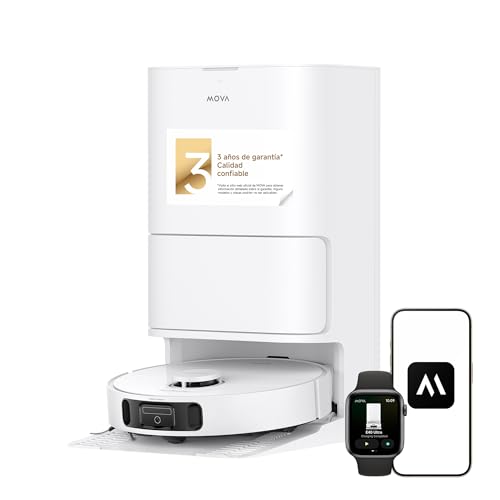
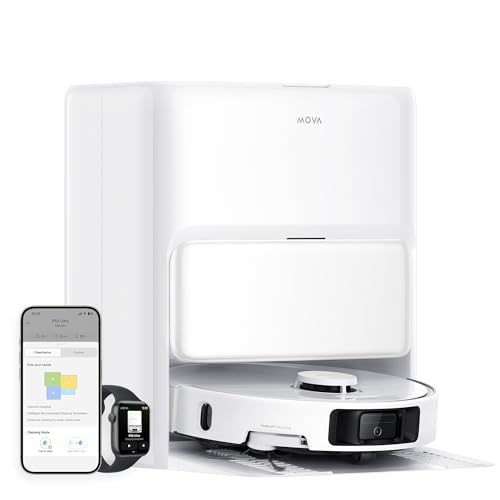
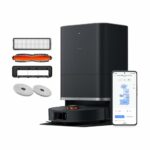
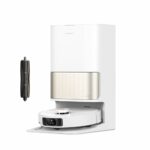
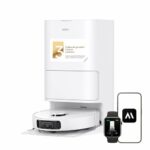
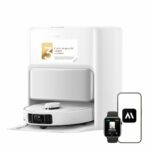
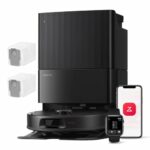
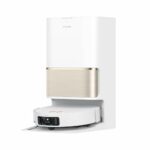
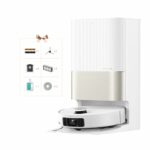
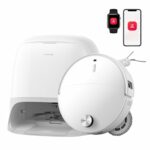
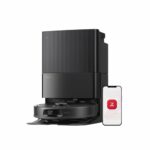
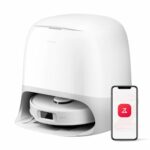
The Mova E40 Ultra and Mova P50 Ultra represent two distinct approaches within the brand's 2025 robot vacuum lineup. Both share the same fundamental architecture—19,000 Pa suction power, 5,200 mAh battery capacity, and dual rotating mops—but diverge in several key areas that can meaningfully affect daily performance. The E40 Ultra follows a more traditional configuration, whilst the P50 Ultra introduces refinements typically associated with premium models, particularly in its base station capabilities and cleaning mechanism adjustments.
These models suit medium to large homes with mixed flooring. The differences between them aren't dramatic on paper, but in practice they address different priorities: the E40 Ultra focuses on straightforward functionality with slightly larger water reservoirs, whereas the P50 Ultra adds features that enhance edge cleaning, obstacle navigation, and base maintenance automation.
Key Differences at a Glance
- The P50 Ultra lifts both its main brush and side brush during mopping; the E40 Ultra does not
- Side brush extension for corner cleaning is exclusive to the P50 Ultra
- The P50 Ultra washes mops with hot water; the E40 Ultra uses cold water
- Third-generation automatic tray cleaning is present only in the P50 Ultra
- The E40 Ultra recognises pets; the P50 Ultra detects curtains instead
- The P50 Ultra can climb 22 mm obstacles versus 20 mm for the E40 Ultra
- Base station dimensions differ significantly, affecting placement options
- Water tank capacities vary: the E40 Ultra holds more in both clean and dirty reservoirs
Suction Power and Brushwork
Both models deliver 19,000 Pa of suction, which places them comfortably in the upper-middle tier for 2025 robot aspirators. That figure translates to solid performance on hard floors and low-pile carpets, though neither claims specialist deep-carpet credentials.
The main brush on each unit is a simple design—not the anti-tangle HyperStream or DuoDivide configurations found on some premium models—so homes with long-haired occupants or shedding pets should expect routine maintenance. The side brushes, however, are anti-tangle on both, which helps reduce the frequency of manual cleaning.
Where the Mova P50 Ultra pulls ahead is in its ability to lift both the main and side brushes during mopping. This prevents the brushes from dragging wet debris across the floor or re-depositing dust whilst the mops are working. The E40 Ultra lacks this feature, meaning its brushes remain in contact with the floor throughout the mopping cycle. In practice, this can lead to streaks or require a second pass in dirtier areas.
The P50 Ultra also extends its side brush outward to reach into corners and along skirting boards more effectively. For homes with intricate floor plans or furniture clusters, this makes a tangible difference in coverage. The E40 Ultra's fixed side brush can miss debris that settles just beyond its standard sweep radius.
Mopping System
Both robots use dual rotating mops with extension capability and a movement system that pushes the mop slightly under furniture edges and skirting boards. Each can lift its mops 10.5 mm when transitioning onto carpets or rugs, which is adequate for most domestic thresholds and low-pile textiles.
The critical distinction lies in the base station's mop-washing function. The Mova P50 Ultra heats the water used to clean the mops, which improves the removal of greasy residues and helps sanitise the pads between cleaning runs. The E40 Ultra washes with cold water, which is less effective against stubborn marks and can leave the mops slightly less fresh over time. Both stations dry the mops with warm air, so odour prevention is handled equally well once the washing phase is complete.
Neither model automatically detaches its mops at the base for vacuum-only sessions, nor do they detect dirt on the floor or mops to trigger re-cleaning. These are features reserved for higher-end models in other ranges. The detergent dispenser on both is an optional add-on rather than standard, which keeps the base price down but requires a separate purchase if you want automated detergent dosing.
Navigation System
Navigation hardware is nearly identical: both employ a 360-degree LiDAR turret for room mapping and a front-facing 3D laser sensor for obstacle avoidance. Neither includes a camera-based AI system or LED night vision, so object recognition relies on sensor data rather than visual analysis.
The Mova E40 Ultra can recognise pets, which allows it to adjust cleaning patterns around animals or avoid startling them during operation. The P50 Ultra, conversely, detects curtains and adjusts its approach to prevent entanglement or dragging fabric. The choice between these two recognition profiles depends on household composition: pet owners may prefer the E40 Ultra's behaviour, whilst homes with floor-length drapes benefit from the P50 Ultra's curtain awareness.
Both models feature CleanGenius AI for adaptive cleaning intensity based on room type and detected debris levels, though this is a software feature rather than hardware-driven intelligence. Remote camera access is absent from both, so real-time monitoring or security functions aren't available.
Battery and Autonomy
The 5,200 mAh battery is identical across both models. The E40 Ultra specifies 210 minutes of runtime, which suggests coverage of approximately 200–250 square metres on a single charge under typical conditions. The P50 Ultra does not list a runtime figure, but given the identical battery and similar feature set, performance should be comparable.
Charging times and surface area recommendations aren't provided for either model, so estimating recharge duration or maximum home size requires some extrapolation. In practice, homes up to 200 square metres should see complete coverage without mid-clean recharging, assuming moderate furniture density and a mix of vacuuming and mopping tasks.
Smart Features
The Mova P50 Ultra can climb obstacles up to 22 mm, compared to 20 mm for the E40 Ultra. That 2 mm difference might seem trivial, but it can determine whether the robot successfully mounts certain door thresholds, thick rugs, or cable management strips. Homes with varied flooring transitions will notice the P50 Ultra's slightly superior clearance.
Neither model includes a robotic arm for object manipulation or a proprietary voice assistant. Both integrate with external voice platforms such as Alexa and Google Home, so routine commands and scheduling work through existing smart home ecosystems.
Multifunctional Base Station
Both base stations handle auto-emptying, mop washing, and mop drying. Dust bags hold 3.2 litres, which typically lasts four to six weeks in an average household before replacement.
The Mova P50 Ultra introduces third-generation automatic tray cleaning, meaning the base station periodically flushes and scrubs its own washing tray to prevent residue build-up. The E40 Ultra requires manual tray maintenance, which isn't onerous but does add a recurring task to the upkeep routine.
Water tank capacities differ: the E40 Ultra provides 4.5 litres of clean water and 4 litres for dirty water, whilst the P50 Ultra reduces these to 4 litres and 3.5 litres respectively. For larger homes or extended mopping sessions, the E40 Ultra's extra capacity means fewer mid-clean refills. The P50 Ultra's smaller tanks are a trade-off for its more compact base footprint.
Neither station includes UV disinfection or integrated plumbing connections. Optional kits for direct water line hookup are not available, so manual filling and emptying remain necessary.
Physical Dimensions
The robots themselves are identical: 350 mm diameter and 97 mm tall. That height allows them to slip under most furniture with 100 mm clearance, though particularly low-slung sofas or bed frames may still block access.
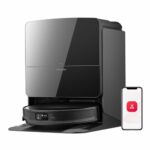
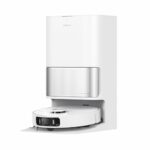
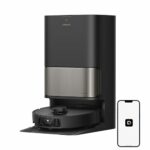
Base station dimensions diverge significantly. The E40 Ultra's base measures 340 mm wide, 590.5 mm tall, and 456.7 mm deep—a relatively tall, narrow profile. The P50 Ultra's base is wider at 420 mm but shorter at 470 mm, with a depth of 458 mm. The E40 Ultra's vertical design suits tight alcoves or corner placements, whilst the P50 Ultra's lower, broader stance fits better under wall-mounted shelves or in standard cupboard spaces. Consider your available floor and wall space when choosing between them.
Real-World Use Cases
For homes with pets, the E40 Ultra's recognition capability and slightly larger water reservoirs make it a practical choice, especially if you're mopping frequently to manage fur and paw prints. The lack of brush lifting during mopping is a minor inconvenience rather than a deal-breaker, though you may need to run a vacuum-only pass before mopping in high-traffic areas.
The P50 Ultra suits households prioritising low-maintenance operation and thorough edge cleaning. The hot-water mop wash and automatic tray cleaning reduce hands-on upkeep, whilst the extendable side brush and 22 mm obstacle clearance improve coverage in complex layouts. If your home has heavy curtains or numerous floor transitions, the P50 Ultra's specific recognition and climbing abilities offer tangible benefits.
Both models handle mixed hard flooring and low-pile rugs competently. Neither excels on thick carpets due to the simple brush design and moderate suction, so homes with extensive high-pile carpeting should look elsewhere. The 10.5 mm mop lift is sufficient for most domestic rugs but won't clear plush or shag textures.
Conclusion: Which to Choose?
Choose the Mova E40 Ultra if: you have pets that benefit from specific recognition routines, prefer larger water tanks for extended mopping sessions, or need a taller, narrower base station to fit a particular space. It's also slightly more straightforward in configuration, which some users find reassuring.
Choose the Mova P50 Ultra if: you want the convenience of hot-water mop washing and automatic tray cleaning, need better edge and corner coverage via the extendable side brush, or have floor transitions and thresholds that require the extra 2 mm of climbing clearance. The lower, wider base may also suit your available space better. Homes with curtains rather than pets will appreciate the tailored detection profile.
In essence, the E40 Ultra delivers solid fundamentals with a focus on capacity and pet-friendly behaviour, whilst the P50 Ultra refines the cleaning process with features that reduce manual intervention and improve thoroughness along edges and over obstacles. Neither represents a compromise; they simply address different household priorities within the same capable platform.