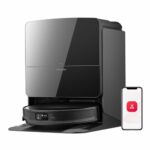
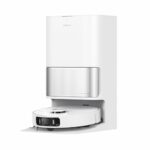
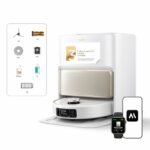
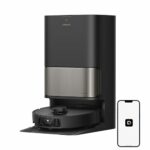
Introduction
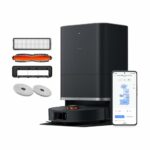
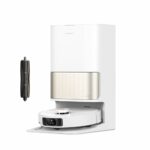
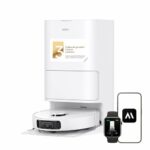
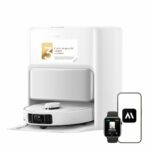
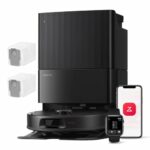
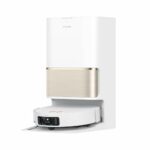
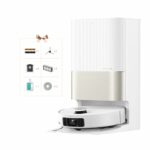
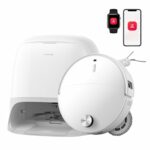
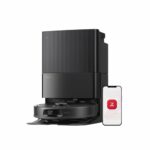
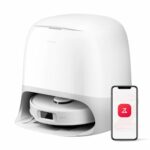
The Mova E40 Ultra and Mova P50 Pro Ultra represent the brand's 2025 lineup, both delivering 19,000 Pa suction power and comprehensive cleaning capabilities. These models share the same battery capacity at 5,200 mAh and identical runtime of 210 minutes, positioning them as direct competitors within Mova's range. The key distinctions lie not in raw power, but in their navigation systems, base station features, and intelligent cleaning functions.
The E40 Ultra targets users seeking robust cleaning performance with essential features at a more accessible price point. The P50 Pro Ultra, meanwhile, incorporates advanced AI capabilities and premium base station functions that appeal to those wanting cutting-edge automation and minimal intervention in their cleaning routine.
Key Differences at a Glance
- The P50 Pro Ultra features a TriCut 3.0 main brush versus the E40 Ultra's simple brush design
- Only the P50 Pro Ultra offers elevating main and side brushes, plus an extendable side brush
- The P50 Pro Ultra includes dual AI cameras with remote access and night vision LED
- Hot water mop washing and third-generation automatic tray cleaning exclusive to the P50 Pro Ultra
- The P50 Pro Ultra automatically removes mops at the base and detects dirt on both mops and floors
- Built-in detergent tank on the P50 Pro Ultra; optional purchase required for the E40 Ultra
- The P50 Pro Ultra recognises 160 objects and includes its own voice assistant
- The E40 Ultra sits 6.8 mm lower at 97 mm height
Power and Suction
Both models deliver identical 19,000 Pa suction, which provides strong pickup across hard floors and carpets. Where they diverge significantly is in brush technology. The E40 Ultra uses a simple brush design that gets the job done but requires more frequent maintenance when dealing with hair. The P50 Pro Ultra's TriCut 3.0 brush combines bristles with integrated cutting blades that actively slice through tangled hair, reducing the need for manual cleaning.
The P50 Pro Ultra's main brush elevates during mopping to prevent wet debris from being dragged across clean floors. This function is absent on the E40 Ultra, meaning the brush remains in contact with the floor throughout the entire cleaning cycle.
The side brush configuration tells a similar story. Whilst both include anti-tangle side brushes, the P50 Pro Ultra extends its side brush to reach deeper into corners and along skirting boards. It also elevates this brush during mopping and can raise it when not needed. The E40 Ultra's side brush maintains a fixed position throughout operation.
For households with pets or long-haired residents, these differences matter considerably in daily use.
Mopping
Both robots use dual rotating mopads with extension capabilities for edge cleaning, and both lift their mops 10.5 mm when encountering carpets or rugs. They share the same mopping extension system that pushes mops outward to reach edges more effectively.
The critical distinction emerges in intelligent mopping features. The P50 Pro Ultra automatically detaches its mops at the base station when you want to run vacuum-only cycles, eliminating the need for manual removal. The E40 Ultra requires you to remove mops by hand if you want to avoid dragging them across carpets during a vacuum session.
Dirt detection represents another significant gap. The P50 Pro Ultra monitors both the mops themselves and the floor surface, triggering additional cleaning passes when it identifies stubborn marks or heavily soiled areas. The E40 Ultra lacks this intelligence, following predetermined cleaning patterns without adapting to actual floor conditions.
Both models mop with cold water delivered from the robot, though the base station treatment differs considerably, which we'll explore in the next section.
Navigation System
Navigation hardware starts from a common foundation: both employ third-generation LiDAR turrets and frontal 3D laser sensors for obstacle avoidance. Both recognise pets and adjust their behaviour accordingly.
The P50 Pro Ultra extends this baseline with dual AI cameras that fundamentally change how the robot understands its environment. It identifies 160 different object types, allowing it to distinguish between shoes, cables, pet waste, and furniture with precision. The E40 Ultra's object recognition capability isn't specified, suggesting a more basic implementation.
Curtain detection appears exclusively on the P50 Pro Ultra, helping it navigate around hanging fabrics without becoming tangled. The dual cameras also enable remote access, letting you check on your home through the robot's perspective via the app. An LED provides night vision functionality, making this feature practical even in darkened rooms.
The E40 Ultra omits the cameras entirely, relying on its LiDAR and 3D sensors for navigation. This proves perfectly adequate for mapping and obstacle avoidance, but lacks the sophisticated object recognition and remote monitoring capabilities.
Both models incorporate CleanGenius AI for intelligent cleaning routines, though the P50 Pro Ultra's stain recognition system uses its cameras to identify and target specific marks, whilst the E40 Ultra follows more generalised cleaning patterns.
Battery and Autonomy
The specifications here are identical: 5,200 mAh capacity delivering 210 minutes of runtime. This translates to coverage for large homes in a single session, with both robots automatically returning to recharge when needed and resuming where they left off.
Neither manufacturer specifies charging time or maximum recommended floor area, but the generous battery capacity suggests suitability for homes well beyond 200 square metres.
Intelligent Functions
The P50 Pro Ultra climbs obstacles up to 22 mm, giving it a slight edge over the E40 Ultra's 20 mm capability. In practical terms, this means marginally better performance with thicker carpet edges or slightly higher door thresholds.
Voice control works differently between the models. Both integrate with Alexa and Google Home for external voice assistant compatibility. The P50 Pro Ultra adds its own built-in voice assistant, allowing direct commands without requiring a separate smart speaker. The E40 Ultra relies exclusively on external assistants.
Multifunction Cleaning Base
Both bases handle automatic dustbin emptying into 3.2-litre bags and dry mops using hot air to prevent odours. The differences concentrate in mop washing and maintenance automation.
The P50 Pro Ultra washes mops with hot water, which proves more effective at breaking down oils and stubborn grime compared to the E40 Ultra's cold water washing. Hot water cleaning delivers noticeably better results when dealing with kitchen floors or sticky residues.
Third-generation automatic tray cleaning on the P50 Pro Ultra means the base station maintains itself, preventing the buildup of debris and bacteria in the washing area. The E40 Ultra requires manual cleaning of the washing tray, adding a maintenance task that the premium model eliminates.
The detergent tank situation differs as well. The P50 Pro Ultra includes a built-in detergent dispenser as standard, automatically adding cleaning solution during mop washing. The E40 Ultra offers this as an optional purchase, meaning an additional expense if you want automated detergent dispensing.
Water tank capacities vary slightly: the E40 Ultra holds 4.5 litres of clean water and 4 litres of dirty water, whilst the P50 Pro Ultra carries 4 litres clean and 3.5 litres dirty. These differences prove negligible in real-world use, with both providing ample capacity for multiple cleaning cycles.
Dimensions
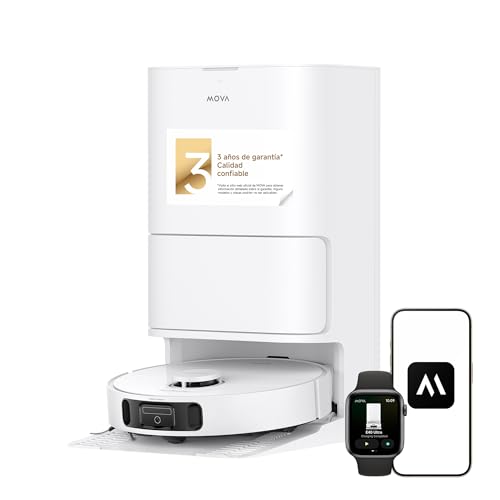
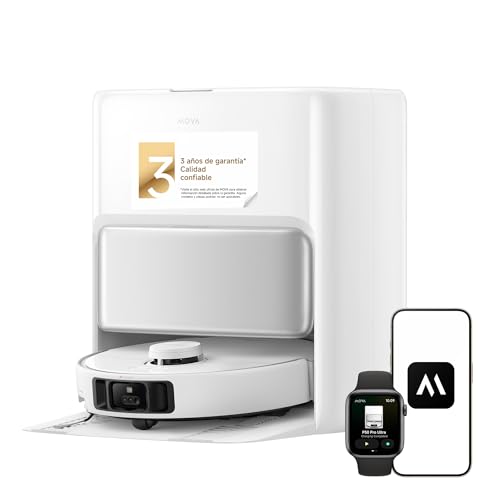
The robots measure 350 mm in diameter, but height differs. The E40 Ultra stands 97 mm tall, whilst the P50 Pro Ultra reaches 103.8 mm. That 6.8 mm difference can determine whether a robot fits beneath certain furniture pieces. If you have low-clearance sofas or bed frames, the E40 Ultra's lower profile may prove decisive.
Base station footprints diverge more substantially. The E40 Ultra's base measures 340 mm wide, 456.7 mm deep, and 590.5 mm tall—a relatively tall, narrow profile. The P50 Pro Ultra's base spans 420 mm wide, 458 mm deep, but only 470 mm tall—shorter but considerably wider. Consider your available floor space when choosing between these configurations.
Real-World Usage Experience
For homes with pets, the P50 Pro Ultra's TriCut 3.0 brush and advanced hair management significantly reduce maintenance frequency. Its dirt detection ensures thorough cleaning even when your dog tracks mud through the kitchen. The dual cameras help it navigate around pet bowls and toys with greater precision.
The E40 Ultra handles pet homes adequately but requires more frequent brush cleaning and lacks the adaptive intelligence to identify and re-clean heavily soiled areas. Its lower height does help it reach under more furniture where pet hair accumulates.
In large homes, both robots' 210-minute runtime and 5,200 mAh batteries provide sufficient coverage. The P50 Pro Ultra's superior object recognition helps it navigate complex floor plans more efficiently, whilst its automatic mop removal makes it more versatile for mixed vacuum-and-mop routines across multiple rooms.
For users prioritising convenience, the P50 Pro Ultra's self-cleaning base tray, hot water mop washing, and automatic mop detachment minimise hands-on maintenance. The E40 Ultra demands more regular intervention: manual mop removal, tray cleaning, and potentially an optional detergent tank purchase.
The E40 Ultra suits smaller homes or those with simpler layouts where advanced AI navigation proves less critical. Its lower profile benefits homes with abundant low-clearance furniture.
Conclusion: Which Should You Choose?
Choose the Mova E40 Ultra if: you want strong cleaning performance at a lower price point, your home has particularly low furniture that requires a sub-100mm robot height, you don't need advanced AI features or remote camera access, and you're comfortable with slightly more hands-on maintenance including manual mop removal and periodic tray cleaning.
Choose the Mova P50 Pro Ultra if: you want maximum automation with minimal intervention, you have pets or long hair in the household benefiting from the TriCut 3.0 brush, you value intelligent dirt detection and adaptive cleaning, you want remote home monitoring through the robot's cameras, hot water mop washing matters for your floor types, and you prefer the base station to maintain itself automatically. This model suits larger or more complex homes where advanced navigation and object recognition deliver tangible benefits.
The price difference between these models reflects genuine functional gaps rather than superficial upgrades. The P50 Pro Ultra justifies its premium through features that reduce your involvement in the cleaning process, whilst the E40 Ultra offers the same core cleaning power for those willing to handle a bit more maintenance themselves.