Introduction
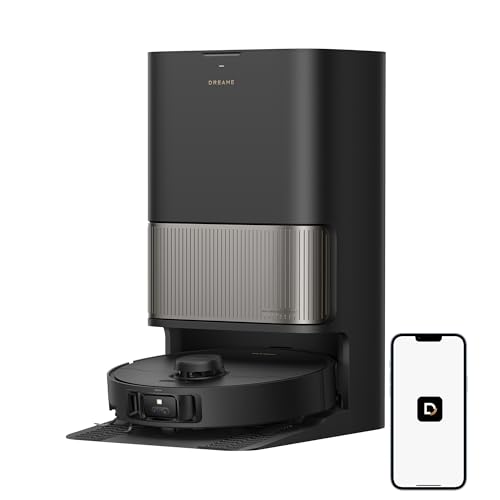
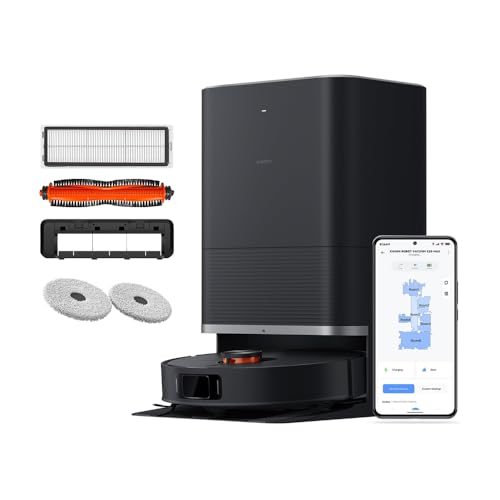
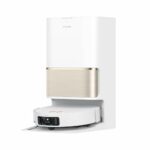
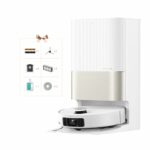
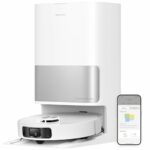
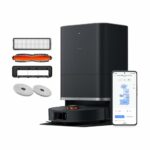
The Dreame L40s Pro Ultra and Xiaomi X20 Max represent two distinct approaches to premium robotic cleaning. The Dreame model arrives in 2025 with an impressive 19,000 Pa suction power, positioning itself at the top end of current specifications. The Xiaomi X20 Max, launched in 2024, takes a more balanced approach with 8,000 Pa suction. Both models share the same 5,200 mAh battery capacity and identical 350 mm diameter, making them suitable for navigating typical home environments.
These aren't budget options. Each comes equipped with a multifunctional base station that handles automatic emptying, mop washing with hot water, and hot air drying. The question becomes which features matter most for your particular home setup.
Power and Suction
The difference in suction power is substantial. The Dreame L40s Pro Ultra delivers 19,000 Pa compared to the Xiaomi X20 Max's 8,000 Pa. In practical terms, this means the Dreame has considerably more raw power for lifting embedded dirt from carpets and extracting debris from tile grout. For homes with thick rugs or pets that shed heavily, this gap becomes meaningful.
The brushing systems diverge significantly. Dreame employs its Double Brush HyperStream design, which uses two brushes anchored at one end to minimise hair tangles. The Xiaomi X20 Max uses TriCut 3.0, combining bristles with integrated blades that cut through tangled hair. Both approaches tackle the hair problem, just differently.
Where the Dreame pulls ahead is versatility. Its main brush lifts during mopping to avoid dragging dirt across wet floors. The side brush also lifts and extends, reaching into corners more effectively whilst avoiding contact with wet areas. The Xiaomi lacks these elevation features entirely. The Dreame's side brush is also anti-tangle, adding another layer of convenience for homes with long hair or pet fur.
Mopping Performance
Both models use dual rotating mops, but the Dreame L40s Pro Ultra adds Roboswing movement, allowing the robot to swing the mop slightly under furniture edges and skirting boards. The Xiaomi X20 Max has mop extension but without this additional motion. Mop lift height is nearly identical: 10.5 mm for Dreame, 10 mm for Xiaomi. Either will clear most low-pile rugs without issue.
The real distinction emerges in automation and intelligence. The Dreame can automatically remove its mops at the base station, allowing it to vacuum carpeted areas without any wet contact. The Xiaomi cannot do this. If you have mixed flooring with both hard surfaces and carpets, the Dreame handles transitions more intelligently.
Dirt detection is another Dreame exclusive. Sensors identify heavily soiled areas and trigger additional cleaning passes. The system also detects when mops become dirty, prompting a return to the base for washing mid-clean. The Xiaomi lacks these sensors entirely, following its programmed routine regardless of floor condition.
Navigation System
Both models use LiDAR navigation with 3D laser sensors for obstacle avoidance. Night-time operation is supported with LED illumination on each. Where they separate is in visual intelligence. The Dreame L40s Pro Ultra incorporates a dual AI camera system capable of recognising 180 different object types. The Xiaomi doesn't specify its object recognition count and lacks the AI camera altogether.
For pet owners, this matters. The Dreame identifies animals and adjusts behaviour accordingly, avoiding disturbance during cleaning. It also detects curtains, preventing the robot from becoming tangled in fabric. The Xiaomi X20 Max relies purely on its 3D sensors without these visual recognition capabilities.
Remote camera access is available on the Dreame, letting you check in on your home via the app. The Xiaomi doesn't offer this feature. If home monitoring appeals, the Dreame provides that additional functionality.
Battery and Autonomy
Despite identical 5,200 mAh batteries, runtime differs considerably. The Dreame L40s Pro Ultra manages 220 minutes on a single charge, whilst the Xiaomi X20 Max achieves 120 minutes. This suggests more efficient power management on the Dreame, likely optimising suction levels dynamically based on floor type and dirt detection.
For larger homes, this extended autonomy reduces the likelihood of mid-clean recharging interruptions. The Xiaomi may need to return to base and resume cleaning in homes exceeding its 120-minute range, which can extend total cleaning time.
Smart Features
The Dreame L40s Pro Ultra can climb obstacles up to simple steps, whilst the Xiaomi X20 Max handles thresholds up to 20 mm. Both manage typical door thresholds without difficulty, though the Dreame's specification suggests slightly more capability with uneven surfaces.
Voice control works differently. The Dreame includes its own built-in voice assistant alongside compatibility with Alexa and Google Home. The Xiaomi supports external assistants only. If you prefer interacting directly with the robot without invoking a separate smart home system, the Dreame offers that option.
Multifunctional Base Station
Both base stations handle automatic dust emptying, hot water mop washing, and hot air drying. The Dreame's base uses third-generation self-cleaning technology for its wash tray, preventing residue build-up and reducing manual maintenance. The Xiaomi lacks this automatic tray cleaning, requiring periodic manual attention.
The Dreame includes a detergent dispenser, automatically adding cleaning solution during mop washing. The Xiaomi X20 Max doesn't have this tank, relying on water alone. For those wanting a deeper clean or dealing with stubborn kitchen grime, the detergent option adds convenience.
Capacity differences are modest but present. The Dreame's dust bag holds 3.2 litres versus 2.5 litres for the Xiaomi. Clean water tanks measure 4.5 litres and 4 litres respectively, with dirty water at 4 litres and 3.8 litres. In practice, both should handle several cleaning sessions before requiring emptying, though the Dreame extends that interval slightly.
The Dreame offers an optional plumbing connection kit, available separately, that allows direct water supply and drainage. The Xiaomi doesn't support this. It's worth noting this kit isn't included and represents an additional purchase for those wanting fully automated water management.
Dimensions
Both robots measure 350 mm in diameter, navigating through doorways and around furniture with equal ease. Height tells a different story. The Xiaomi X20 Max stands 97 mm tall, whilst the Dreame L40s Pro Ultra measures 103.8 mm. That 6.8 mm difference could determine whether the robot fits beneath certain sofas or bed frames. If you have particularly low furniture clearances, measure carefully.
Base station footprints differ more noticeably. The Dreame's base measures 456.7 mm deep and 590.5 mm tall. The Xiaomi comes in at 420 mm deep and 563 mm tall. The Dreame requires slightly more floor space and vertical clearance. Neither is particularly compact, so ensure you have adequate space in your intended location.
Real-World Usage
For larger homes, the Dreame L40s Pro Ultra's extended autonomy and higher suction make it better suited to covering extensive floor areas in a single session. The 220-minute runtime handles sprawling layouts without interruption. Homes with multiple floor types benefit from automatic mop removal, allowing seamless transitions from hard floors to carpets.
Pet owners will appreciate the Dreame's enhanced hair management through its HyperStream brush, anti-tangle side brush, and pet recognition. The dirt detection sensors also prove useful when dealing with tracked-in mess from outdoor excursions. The Xiaomi's TriCut brush handles pet hair adequately, but lacks the additional intelligence and automation.
The Xiaomi X20 Max suits smaller to medium-sized homes where its 120-minute autonomy suffices. Its lower profile allows access under more furniture. Without automatic mop removal, it works best in homes with predominantly hard flooring or where you're comfortable manually managing carpet areas.
Maintenance convenience leans towards the Dreame with its self-cleaning base tray and detergent dispenser. The Xiaomi requires more hands-on attention to keep the wash tray clean and relies on water alone for mop washing.
Conclusion: Which to Choose?
Choose the Dreame L40s Pro Ultra if: you have a larger home requiring extended runtime, multiple pets shedding fur, mixed flooring with both hard surfaces and carpets, or you value automation features like dirt detection, automatic mop removal, and self-cleaning base maintenance. The remote camera access appeals if you want home monitoring capability. The higher suction power suits homes with thick carpets or stubborn dirt.
Choose the Xiaomi X20 Max if: you have lower furniture requiring the slimmer 97 mm profile, a smaller home where 120 minutes autonomy proves sufficient, predominantly hard flooring without frequent carpet transitions, or you're seeking capable performance at what will likely be a lower price point. The TriCut brush handles pet hair well enough, and the hot water mop washing matches the Dreame's capability in that regard.
The Dreame L40s Pro Ultra positions itself as the more comprehensive solution with greater automation and intelligence. The Xiaomi X20 Max delivers solid core functionality with a slimmer profile and likely more accessible pricing. Your specific home layout, flooring mix, and desired level of automation should guide the decision.