Introduction
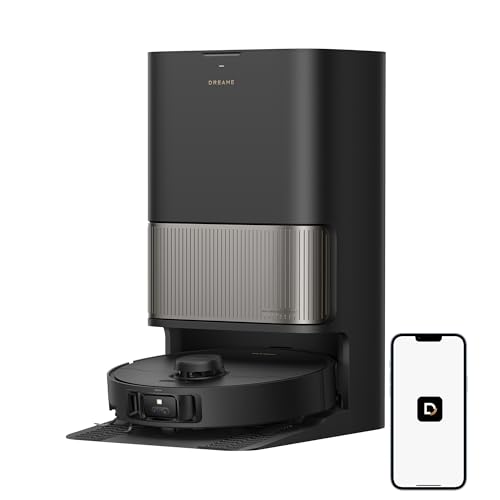
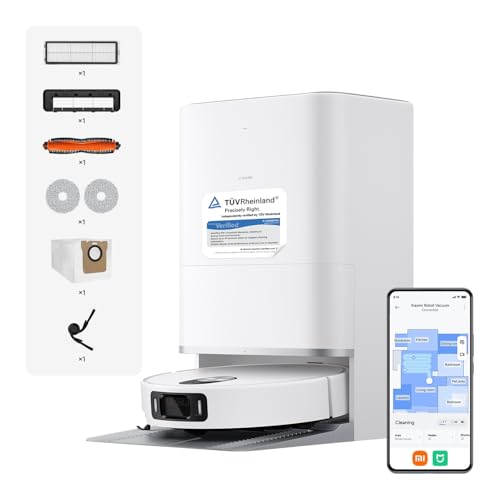
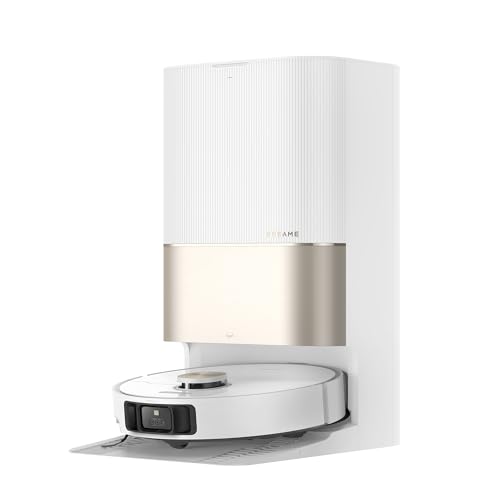
The Dreame L40s Pro Ultra and Xiaomi Robot Vacuum 5 Pro arrive in 2025 as direct competitors in the premium segment, whilst the Dreame X40 Ultra from 2024 remains a solid reference point for those seeking proven technology. All three share the multifunctional base approach with mop washing and hot air drying, but their technical specifications reveal meaningful differences that affect daily performance.
These aren't entry-level models. Each one targets users wanting minimal intervention: automatic emptying, mop maintenance handled by the base, and intelligent navigation. The choice between them depends on specific needs like suction power, obstacle recognition, or how well they handle homes with pets and furniture.
Suction Power and Brushwork
Suction figures tell an immediate story. The Xiaomi Robot Vacuum 5 Pro reaches 20,000 Pa, giving it a slight edge over the Dreame L40s Pro Ultra's 19,000 Pa. The X40 Ultra sits further back at 12,000 Pa, reflecting its 2024 design. In practical terms, that extra power helps with embedded dirt in rugs or pet hair lodged in carpet fibres.
The brush systems diverge notably. Xiaomi employs its TriCut 3.0 design combining bristles with integrated blades to slice through tangled hair. The L40s Pro Ultra uses a dual-brush configuration, whilst the X40 Ultra sticks with a simpler single-brush setup. All three lift their main brushes when mopping to avoid dragging dirt across wet floors.
Side brush behaviour matters more than many expect. The L40s Pro Ultra and X40 Ultra both elevate their side brushes during mopping runs, preventing them from flicking water around. The Xiaomi model lacks this feature, which can leave splatter marks on skirting boards. All three extend their side brushes to reach into corners, and all include anti-tangle designs to reduce hair wrap.
Mopping Systems
Each robot uses twin rotating mops, but implementation varies. The L40s Pro Ultra and X40 Ultra incorporate RoboSwing technology, allowing the robot to shift its body slightly and push a mop under furniture edges or cabinet toe kicks. The Xiaomi model extends its mops outward but doesn't perform this swaying motion.
Mop lift height becomes relevant when crossing thick rugs or returning to hard floors. The Xiaomi lifts its pads 15 mm, whilst both Dreame models manage 10.5 mm. That extra clearance helps avoid dragging damp mops onto carpets, though all three handle typical transitions without issue.
A standout difference: the L40s Pro Ultra and X40 Ultra automatically detach their mops at the base when you want vacuum-only cleaning. The Xiaomi requires manual removal. For homes with large carpeted areas, this automation saves repeated trips to the dock.
All three bases wash mops with hot water and dry them using heated air, which speeds drying and reduces bacterial growth. The L40s Pro Ultra features third-generation tray self-cleaning, the X40 Ultra has second-generation, and the Xiaomi includes the function without specifying generation. Dreame models also provide a detergent reservoir; the Xiaomi doesn't, relying on water alone during mop washing cycles.
Navigation Intelligence
LiDAR mapping forms the foundation across all three, but their obstacle recognition capabilities differ substantially. The Xiaomi identifies up to 200 different objects, the L40s Pro Ultra recognises 180, and the X40 Ultra handles 120. Higher numbers don't always guarantee better real-world performance, but they suggest more nuanced decision-making when encountering clutter.
The Dreame models specifically detect pets and curtains, adjusting behaviour accordingly—useful if you have cats that startle easily or floor-length drapes that could snag. The Xiaomi lacks these specific recognition modes, treating them as generic obstacles.
All three use dual AI cameras (the Xiaomi has a single camera system noted in the data) paired with 3D laser sensors and LED lighting for low-light navigation. Remote camera access works on each model, letting you check rooms from your phone. The L40s Pro Ultra adds a built-in voice assistant beyond standard Alexa or Google Home integration, though whether this proves useful depends on your ecosystem preferences.
Battery Life and Coverage
The Dreame X40 Ultra packs a 6,400 mAh battery delivering 194 minutes of runtime. Both 2025 models use smaller 5,200 mAh cells, but their efficiency varies: the L40s Pro Ultra achieves 220 minutes, whilst the Xiaomi manages just 140 minutes. That's a striking difference. For large homes, the L40s Pro Ultra's stamina means fewer mid-clean recharges, even if its raw suction trails the Xiaomi slightly.
Battery capacity alone doesn't dictate coverage. Navigation efficiency, suction settings, and mopping patterns all influence how far a robot travels on a single charge. The Xiaomi's shorter runtime might reflect its higher suction draw or less optimised pathfinding.
Smart Features
Climbing ability separates these models. The Xiaomi clears 20 mm obstacles, the X40 Ultra handles 22 mm, and the L40s Pro Ultra manages single-step thresholds without a specific millimetre rating. In practice, this affects transitions between rooms with raised doorways or thick rug edges.
The L40s Pro Ultra includes its own voice assistant, allowing direct commands without external smart speakers. The other two rely on Alexa or Google Home integration. None of these robots feature robotic arms—those remain limited to ultra-premium models outside this comparison.
Dirt detection works across all three, prompting extra passes over heavily soiled areas or re-washing mops when sensors detect grime. The L40s Pro Ultra's CleanGenius AI and the Xiaomi's equivalent systems adjust suction and water flow dynamically. The X40 Ultra uses AI Sage 11.0 with a Snapdragon 8-core chip, though exact processor details for the newer models aren't specified.
Multifunctional Base
Base capacity influences maintenance frequency. The Dreame models hold 3.2-litre dust bags, 4.5 litres of clean water, and 4 litres of dirty water. The Xiaomi uses a smaller 2.5-litre dust bag, 4 litres clean water, and 3.8 litres dirty water. For larger homes, those extra litres mean fewer trips to empty or refill.
Both Dreame bases offer optional plumbing connection kits sold separately, eliminating manual water changes entirely. The Xiaomi doesn't provide this option. Whilst not essential, permanent plumbing suits users wanting truly hands-off operation over weeks rather than days.
Detergent dispensing appears only on Dreame models, automatically adding cleaning solution during mop washing. The Xiaomi relies on water temperature alone. For stubborn kitchen grime, that detergent makes a measurable difference.
Physical Dimensions
Height determines which furniture these robots can clean beneath. The Xiaomi sits lowest at 88 mm, followed by the X40 Ultra at 97 mm, then the L40s Pro Ultra at 103.8 mm. That 15.8 mm difference between the Xiaomi and L40s Pro Ultra could mean accessing under sofas or bed frames that the taller model can't reach.
All three measure 350 mm in diameter—standard for this class. Base footprints vary slightly: Dreame bases measure 340 mm wide, 456.7 mm deep, and around 590.5 mm tall. The Xiaomi base is marginally wider at 360 mm and deeper at 470 mm, but shorter at 572 mm. These differences rarely matter unless you're squeezing the base into a tight cupboard.
Real-World Use Cases
For homes with pets, the Dreame models' specific animal recognition and higher dust bag capacity (3.2 litres versus 2.5) suit heavy shedding better. Their side brush lift also prevents flinging fur during mopping. The Xiaomi's superior 20,000 Pa suction helps with embedded pet hair in carpets, but its shorter 140-minute runtime might require recharging in larger spaces.
Low furniture demands the Xiaomi's 88 mm profile. If your sofas or beds sit close to the floor, the taller Dreame models simply won't fit underneath. Conversely, the L40s Pro Ultra's 220-minute runtime and detergent dispenser make it ideal for sprawling single-level homes where thorough mopping matters more than squeezing under every piece of furniture.
The X40 Ultra's 6,400 mAh battery and 194-minute runtime position it between the other two, offering solid endurance without the L40s Pro Ultra's latest refinements. Its lower 12,000 Pa suction shows its age, but for homes without deep-pile carpets, it remains capable. The RoboSwing feature and mop auto-removal match the L40s Pro Ultra's convenience.
Maintenance effort varies. Automatic mop removal on Dreame models saves manual handling; the Xiaomi requires you to detach pads before vacuum-only runs. Plumbing kit compatibility on Dreame bases appeals to those wanting zero water management, though it's an additional purchase.
Conclusion: Which One to Choose?
Choose the Dreame L40s Pro Ultra if you want the longest runtime at 220 minutes, automatic mop removal, and a detergent dispenser for more thorough mopping. It suits larger homes where endurance matters, and the built-in voice assistant adds convenience if you prefer not relying on external smart speakers. Pet owners benefit from its specific animal detection and side brush lift. The optional plumbing kit makes it future-proof for hands-off operation, though you'll need to check furniture clearance given its 103.8 mm height.
Choose the Xiaomi Robot Vacuum 5 Pro if maximum suction power is your priority—its 20,000 Pa tackles embedded dirt and pet hair more aggressively. The 88 mm height makes it the best choice for low-clearance furniture. However, accept the trade-offs: 140-minute runtime means more frequent recharging in large homes, no detergent dispenser, and manual mop removal before vacuum-only sessions. It's ideal for smaller flats or homes with lots of low furniture where its slim profile justifies the shorter battery life.
Choose the Dreame X40 Ultra if you want proven 2024 technology with the largest 6,400 mAh battery and solid 194-minute runtime. It offers RoboSwing, automatic mop removal, and detergent dispensing at potentially lower pricing than the newer L40s Pro Ultra. The 12,000 Pa suction lags behind, making it less suitable for thick carpets, but for hard floors and low-pile rugs, it delivers reliable performance. Its 97 mm height splits the difference between the other two, and the optional plumbing kit matches the L40s Pro Ultra's expandability.