Introduction
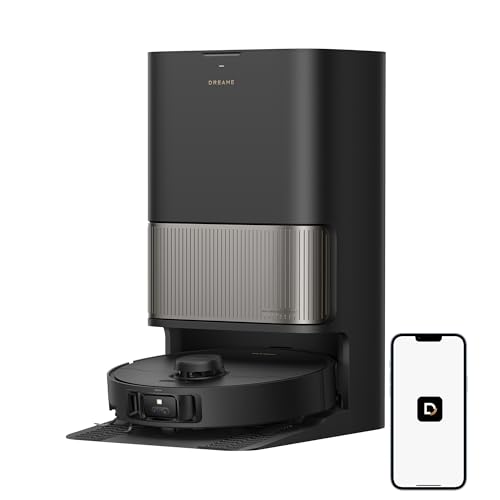
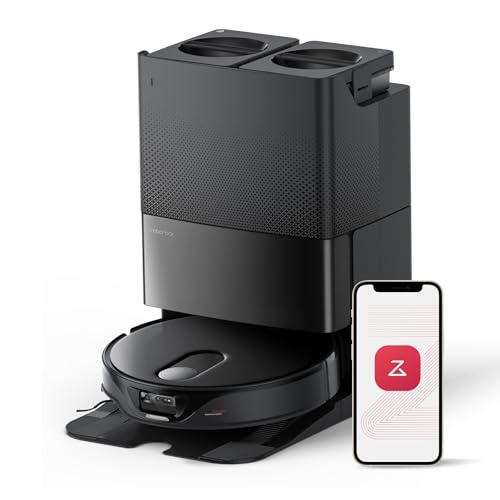
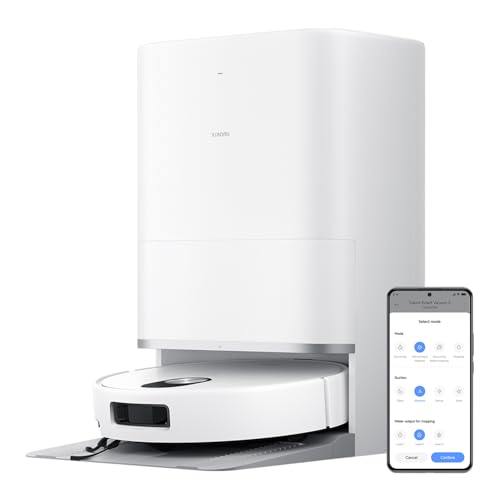
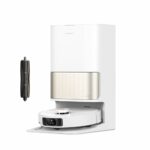
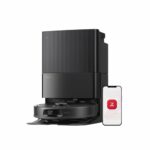
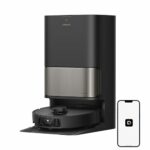
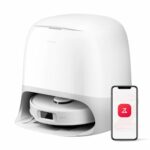
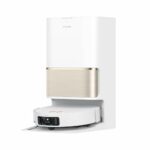
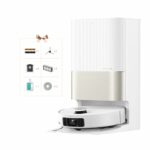
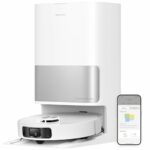
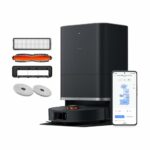
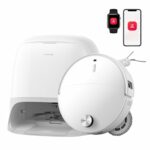
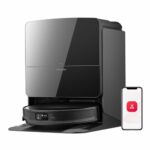
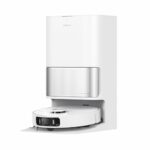
The Dreame L40s Pro Ultra, Roborock Qrevo Slim, and Xiaomi Robot Vacuum 5 represent three distinct approaches to premium robot vacuum technology in 2025. Whilst Dreame and Xiaomi have launched their models this year, the Qrevo Slim arrived in 2024 and has already established itself as a capable performer. All three feature multifunctional bases with mop washing and drying capabilities, making them suitable for homes where proper floor mopping matters as much as vacuuming.
These aren't entry-level devices. Each model targets users who want comprehensive cleaning automation, though they differ significantly in their technical specifications and capabilities. The Dreame positions itself as the most feature-rich option, the Roborock focuses on reliability with a slimmer profile, and the Xiaomi brings raw suction power to the table.
Power and Suction
Suction power tells an interesting story here. The Xiaomi Robot Vacuum 5 leads with 20,000 Pa, followed closely by the Dreame L40s Pro Ultra at 19,000 Pa. The Roborock Qrevo Slim sits at 11,000 Pa—nearly half the Xiaomi's output. In practical terms, this matters most on carpets and rugs, where higher suction helps extract embedded dirt and pet hair.
The main brush systems differ fundamentally. Dreame and Roborock both use dual anti-tangle designs, whilst Xiaomi employs its TriCut 3.0 system that combines bristles with cutting blades. The dual brush approach on the Dreame and Roborock tends to prevent hair wrapping more effectively, which becomes noticeable after a few weeks of use in homes with long hair or pets.
Brush elevation during mopping separates these models considerably. The Dreame L40s Pro Ultra lifts both its main brush and side brush when mopping, preventing wet bristles from spreading dirt. The Roborock raises its main brush but leaves the side brush down. The Xiaomi doesn't lift either. This affects cleaning efficiency—dragging wet brushes across clean mopped floors isn't ideal.
All three feature extensible side brushes for better edge cleaning. The Dreame and Xiaomi add anti-tangle properties to their side brushes; the Roborock doesn't. For homes with lots of dust accumulation along skirting boards, the extensible design helps all three models reach into corners more effectively.
Mopping
Each robot uses dual rotating mops, but their implementation varies. The Dreame L40s Pro Ultra includes mop extension with its Roboswing movement, allowing the pads to reach further along edges and even slightly under furniture lips. The Roborock and Xiaomi both extend their mops but without the additional swinging motion.
Mop lift height matters when transitioning between hard floors and carpets. The Xiaomi achieves 15 mm of lift—the highest here. The Dreame manages 10.5 mm and the Roborock 10 mm. Whilst these differences seem minor, that extra clearance on the Xiaomi helps with thicker rugs.
The Dreame stands alone with its ability to automatically detach mops at the base. When you only need vacuuming, it removes the mop pads entirely rather than just lifting them. This prevents any possibility of damp pads touching carpets during vacuum-only runs.
Dirt detection capabilities differ notably. The Dreame and Roborock both detect dirty mops and soiled floors, triggering additional cleaning passes. The Xiaomi lacks this feature entirely, relying on preset cleaning patterns regardless of actual floor condition.
Cleaning Base Functions
All three bases wash mops with hot water and dry them with warm air—essential for preventing bacterial growth and odours. The Dreame labels its system as third-generation self-cleaning, whilst Roborock uses version 1.0 of its technology. The Xiaomi simply confirms the feature exists without version details.
The Dreame L40s Pro Ultra includes a detergent dispenser, automatically adding cleaning solution during mop washing. Neither the Roborock nor Xiaomi offer this, requiring manual addition of detergent to the water tank if desired.
Storage capacity varies across the board. The Dreame provides the largest dust bag at 3.2 litres, compared to 2.7 litres for the Roborock and 2.5 litres for the Xiaomi. Clean water tanks measure 4.5 litres (Dreame), 4 litres (Roborock and Xiaomi). Dirty water capacity is 4 litres for the Dreame, 3.5 litres for the Roborock, and 3.8 litres for the Xiaomi. These differences affect how frequently you'll need to service the base—larger tanks mean less maintenance.
The Dreame offers an optional plumbing connection kit, purchased separately. This allows direct water supply and drainage, though it's not integrated as standard. The other two models don't support plumbing connections at all.
Navigation System
Navigation technology separates these models significantly. The Dreame L40s Pro Ultra uses a retractable LiDAR turret combined with dual AI cameras. The Roborock Qrevo Slim employs its StarSight 1.0 system with dual AI cameras as well. The Xiaomi relies on retractable LiDAR but omits AI cameras entirely.
Object recognition capabilities reflect this hardware difference. The Dreame recognises 180 different obstacle types, the Roborock identifies 73, and the Xiaomi's recognition count isn't specified. In practice, more recognised objects means fewer stuck robots and better navigation around everyday household items.
Pet detection features on the Dreame and Roborock allow these robots to identify animals and adjust behaviour accordingly—useful for avoiding sleeping pets or fresh accidents. The Xiaomi can't distinguish pets from other obstacles.
The Dreame goes further with curtain detection, preventing the robot from tangling itself in long drapes. Neither competitor offers this specific recognition.
Remote camera access works on both the Dreame and Roborock, letting you check on your home through the robot's cameras via the app. The Xiaomi, lacking cameras, can't provide this function. Both camera-equipped models include LED lighting for low-light navigation; the Xiaomi manages without.
Battery and Autonomy
All three robots share identical 5,200 mAh battery capacity, yet runtime differs considerably. The Dreame L40s Pro Ultra achieves 220 minutes of operation, the Roborock Qrevo Slim manages 180 minutes, and the Xiaomi Robot Vacuum 5 runs for 140 minutes. The Xiaomi's shorter runtime likely reflects its higher 20,000 Pa suction consuming more power.
For typical homes under 150 square metres, any of these runtimes suffices. Larger properties might find the Dreame's extended operation useful, particularly for completing whole-home cleaning in a single session without returning to recharge mid-clean.
Smart Features
Obstacle climbing ability sits at 20 mm for both the Roborock and Xiaomi. The Dreame handles simple steps but doesn't specify exact height capability. This matters for homes with door thresholds or raised room transitions—20 mm clearance handles most standard thresholds comfortably.
The Dreame and Roborock each include proprietary voice assistants built into the robot itself. The Xiaomi doesn't have its own assistant. All three support external voice control through Alexa and Google Home, so basic voice commands work regardless.
Dimensions
Height becomes critical for furniture clearance. The Roborock Qrevo Slim measures just 82 mm tall—noticeably lower than the Xiaomi at 88 mm and especially the Dreame at 103.8 mm. That 21.8 mm difference between the Roborock and Dreame determines whether the robot fits under many sofas, beds, and cabinets.
Diameter remains similar: 350 mm for the Dreame and Xiaomi, 353 mm for the Roborock. These measurements won't significantly affect navigation through doorways or around furniture legs.
Base dimensions matter for installation space. The Dreame base measures 340 mm wide, 590.5 mm tall, and 456.7 mm deep. The Roborock is 340 mm wide, 521 mm tall, and 487 mm deep. The Xiaomi spans 360 mm wide, 572 mm tall, and 470 mm deep. The Roborock's lower height and the Dreame's shallower depth might influence placement options in tight spaces.
Real-World Usage Scenarios
For homes with pets, the Dreame L40s Pro Ultra and Roborock Qrevo Slim offer distinct advantages through pet recognition and dual anti-tangle brushes. The Xiaomi's higher suction helps with embedded pet hair but lacks the AI to avoid animals or recognise accidents.
Large homes benefit from the Dreame's 220-minute runtime and larger tank capacities, reducing mid-clean interruptions. The Xiaomi's 140-minute battery might require recharging during extensive cleaning sessions in properties exceeding 200 square metres.
Low-clearance furniture strongly favours the Roborock Qrevo Slim. Its 82 mm height accesses spaces the others simply can't reach. If your beds or sofas sit close to the floor, this becomes the deciding factor.
Homes requiring minimal maintenance intervention suit the Dreame best. Automatic mop removal, detergent dispensing, and the optional plumbing kit reduce manual tasks considerably. The Roborock and Xiaomi demand more regular attention to mop management and detergent addition.
The Xiaomi's raw 20,000 Pa suction excels on thick carpets and rugs where deep cleaning matters most. However, its lack of AI cameras and shorter battery life limit its overall versatility compared to the other two models.
Conclusion: Which to Choose?
Choose the Dreame L40s Pro Ultra if you want the most comprehensive feature set available. The automatic mop removal, detergent dispenser, superior runtime, and extensive object recognition make it ideal for larger homes with pets where you value maximum automation. The higher price reflects genuinely useful capabilities rather than marketing gimmicks.
Choose the Roborock Qrevo Slim if furniture clearance matters above all else. That 82 mm height opens up cleaning areas other robots miss entirely. It delivers solid performance across all functions without the Dreame's advanced features, making it a sensible choice for those who prioritise reliability and access over cutting-edge technology.
Choose the Xiaomi Robot Vacuum 5 if maximum suction power drives your decision and you don't need AI camera features. The 20,000 Pa output and 15 mm mop lift handle demanding floor types effectively, though you'll sacrifice smart object recognition and remote monitoring. It suits homes with heavy-duty cleaning needs where brute force matters more than intelligent navigation.