Introduction
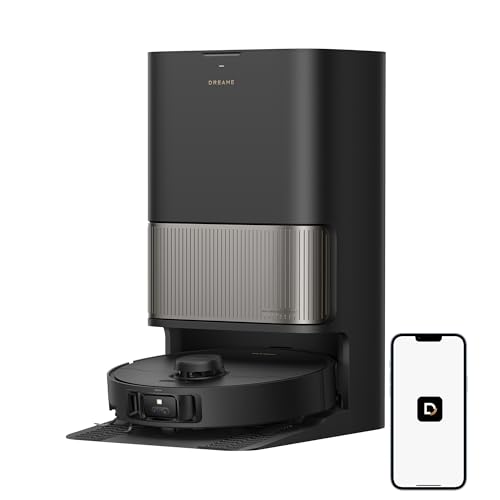
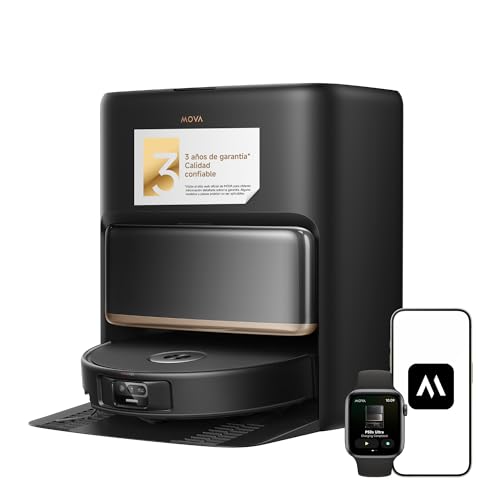
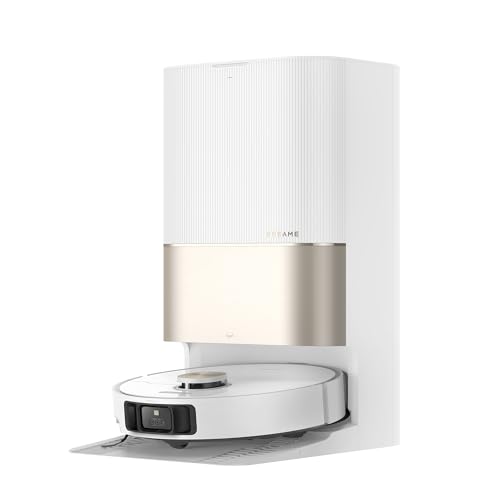
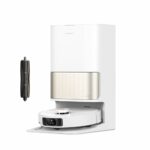
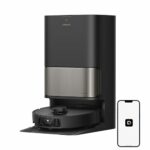
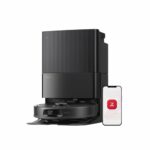
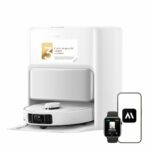
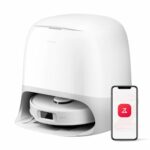
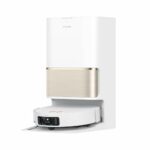
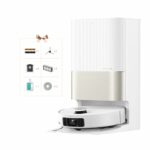
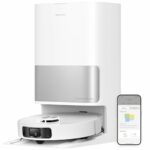
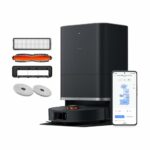
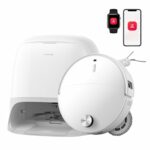
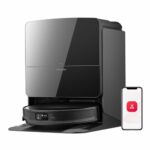
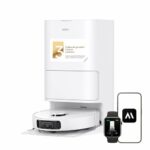
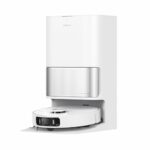
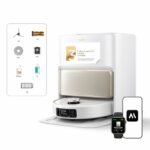
The Dreame L40s Pro Ultra and Mova P50s Ultra represent the latest generation of premium robot vacuum cleaners launched in 2025, whilst the Dreame X40 Ultra arrived in 2024 as a high-end predecessor. All three models feature comprehensive multifunctional bases that handle mop washing and drying, automatic dust emptying, and advanced AI navigation systems. These aren't entry-level devices—they're designed for users who want minimal intervention and maximum cleaning performance across larger properties.
The Mova P50s Ultra stands out immediately with its significantly lower profile at just 82.5mm, making it notably better suited for homes with low-clearance furniture. Meanwhile, the Dreame L40s Pro Ultra pushes suction power to 19,000Pa, positioning itself between the Mova's impressive 24,000Pa and the X40 Ultra's 12,000Pa. Each model brings distinct advantages depending on your home layout and cleaning priorities.
Key Differences at a Glance
- The Mova P50s Ultra delivers 24,000Pa suction—the highest of the three—and includes UV disinfection in its base
- Dreame L40s Pro Ultra offers 19,000Pa suction with a built-in voice assistant and third-generation base self-cleaning
- Mova P50s Ultra sits at just 82.5mm tall, compared to 103.8mm for the L40s Pro Ultra and 97mm for the X40 Ultra
- The L40s Pro Ultra features slightly larger water tanks (4.5L clean, 4L dirty) versus the Mova's 4L and 3.5L respectively
- Only the Dreame models (L40s Pro Ultra and X40 Ultra) offer an optional plumbing connection kit
- The Mova P50s Ultra uses FlashPulse navigation technology, whilst both Dreame models employ traditional LiDAR turrets
- The L40s Pro Ultra and Mova P50s Ultra both include proprietary voice assistants; the X40 Ultra doesn't
- The Mova recognises 200 different obstacles compared to 180 for the L40s Pro Ultra and 120 for the X40 Ultra
Suction Power and Brushwork
The Mova P50s Ultra takes the lead in raw suction capability with 24,000Pa—a substantial advantage when dealing with stubborn debris embedded in carpets or textured flooring. The Dreame L40s Pro Ultra sits at 19,000Pa, which remains more than adequate for most households, whilst the X40 Ultra's 12,000Pa feels somewhat modest by current flagship standards.
All three models deploy dual rotating brushes underneath—the HyperStream design that Dreame and Mova favour for minimising hair tangles. This dual-brush configuration proves particularly effective in homes with pets, as hair gets directed towards the suction inlet rather than wrapping around a single roller. Each robot can lift its main brush when mopping begins, preventing wet grime from contaminating the brush fibres.
Side brush functionality is identical across the board. Each model features an extendable side brush that reaches into corners more effectively, plus the ability to lift that brush during mopping to avoid flinging dirty water across clean floors. The anti-tangle design extends to the side brush as well, reducing the frequency of manual maintenance.
Mopping Performance
Mopping hardware is remarkably consistent across these three robots. Each uses dual rotating mop pads that extend outwards to reach skirting boards and edges—enhanced further by the RoboSwing feature that allows the robot to wiggle slightly and push the mop under furniture lips. Mop lift reaches 10.5mm on all models, sufficient to clear most low-pile rugs without dragging wet pads across them.
The bases wash mop pads with hot water and dry them using heated air, which helps prevent bacterial growth and musty odours between cleaning sessions. All three detect dirt levels on both the mops and the floor itself, triggering additional passes or mop washes when necessary. The robots can also detach their mops at the base when you only want vacuuming, avoiding unnecessary wear on the mopping mechanism.
Where differences emerge is in base maintenance. The Dreame L40s Pro Ultra and Mova P50s Ultra both feature third-generation self-cleaning systems for the wash tray, whilst the X40 Ultra uses a second-generation setup. In practical terms, this means the newer models require less frequent manual cleaning of the base's internal components. The Mova P50s Ultra adds UV disinfection to sanitise the wash tray—a feature absent from both Dreame models.
Navigation Systems
The Dreame L40s Pro Ultra and X40 Ultra rely on traditional LiDAR turrets—those spinning domes on top that map your home using laser pulses. The Mova P50s Ultra takes a different approach with FlashPulse technology, which contributes to its dramatically lower 82.5mm profile by eliminating the raised turret entirely.
All three employ dual AI cameras and forward-facing 3D laser sensors to identify and avoid obstacles in real time. The Mova P50s Ultra recognises 200 different object types, edging ahead of the L40s Pro Ultra's 180 and the X40 Ultra's 120. This expanded recognition database can make a tangible difference in cluttered homes where toys, shoes, and miscellaneous items regularly appear on the floor.
Pet owners will appreciate that all models specifically detect animals and adjust behaviour accordingly—slowing down near nervous cats or avoiding pet bowls. Curtain detection prevents the robots from becoming entangled in floor-length drapes. LED lighting enables navigation in dark rooms, and you can access the onboard camera remotely to check on your home whilst away.
Battery Life and Coverage
The Mova P50s Ultra packs the largest battery at 6,400mAh, matching the Dreame X40 Ultra's capacity, whilst the L40s Pro Ultra uses a 5,200mAh cell. Despite the smaller battery, the L40s Pro Ultra achieves 220 minutes of runtime—longer than the X40 Ultra's 194 minutes. The Mova's runtime figures aren't available, but the larger battery suggests comparable or superior endurance.
In practical terms, 220 minutes translates to coverage well beyond what most homes require in a single session. These robots return to base automatically to recharge if needed, then resume cleaning where they left off. For properties exceeding 200 square metres, the extended runtime becomes genuinely useful, reducing the number of recharge cycles during whole-home cleans.
Smart Features
All three robots handle simple obstacles like cables and low thresholds without issue. The Mova P50s Ultra and Dreame L40s Pro Ultra both manage single-step transitions, whilst the X40 Ultra specifies a 22mm climbing capability—enough for typical door thresholds and slight floor level changes between rooms.
The Dreame L40s Pro Ultra and Mova P50s Ultra include proprietary voice assistants, allowing you to issue commands directly to the robot without relying on external smart speakers. The X40 Ultra lacks this built-in assistant but still integrates with Alexa and Google Home, as do the newer models. This matters less if you already use a smart home ecosystem, but the onboard assistant can be convenient for quick commands without unlocking your phone or addressing a separate device.
Multifunctional Base Specifications
Each base handles the full suite of maintenance tasks: emptying the robot's 300ml dust bin into a 3.2-litre bag, washing mop pads with hot water, and drying them with heated air. Detergent dispensers allow you to add cleaning solution that's automatically mixed during mop washing.
The Mova P50s Ultra distinguishes itself with UV disinfection that sanitises the wash tray after each cleaning cycle. This feature targets bacteria that might otherwise accumulate in the damp environment of the base—potentially valuable for households concerned about hygiene, though regular maintenance keeps any base reasonably clean.
Water tank sizes vary slightly. The Dreame L40s Pro Ultra holds 4.5 litres of clean water and 4 litres of dirty water, whilst the Mova P50s Ultra uses 4-litre and 3.5-litre tanks respectively. The X40 Ultra matches the L40s Pro Ultra's capacities. These differences rarely matter in daily use unless you're cleaning exceptionally large areas in a single session.
Both Dreame models offer an optional plumbing connection kit purchased separately, allowing you to plumb the base directly into your home's water supply and drainage. The Mova P50s Ultra doesn't support this feature. Whilst convenient for those who want to eliminate manual tank filling entirely, it's worth noting this requires installation and isn't a standard inclusion.
Physical Dimensions
Height proves the most significant dimensional difference. The Mova P50s Ultra's 82.5mm profile allows it to slip beneath furniture that would block the Dreame L40s Pro Ultra at 103.8mm or the X40 Ultra at 97mm. If you have low-clearance sofas, beds, or cabinets, this 15-20mm difference determines whether the robot cleans under them or simply maps them as no-go zones.
All three share a 350mm diameter, standard for this class of robot. Base dimensions tell an interesting story: the Dreame L40s Pro Ultra and X40 Ultra use identical bases (340mm wide, 590.5mm tall, 456.7mm deep), whilst the Mova P50s Ultra's base is wider at 420mm but shorter at 470mm. The Mova's base footprint is slightly more compact vertically, which may suit certain cupboard or alcove installations better.
Real-World Usage Scenarios
For homes with abundant low furniture, the Mova P50s Ultra's 82.5mm height becomes a decisive advantage. Its 24,000Pa suction ensures it doesn't sacrifice cleaning performance for that slim profile, and the 6,400mAh battery supports extended cleaning sessions across larger properties. The UV disinfection adds peace of mind if you're particularly conscious about hygiene around the base station.
The Dreame L40s Pro Ultra suits users who prioritise longer battery runtime and slightly larger water tanks, particularly if you're considering the optional plumbing kit for a truly hands-off setup. The third-generation base self-cleaning reduces maintenance frequency compared to the X40 Ultra, and the built-in voice assistant adds convenience if you prefer not to rely on external smart speakers.
Pet owners will find all three models well-equipped with anti-tangle brushes and strong suction, though the Mova's higher 24,000Pa rating provides extra margin when dealing with embedded fur in carpets. The expanded obstacle recognition (200 objects versus 180 or 120) also helps in homes where pet toys and accessories regularly appear on the floor.
For multi-level homes, the lighter weight and lower profile of the Mova P50s Ultra makes it easier to carry between floors, though all three require their bases to remain on a single level. If you're cleaning primarily hard floors with occasional rugs, the mopping capabilities are essentially identical—any differences come down to base maintenance features like UV disinfection rather than core mopping performance.
Conclusion: Which Should You Choose?
Choose the Dreame L40s Pro Ultra if you want strong all-round performance with 19,000Pa suction, the longest runtime at 220 minutes, and you value the third-generation base self-cleaning system. The built-in voice assistant adds convenience, and the option to purchase a plumbing connection kit later appeals to those planning a permanent, fully automated setup. This model suits medium to large homes where furniture clearance isn't a limiting factor.
Choose the Mova P50s Ultra if low-profile access is essential—at 82.5mm, it fits under furniture that blocks taller robots. The 24,000Pa suction leads the comparison, and UV disinfection in the base provides additional hygiene assurance. The 6,400mAh battery matches the X40 Ultra's capacity, and the 200-object recognition database helps in cluttered or pet-filled homes. This model excels in properties with abundant low-clearance furniture and users who prioritise maximum suction power.
Choose the Dreame X40 Ultra if you're comfortable with a 2024 model that still delivers solid performance at potentially lower pricing. The 12,000Pa suction remains adequate for most homes, and the 6,400mAh battery provides good coverage. Whilst it lacks the built-in voice assistant and third-generation base cleaning of the newer models, it shares the same mopping hardware and offers the plumbing kit option. This suits budget-conscious buyers who don't need the absolute latest features but still want a capable robot vacuum cleaner with comprehensive base functionality.