Introduction
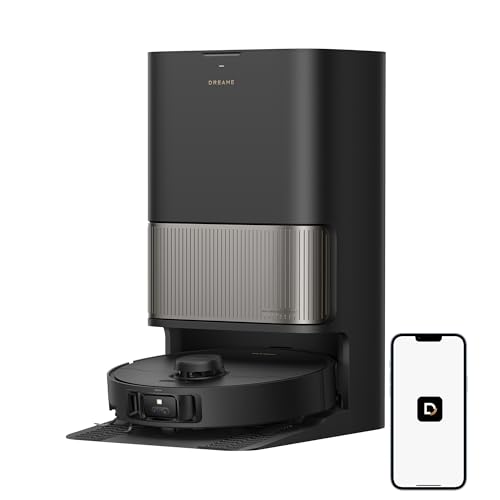
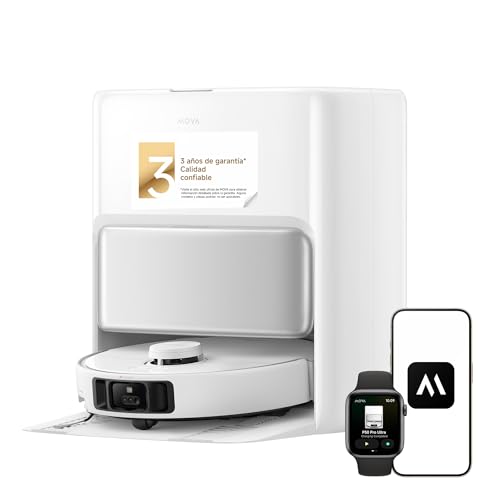
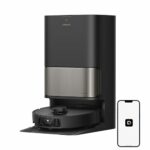
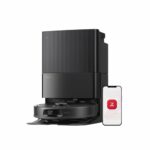
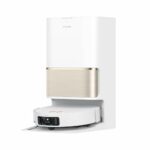
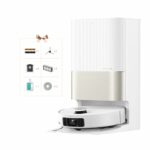
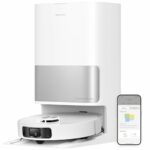
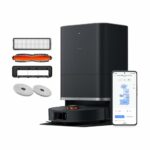
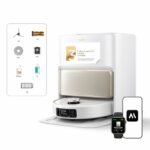
The Dreame L40s Pro Ultra and Mova P50 Pro Ultra represent two flagship robot vacuum cleaners launched in 2025, both positioned at the premium end of the market. These models share a common DNA—Mova is actually Dreame's second brand—which explains the numerous similarities in their technical specifications. Both feature advanced multifunction bases, powerful suction, and sophisticated AI navigation systems designed for comprehensive hands-free cleaning.
What makes this comparison particularly interesting is that whilst these robots share identical core specifications in many areas, subtle differences in water tank capacities, obstacle recognition capabilities, and base dimensions could influence which model suits your home better. These are robots built for users who want complete automation: they vacuum, mop, wash their own mops with hot water, dry them with heated air, and empty their own dustbins. The question isn't whether they're capable—it's which variant fits your specific requirements.
Key Differences at a Glance
- The Dreame L40s Pro Ultra offers 220 minutes of autonomy versus 210 minutes on the Mova P50 Pro Ultra
- Dreame uses a dual HyperStream brush system whilst Mova employs TriCut 3.0 technology
- The Dreame recognises 180 obstacles compared to 160 on the Mova
- Water tank capacities differ: Dreame has 4.5L clean and 4L dirty water; Mova has 4L clean and 3.5L dirty
- Dreame can manage stepped obstacles whilst Mova handles 22mm single-level obstacles
- Dreame offers an optional water pipe connection kit (sold separately); Mova doesn't
- Base dimensions vary significantly: Dreame's is taller (590.5mm vs 470mm) but narrower (340mm vs 420mm)
Power and Suction
Both models deliver identical 19,000 Pa suction power, placing them amongst the most powerful robot vacuums available. This level of suction handles everything from fine dust on hard floors to embedded dirt in carpets without breaking stride.
Where they diverge is in brush technology. The Dreame L40s Pro Ultra features a dual HyperStream brush design, which uses two brushes anchored at one end to actively prevent hair entanglement—particularly valuable in homes with pets or long-haired occupants. The Mova P50 Pro Ultra opts for TriCut 3.0, combining bristles with integrated cutting blades that slice through tangled hair during operation. Both approaches tackle the same problem from different angles, though the HyperStream system generally requires less manual maintenance.
Each robot lifts its main brush during mopping to avoid dragging a wet brush across carpets, and both feature extendable side brushes that reach into corners more effectively. These side brushes also elevate during mopping and incorporate anti-tangle technology. For homes with multiple floor types and pet hair challenges, either system performs admirably.
Mopping
The mopping systems are virtually identical. Both use dual rotating mops that extend outwards to reach edges and employ a movement pattern that pushes the mop slightly under furniture edges and skirting boards. Mop elevation reaches 10.5mm on both models, sufficient to climb onto most low-pile rugs without getting them wet, though you'll want to remove thicker carpets from mopping zones.
Neither model heats the water used to clean floors—they use cold water for actual floor mopping—but this is where the multifunction bases shine. Both bases wash the mops with hot water during cleaning sessions and between rooms, ensuring the robots always mop with clean pads rather than spreading dirty water around. After finishing, the bases wash the mops again and dry them using heated air, which prevents odours and bacterial growth.
Dirt detection technology appears on both robots, allowing them to identify soiled areas on floors and re-clean them automatically. The mops can also be automatically removed at the base, letting the robots switch to vacuum-only mode when needed. This proves useful when you've got a mix of hard floors and thick carpets throughout your home.
Navigation System
Navigation hardware is nearly identical across both models. Each uses a 3D LiDAR turret for room mapping combined with dual AI cameras and frontal 3D laser sensors for obstacle detection. LED lighting enables night-vision capabilities, and both offer remote camera access through their respective apps.
The meaningful difference lies in obstacle recognition breadth. The Dreame L40s Pro Ultra identifies 180 different object types, whilst the Mova P50 Pro Ultra recognises 160. In practical terms, this means the Dreame might navigate slightly more confidently around unusual items—children's toys, charging cables, pet bowls—though both handle common household obstacles competently. Both detect pets and curtains specifically, adjusting their cleaning approach accordingly.
CleanGenius AI technology features on both robots, enabling them to adjust suction power and mopping intensity based on detected dirt levels and floor types. This intelligent adaptation means less manual intervention through the app.
Battery and Autonomy
Battery capacity sits at 5,200 mAh for both models, but the Dreame L40s Pro Ultra squeezes out 220 minutes of runtime compared to the Mova's 210 minutes. This ten-minute difference won't matter much in most homes—both provide ample autonomy for large properties—but if you're cleaning a multi-storey house or particularly expansive floor plan, every minute counts.
Neither manufacturer specifies maximum coverage area or charging times in the available data, though with these battery capacities and the efficiency of modern navigation systems, you're looking at coverage suitable for homes well over 200 square metres on a single charge.
Smart Features
Obstacle climbing capability differs between the two. The Dreame L40s Pro Ultra can manage stepped obstacles—useful for navigating between rooms with different floor levels or climbing onto raised platforms. The Mova P50 Pro Ultra handles obstacles up to 22mm high, which covers most door thresholds and minor floor transitions but won't manage actual steps.
Both robots include their own voice assistants alongside compatibility with external systems like Alexa and Google Home. This dual approach means you can control them either through their native voice systems or integrate them into existing smart home ecosystems. Neither model includes a robotic arm, keeping the focus on core vacuuming and mopping performance rather than additional gimmicks.
Multifunction Base
The bases handle identical core functions: automatic dustbin emptying into 3.2L bags, hot water mop washing, heated air mop drying, and third-generation automatic tray cleaning to prevent limescale and bacteria buildup. Both include detergent dispensers that add cleaning solution during the mop washing cycle.
Water tank capacities reveal the first practical difference. The Dreame L40s Pro Ultra provides 4.5L of clean water and 4L for dirty water, whilst the Mova P50 Pro Ultra offers 4L and 3.5L respectively. For larger homes or extended mopping sessions, the Dreame's extra capacity means fewer manual refills, though the difference isn't dramatic.
The Dreame offers an optional water pipe connection kit, sold separately, which allows you to plumb the base directly into your water supply and drainage. This eliminates manual tank filling and emptying entirely. The Mova doesn't offer this option, even as an add-on. Whilst the kit requires separate purchase and isn't essential for most users, it's worth considering if you want truly zero-maintenance operation.
Dimensions
The robots themselves are identical: 350mm diameter and 103.8mm tall. This height allows them to slip under most furniture, though you'll want to measure clearances under sofas and beds if you have particularly low-profile pieces.
Base dimensions tell a different story. The Dreame L40s Pro Ultra's base measures 340mm wide, 456.7mm deep, and 590.5mm tall—it's narrower but considerably taller. The Mova P50 Pro Ultra's base spans 420mm wide, 458mm deep, and 470mm tall—wider but more compact vertically. If you're tucking the base into a narrow alcove or beside furniture, the Dreame's slimmer profile works better. If vertical space is limited—perhaps under a counter or in a low cupboard—the Mova's reduced height proves advantageous. Neither is particularly small, so measure your intended location carefully.
Real-World Usage
For homes with pets, both robots handle the challenge well thanks to anti-tangle brush systems and powerful suction. The Dreame's HyperStream brushes might require marginally less maintenance, but the Mova's TriCut system actively cuts through hair, so there's little practical difference for most pet owners.
In larger properties, the Dreame's extra autonomy and larger water tanks provide a slight edge, reducing the likelihood of mid-clean returns to base. The stepped obstacle capability also matters if your home has split-level rooms or raised platforms. For smaller to medium-sized homes without level changes, these advantages diminish.
The multifunction bases on both models mean genuinely hands-free operation for weeks at a time. You'll empty the dust bag monthly and refill water tanks every few days (or install the Dreame's optional plumbing kit to avoid even that). The hot water mop washing and heated drying mean you're not dealing with smelly, bacteria-laden mops—a significant upgrade over basic mopping robots.
Conclusion: Which Should You Choose?
Choose the Dreame L40s Pro Ultra if: you have a larger home where the extra battery life and water capacity matter; your property has stepped floor transitions between rooms; you value the broader obstacle recognition for complex environments; you want the option to add water pipe connectivity in future; or you need a narrower base to fit a specific space.
Choose the Mova P50 Pro Ultra if: you prefer a lower-profile base that fits under counters or in cupboards more easily; your home is medium-sized without significant level changes; you want to save money whilst getting essentially the same core performance; or you prefer a slightly wider base footprint that might feel more stable.
In truth, these robots are remarkably similar—testament to their shared engineering heritage. The Dreame offers incremental advantages in autonomy, water capacity, and obstacle handling that matter most in larger, more complex homes. The Mova delivers the same fundamental cleaning performance in a slightly more compact base at what's typically a lower price point. For most users, either choice provides excellent automated cleaning with minimal maintenance required.