Introduction
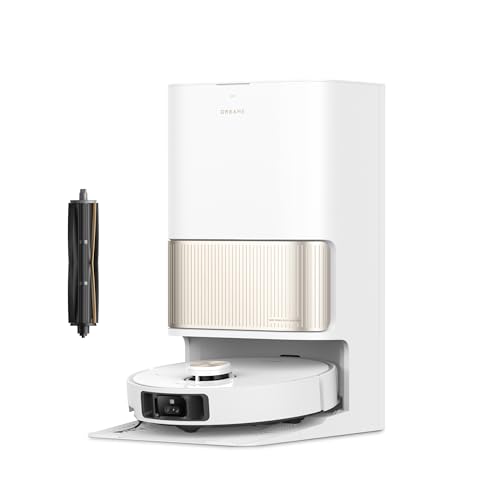
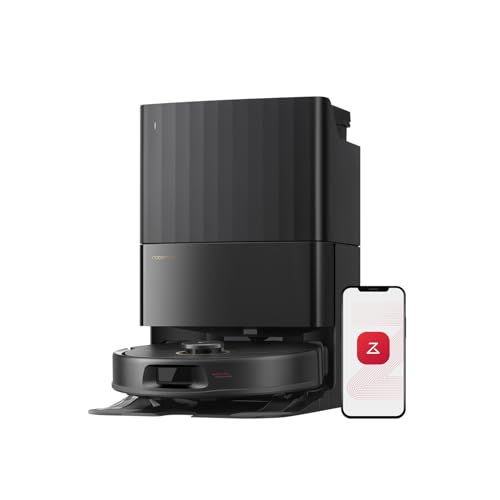
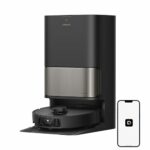
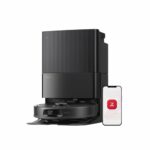
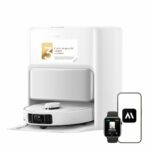
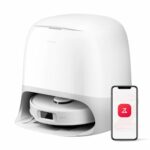
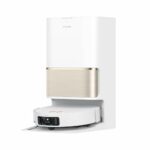
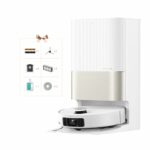
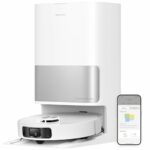
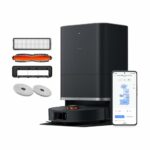
The Dreame L40 Ultra and Roborock Qrevo S5V represent two distinct approaches to high-end robotic cleaning. The Dreame model arrived in 2024 with an impressive array of advanced features, whilst Roborock's 2025 release focuses on refining core functionality with their signature reliability. Both incorporate multifunctional bases that handle everything from self-emptying to mop washing and drying, making them suitable for users who want minimal intervention in their cleaning routines.
These aren't entry-level machines. They're designed for households that demand thorough cleaning across mixed floor types, with enough intelligence to navigate complex layouts without constant supervision. The Dreame pushes boundaries with camera-based AI and hot water mop washing, whereas the Roborock emphasises straightforward efficiency with higher suction power.
Key Differences at a Glance
- Suction power: 12,000 Pa on the Qrevo S5V versus 11,000 Pa on the L40 Ultra
- Brush system: TriCut 3.0 on Dreame, DuoDivide anti-tangle on Roborock
- Mop washing: hot water on the L40 Ultra, cold water on the Qrevo S5V
- Camera AI: dual cameras with remote access on Dreame, absent on Roborock
- Automatic mop removal: only the L40 Ultra can detach mopads at the base
- Detergent tank: included on Dreame, not available on Roborock
- Robot height: 96.5 mm on Qrevo S5V, 103.8 mm on L40 Ultra
- Dirt detection: present on L40 Ultra for both mops and floors, missing on Qrevo S5V
Power and Vacuuming
The Roborock Qrevo S5V edges ahead with 12,000 Pa suction compared to the Dreame's 11,000 Pa. That extra thousand pascals translates to better pickup on carpets and in crevices, particularly when dealing with embedded dirt or pet hair. Roborock pairs this with their DuoDivide anti-tangle brush, which channels hair towards the central suction inlet rather than wrapping it around bristles.
Dreame counters with the TriCut 3.0 brush, combining bristles and integrated blades to slice through tangled hair as it vacuums. Both approaches work well in practice, though the TriCut design requires occasional blade cleaning to maintain cutting efficiency.
Where the L40 Ultra pulls decisively ahead is brush adaptability. The main roller lifts when mopping to prevent wet debris from clogging bristles, and the side brush does the same to avoid flicking water across dry areas. It also extends outward to sweep right into corners. The Qrevo S5V lacks these adjustments entirely—its brushes remain static whether vacuuming or mopping. For homes with varied floor layouts and tight corners, that flexibility matters considerably.
Mopping
Both models use dual rotating mopads that spin against the floor rather than simply dragging behind the robot. The Dreame extends its mops outward and incorporates a swaying motion (RoboSwing) to push slightly under furniture edges and skirting boards. The Roborock extends its mops as well but without the additional swaying movement.
Mop lift height differs marginally: 10.5 mm on the L40 Ultra versus 10 mm on the Qrevo S5V. Neither will clear thick shag rugs, but both handle standard carpets and low-pile mats without dragging wet fabric across them.
The real divergence appears in mop maintenance. Dreame washes its mopads with hot water at 65°C, which cuts through grease and dried-on grime more effectively than cold water alone. The Roborock sticks to cold water washing. Both dry mops with heated air, though the L40 Ultra adds automatic mop removal at the base—when you want vacuum-only operation, the robot detaches its mopads without manual intervention. The Qrevo S5V requires you to remove them yourself.
Dirt detection gives the Dreame another edge. Sensors identify heavily soiled areas and trigger additional mopping passes or return trips to the base for mop rinsing. The Roborock lacks this feedback loop, following its programmed cleaning pattern regardless of floor condition.
Navigation System
Both robots navigate using 3D LiDAR turrets that map rooms in real time, creating accurate floor plans and efficient cleaning routes. The similarities end there.
The Dreame L40 Ultra incorporates dual AI cameras, a front-facing 3D laser sensor, and LED lighting for low-light operation. It recognises over 100 different obstacle types, including pets and curtains, and allows remote camera access through the app—useful for checking on pets or verifying the robot hasn't trapped itself somewhere awkward. The AI Sage 11.0 processor and CleanGenius system analyse room usage patterns to adjust cleaning intensity automatically.
Roborock takes a more conservative approach. The Qrevo S5V relies on LiDAR and basic obstacle avoidance without cameras or 3D laser sensors. It doesn't identify specific objects, recognise pets, or offer remote viewing. SmartPlan 1.0 handles route optimisation, but without the contextual awareness that camera-based AI provides. For households concerned about privacy or those who simply don't need visual monitoring, this stripped-back navigation proves perfectly adequate.
Battery and Autonomy
Identical 5,200 mAh batteries power both machines, yet runtime differs slightly. The Dreame manages 194 minutes on a single charge, whilst the Roborock runs for 180 minutes. That extra quarter-hour on the L40 Ultra likely stems from efficiency optimisations in the AI Sage processor, though in practice both handle large homes comfortably—returning to recharge and resuming where they left off if needed.
Neither manufacturer specifies charging times, but typical cycles for this battery capacity run between three and four hours.
Smart Features
The L40 Ultra climbs obstacles up to 22 mm high—enough to mount thick door thresholds and transition strips without getting stranded. The Qrevo S5V manages 20 mm, which still clears most household transitions but may struggle with particularly tall thresholds.
Voice control works differently between the two. Dreame includes an onboard voice assistant that responds to direct commands without requiring external smart speakers. The Roborock integrates with Alexa and Google Home but doesn't have its own assistant. If you already use a smart home ecosystem, the Roborock slots in seamlessly; if you prefer standalone operation, the Dreame offers more flexibility.
Multifunction Base Station
Both bases handle the complete cleaning cycle: emptying the robot's dustbin into a sealed bag, washing mopads after each session, and drying them with heated air to prevent mildew. The differences lie in refinement and capacity.
Dreame's base holds a 3.2-litre dust bag compared to Roborock's 2.7 litres—roughly two months versus six weeks between bag changes in a typical household. Water tanks are similarly larger: 4.5 litres clean and 4 litres dirty on the L40 Ultra, against 4 litres clean and 3.5 litres dirty on the Qrevo S5V. The extra capacity means fewer refills, particularly useful in larger homes or with frequent mopping schedules.
Hot water mop washing on the Dreame removes stubborn residue more thoroughly than cold water, and the base includes a detergent dispenser that doses cleaning solution automatically during mop washing. The Roborock manages neither—no detergent tank, no hot water. The L40 Ultra also cleans its own wash tray after each mop cycle (second-generation self-cleaning), preventing bacterial buildup in the base itself. The Qrevo S5V requires manual tray cleaning.
Dreame offers an optional plumbing kit for permanent water connection, though this requires separate purchase and installation. The Roborock doesn't support plumbed connections at all. For most users, manual tank filling remains perfectly manageable.
Dimensions
Height determines whether a robot can slip under furniture. The Roborock Qrevo S5V stands 96.5 mm tall, whilst the Dreame L40 Ultra measures 103.8 mm—a 7.3 mm difference that allows the Roborock to squeeze beneath lower sofas and bed frames. If your furniture sits close to the floor, measure clearances carefully before choosing.
Diameter varies minimally: 353 mm on the Roborock versus 350 mm on the Dreame. Neither has a meaningful advantage in tight spaces.
Base station footprints differ more noticeably. The Dreame's base stands 590.5 mm tall and extends 456.7 mm deep, compared to 521 mm tall and 487 mm deep for the Roborock. The L40 Ultra's base is taller but shallower, whilst the Qrevo S5V sits lower but juts further from the wall. Consider available floor space and adjacent furniture when planning placement.
Real-World Use
For homes with pets, the Dreame's camera-based recognition helps it navigate around animals without startling them or getting tangled in toys. The dirt detection also proves valuable when muddy paws track mess indoors—the robot automatically intensifies cleaning in affected areas. The TriCut brush handles shedding reasonably well, though the Roborock's DuoDivide system arguably manages long hair more elegantly by channelling it away from the roller entirely.
In households with mixed flooring, the Dreame's elevating brushes prevent cross-contamination between vacuuming and mopping modes. The automatic mop removal takes this further, allowing pure vacuum operation without manual intervention. The Roborock requires you to physically remove mops when you want vacuum-only cleaning, which adds a small but regular maintenance step.
For larger properties, the Dreame's extended runtime and bigger water tanks reduce interruptions. Hot water mop washing and detergent dosing deliver visibly better results on kitchen floors and high-traffic areas where cold water alone struggles with grease and dried spills.
Smaller homes or apartments benefit more from the Roborock's lower profile and higher suction. If furniture clearance is tight and you don't need camera monitoring, the Qrevo S5V delivers excellent cleaning without the complexity of AI-driven features. The simpler interface may also appeal to users who prefer straightforward operation over extensive customisation.
Conclusion: Which Should You Choose?
Choose the Dreame L40 Ultra if you want comprehensive automation with minimal manual involvement. Hot water mop washing, automatic mop removal, dirt detection, and camera-based navigation make this the more sophisticated option. It suits larger homes, households with pets, and users who appreciate remote monitoring. The detergent dispenser and self-cleaning wash tray reduce maintenance further, whilst the extended battery and larger tanks handle bigger cleaning jobs without interruption.
Choose the Roborock Qrevo S5V if you prioritise raw suction power and a lower profile over advanced AI features. The 12,000 Pa motor and 96.5 mm height let it clean more aggressively and fit under lower furniture. It's ideal for privacy-conscious users who don't want cameras in their home, or those who prefer Roborock's established reliability and simpler operation. The lower base height may suit tighter installation spaces, and the straightforward design means fewer potential points of failure.
Both represent solid investments in automated cleaning. The Dreame pushes technological boundaries with hot water, AI, and hands-free operation. The Roborock refines core functionality with powerful suction and practical design. Your choice ultimately depends on whether you value cutting-edge features or proven performance with minimal complexity.