Introduction
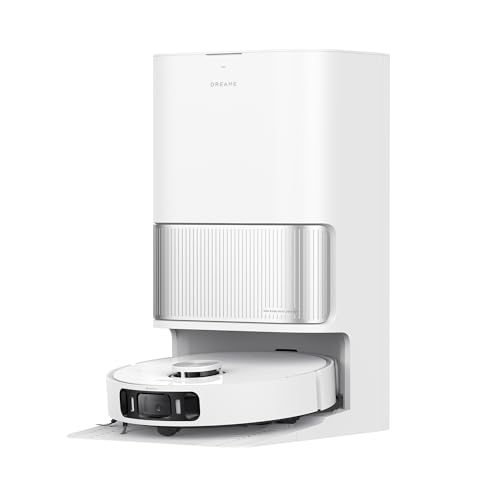
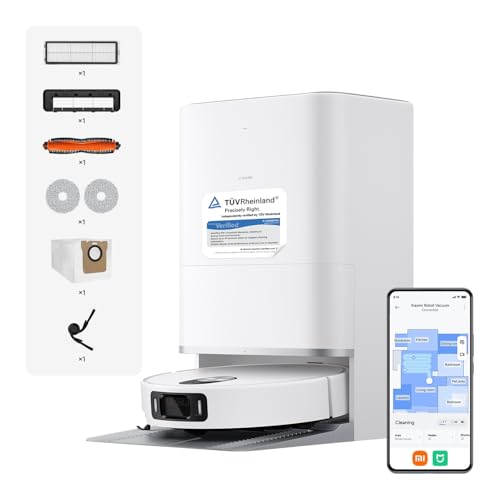
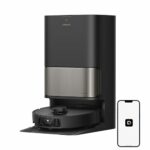
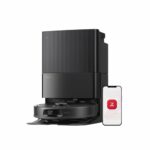
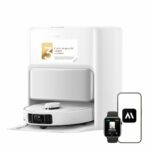
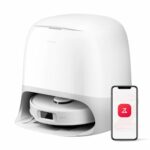
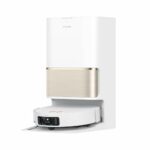
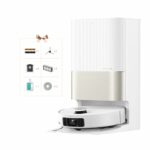
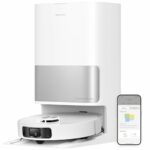
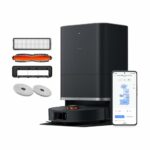
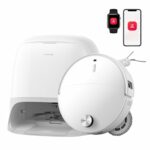
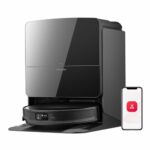
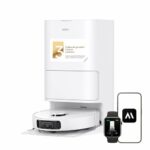
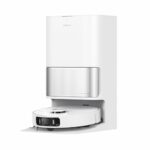
The Dreame L40 Ultra AE and the Xiaomi Robot Vacuum 5 Pro represent two of the most advanced cleaning solutions launched in 2025. Both models feature comprehensive multifunction bases that handle automatic emptying, mop washing with hot water, and hot air drying—essential features for anyone seeking a truly hands-off cleaning experience. These aren't entry-level units; they're designed for homeowners who want premium performance without constant manual intervention.
What makes this comparison particularly interesting is that whilst both robots share several core technologies, they diverge in specific areas that could prove decisive depending on your home layout and cleaning priorities. The Dreame option emphasises capacity and includes some features absent from its competitor, whilst the Xiaomi model focuses on enhanced navigation intelligence and edge cleaning capabilities.
Key Differences at a Glance
- The Xiaomi offers 20,000 Pa suction versus 19,000 Pa on the Dreame
- Only the Xiaomi features an extensible side brush for better corner coverage
- The Xiaomi includes anti-tangle technology on its side brush
- Mop elevation differs: 15 mm on the Xiaomi compared to 10.5 mm on the Dreame
- The Dreame provides a detergent dispenser, which the Xiaomi lacks
- Dust bag capacity is larger on the Dreame at 3.2 litres versus 2.5 litres
- Water tank sizes favour the Dreame: 4.5 L clean and 4 L dirty water
- Navigation differs: the Xiaomi recognises 200 obstacles compared to 120 on the Dreame
- Pet recognition is exclusive to the Dreame
- The Xiaomi includes AI-powered stain recognition
- Robot height varies: 88 mm for the Xiaomi versus 97 mm for the Dreame
Suction Power and Brushwork
Suction performance sits at 20,000 Pa for the Xiaomi Robot Vacuum 5 Pro, edging ahead of the 19,000 Pa delivered by the Dreame L40 Ultra AE. In practical terms, this 1,000 Pa difference might prove noticeable when tackling deeply embedded dirt in carpets or extracting pet hair from textured surfaces, though both figures represent excellent capability for 2025 standards.
Both models employ the TriCut 3.0 main brush system, which combines bristles with integrated blades to slice through tangled hair rather than allowing it to accumulate around the roller. This design proves particularly valuable in homes with long-haired residents or pets. The main brush lifts automatically during mopping on both units, preventing wet debris from transferring back onto cleaned floors.
The side brush configuration reveals a meaningful distinction. The Xiaomi includes an extensible side brush that reaches further into corners and along skirting boards, plus anti-tangle technology to prevent hair wrap-up. The Dreame lacks both features. For homes with complex floor plans featuring numerous corners and edges, this could translate into noticeably cleaner results without manual intervention. Neither model offers side brush elevation during mopping.
Mopping Performance
Both robots deploy dual rotating mops that spin to scrub floors rather than simply dragging a damp cloth across surfaces. The Dreame L40 Ultra AE incorporates Roboswing technology, which adds a subtle swaying motion allowing the mop pads to reach slightly under furniture edges and protruding cabinet bases. The Xiaomi also features mop extension for border cleaning, ensuring thorough coverage right up to walls.
Mop lift capability differs between the two. The Xiaomi raises its pads 15 mm when transitioning to carpets or returning to base, whilst the Dreame manages 10.5 mm. That extra clearance on the Xiaomi provides better protection for medium-pile rugs and reduces the risk of damp mops dragging across soft surfaces. Neither robot automatically detaches its mops at the base station, so both will carry them throughout the entire cleaning cycle.
Both models wash their mops with hot water and dry them using heated air—critical features for maintaining hygiene and preventing bacterial growth. They also share dirt detection technology that identifies heavily soiled areas and automatically triggers additional cleaning passes or mop rewashing. The water used for floor cleaning itself remains cold on both units.
Navigation Systems
The navigation approach differs slightly between these models. The Dreame employs a third-generation LiDAR turret system, whilst the Xiaomi uses a retractable LiDAR design. Both integrate AI cameras and 3D laser sensors for obstacle avoidance, plus LED lighting for effective operation in dark conditions. Remote camera access is available on both, allowing you to check on your home whilst away.
Object recognition capabilities reveal a substantial gap. The Xiaomi Robot Vacuum 5 Pro can identify and classify 200 different obstacles, significantly more than the 120 recognised by the Dreame. This enhanced intelligence should translate into more confident navigation around complex environments with varied furniture and household items.
The Dreame includes specific pet recognition, which can prove valuable if you have cats or dogs—the robot can identify and carefully navigate around resting animals. The Xiaomi compensates with AI-powered stain recognition that automatically detects marks on floors and adjusts cleaning intensity accordingly. Both models incorporate intelligent cleaning algorithms that adapt behaviour based on room type and detected conditions.
Battery and Autonomy
Battery capacity matches at 5,200 mAh for both robots. The Xiaomi provides specific autonomy data: 140 minutes of runtime, which should comfortably handle most homes in a single session. The Dreame's runtime isn't specified, though with identical battery capacity and similar power consumption profiles, performance should prove comparable.
Both robots can overcome obstacles up to 20 mm in height, allowing them to transition between rooms with raised thresholds or climb onto thick rugs without assistance. This capability reduces the likelihood of the robot becoming stranded during cleaning cycles.
Smart Features
Neither model includes a robotic arm or proprietary voice assistant, though both integrate with external systems like Alexa and Google Home for voice control. The intelligent cleaning systems differ in focus: the Dreame uses CleanGenius AI to optimise cleaning patterns, whilst the Xiaomi's AI concentrates on stain detection and targeted treatment.
Both robots feature comprehensive app control with mapping, scheduling, and customisation options. The camera systems enable remote monitoring, which adds a security dimension beyond simple cleaning functionality.
Multifunction Base Station
Both bases handle the essential tasks: automatic dust emptying, hot water mop washing, and hot air mop drying. The Dreame L40 Ultra AE includes second-generation automatic cleaning of the washing tray itself, whilst the Xiaomi also features this self-maintenance capability without specifying generation. Neither offers UV disinfection or integrated plumbing connection.
The Dreame stands out with its detergent dispenser, which automatically adds cleaning solution during mop washing for enhanced hygiene. This feature is absent from the Xiaomi. The Dreame also offers an optional plumbing connection kit (purchased separately), though this isn't a standard inclusion.
Capacity differences matter for maintenance intervals. The Dreame's dust bag holds 3.2 litres compared to 2.5 litres on the Xiaomi—potentially several extra weeks between bag changes. Water reservoirs also favour the Dreame: 4.5 litres of clean water versus 4 litres, and 4 litres of dirty water versus 3.8 litres. These larger capacities reduce refilling frequency, particularly beneficial for larger homes or those running multiple cleaning cycles between manual interventions.
Physical Dimensions
Robot height proves significant. The Xiaomi measures 88 mm tall, noticeably lower than the Dreame's 97 mm profile. That 9 mm difference expands access under low-clearance furniture like certain sofas, beds, and cabinets. For homes with limited under-furniture space, this could mean the difference between automated cleaning and manual intervention. Both robots share a 350 mm diameter.
Base station footprints differ slightly. The Dreame measures 340 mm wide, 590.5 mm tall, and 456.7 mm deep. The Xiaomi spans 360 mm wide, 572 mm tall, and 470 mm deep. The Dreame sits taller but narrower, whilst the Xiaomi spreads wider and deeper but stands shorter. Consider your available floor space when choosing between them.
Real-World Usage Considerations
For larger homes, the Dreame's superior tank capacities reduce maintenance interruptions. The 3.2-litre dust bag and larger water reservoirs mean less frequent emptying and refilling, whilst the detergent dispenser automates another aspect of upkeep. These advantages compound over time, particularly in homes exceeding 150 square metres or those with multiple occupants generating more debris.
Pet owners face a choice. The Dreame offers specific pet recognition, allowing it to navigate around resting animals without disturbing them. The TriCut 3.0 brush handles pet hair effectively on both models, though the Xiaomi's anti-tangle side brush might prove marginally better at preventing hair accumulation in that component.
Homes with complex layouts benefit from the Xiaomi's enhanced obstacle recognition and extensible side brush. The ability to identify 200 different objects reduces the likelihood of the robot becoming confused or stuck, whilst the extending side brush ensures thorough edge cleaning without requiring multiple passes. The lower profile also grants access to more spaces.
For those prioritising minimal intervention, the Dreame's detergent dispenser and larger capacities deliver a more hands-off experience. Conversely, if your home features numerous low-clearance furniture pieces or intricate room layouts, the Xiaomi's compact height and superior navigation intelligence prove more practical.
Conclusion: Which Should You Choose?
Choose the Dreame L40 Ultra AE if: you have a larger home requiring less frequent maintenance, value the convenience of automatic detergent dispensing, or own pets that benefit from specific recognition technology. The larger dust bag and water tanks mean fewer interruptions, whilst the detergent system maintains hygiene without manual addition. The optional plumbing kit also provides a future upgrade path if desired.
Choose the Xiaomi Robot Vacuum 5 Pro if: your home features low-clearance furniture, complex layouts with numerous corners, or you prioritise maximum suction power and obstacle intelligence. The 88 mm height opens access to spaces the Dreame cannot reach, whilst the extensible side brush and recognition of 200 objects deliver more thorough coverage in challenging environments. The AI stain detection also provides targeted cleaning where it matters most.
Both represent excellent investments for 2025, with comprehensive features that minimise manual cleaning. Your choice ultimately depends on whether you value capacity and convenience (Dreame) or navigation intelligence and compact dimensions (Xiaomi).