Introduction
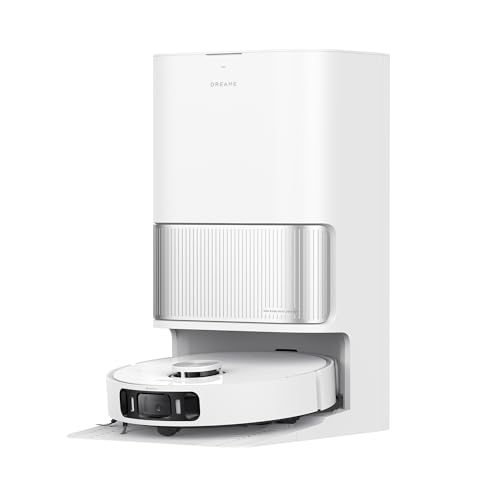
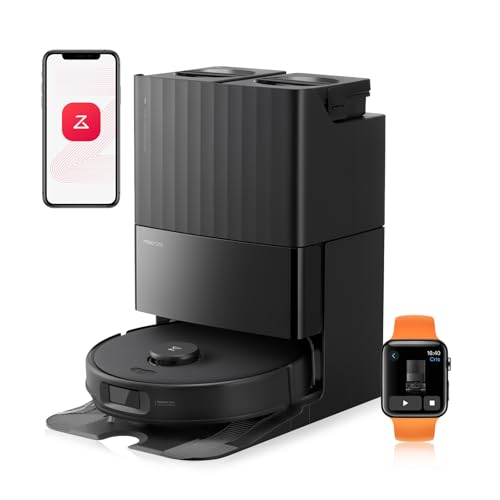
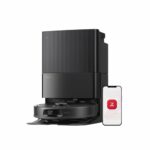
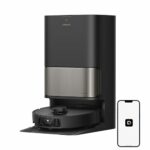
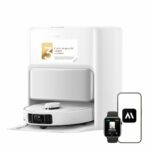
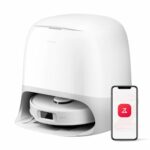
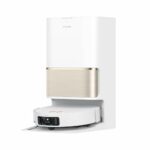
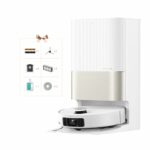
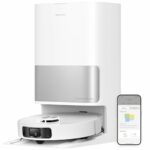
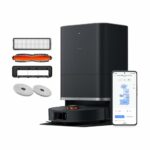
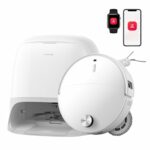
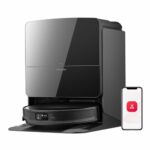
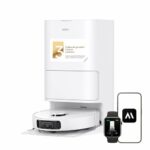
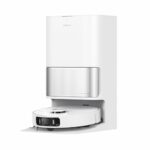
The Dreame L40 Ultra AE represents the brand's 2025 entry into the premium segment, whilst the Roborock Qrevo Edge S5A arrived in 2024 as part of Roborock's established Qrevo range. Both are high-end robotic vacuum cleaners equipped with multifunctional bases that handle mopping, washing, and drying automatically. These aren't entry-level devices—they're designed for users who want comprehensive floor care without daily intervention.
The Dreame model brings slightly more raw power and a few extra smart features, including AI camera capabilities and remote access. The Roborock, meanwhile, focuses on proven reliability with its extendable side brush and anti-tangle design. Both suit medium to large homes with mixed flooring, though their approaches differ in meaningful ways.
Power and vacuuming
Suction power sits at 19,000 Pa for the Dreame L40 Ultra AE, giving it a slight edge over the Roborock Qrevo Edge S5A's 18,500 Pa. In practice, that 500 Pa difference might show up when dealing with embedded dirt in carpet pile or fine dust in grouted tiles, though both figures are strong enough for most residential scenarios.
The main brush design tells a more interesting story. Dreame's TriCut 3.0 combines bristles with cutting blades to slice through tangled hair, which helps if you've got long-haired occupants or pets. Roborock counters with its DuoDivide Anti-tangle brush, which channels hair toward the central suction gap rather than letting it wrap around the roller. Both systems aim to reduce maintenance, just through different engineering.
A standout feature on the Dreame is its ability to lift the main brush during mopping. This prevents the roller from dragging wet dirt across the floor or leaving streaks when switching between vacuuming and mopping zones. The Roborock doesn't offer main brush elevation, so the roller remains in contact with the floor throughout the clean.
The side brush setup flips the script. Roborock's extendable side brush swings outward to reach into corners and along skirting boards, and it's also anti-tangle, which means less hair wrapping around the arm. The Dreame's side brush stays fixed and doesn't have anti-tangle properties. Neither model lifts the side brush when mopping, so both will drag it through damp areas.
For homes with pets or family members with long hair, the Roborock's side brush design may require less frequent cleaning. The Dreame's main brush lift, however, can be more useful if you're running combined vacuum-and-mop sessions across mixed flooring.
Mopping
Both robots use dual rotating mop pads, which spin to scrub rather than simply dragging a damp cloth across the floor. The Dreame L40 Ultra AE extends its mops using a movement called RoboSwing, which shifts the robot's rear slightly to push the mop under furniture edges and skirting boards. The Roborock Qrevo Edge S5A also extends its mops for edge coverage, though without the RoboSwing motion.
Mop lift height is nearly identical: 10.5 mm on the Dreame, 10 mm on the Roborock. Both are sufficient to clear low-pile rugs and prevent damp pads from touching carpet when the robot transitions between hard floors and soft surfaces.
Each base washes the mops with hot water and dries them with heated air, which helps prevent odours and bacterial growth. Both robots detect dirt on the mop pads and on the floor itself, triggering additional passes or re-washing cycles when needed. Neither model can automatically detach its mops at the base for vacuum-only runs, so you'll need to remove them manually if you're cleaning carpeted areas exclusively.
The Dreame's base includes a detergent dispenser, which doses cleaning solution during mop washing. The Roborock lacks this feature, so you'd need to add detergent to the clean water tank manually if you want to use it. The Dreame also supports an optional plumbing connection kit (sold separately), which can top up clean water and drain dirty water automatically. The Roborock doesn't offer a plumbing kit at all.
In real-world terms, the detergent dispenser and plumbing option make the Dreame slightly more hands-off for users who want to minimise refilling and emptying routines.
Navigation system
Both robots navigate using 3D LiDAR turrets, which map rooms quickly and build accurate floor plans. Where they diverge is in obstacle detection and smart features.
The Dreame L40 Ultra AE adds an AI camera with a 3D laser sensor at the front, plus LED lighting for night vision. This setup recognises up to 120 different obstacles and can identify pets specifically, adjusting cleaning patterns to avoid disturbing them or working around pet bowls and toys. The camera also supports remote access, so you can check in on your home through the app whilst you're out.
The Roborock Qrevo Edge S5A skips the camera entirely, relying on its 3D LiDAR and obstacle avoidance sensors instead. The number of obstacles it can recognise isn't listed, and there's no pet detection, night vision, or remote camera access. Its SmartPlan 2.0 AI does adjust cleaning strategies based on room layout and dirt levels, but it won't identify specific objects or let you peek through the robot's eyes.
For households with pets or young children, the Dreame's camera and object recognition can be genuinely useful. The Roborock's simpler sensor suite still avoids collisions and maps effectively, but it won't give you the same level of visual feedback or object-specific behaviour.
Battery and autonomy
Both robots carry 5,200 mAh batteries. The Roborock Qrevo Edge S5A is rated for 180 minutes of runtime, which should cover around 200–250 square metres depending on floor type and cleaning mode. The Dreame L40 Ultra AE doesn't list a specific runtime figure in the data provided, though the identical battery capacity suggests similar endurance.
Neither charging time is specified, but robots in this class typically recharge in three to four hours. Both models support recharge-and-resume, so they'll return to the base mid-clean if the battery runs low, then pick up where they left off once topped up.
For large homes or open-plan layouts, the Roborock's confirmed 180-minute runtime offers reassurance that the robot can complete a full clean without multiple recharge cycles.
Smart features
Both the Dreame L40 Ultra AE and Roborock Qrevo Edge S5A can climb obstacles up to 20 mm high, which handles typical door thresholds and low transitions between rooms. Neither includes a robotic arm or proprietary voice assistant, though both integrate with Alexa and Google Home for voice control.
The Dreame's CleanGenius AI and the Roborock's SmartPlan 2.0 both adjust cleaning intensity and route planning based on room type, dirt levels, and usage patterns. The Dreame's system leans more heavily on visual data from its camera, whilst the Roborock relies on sensor feedback and historical cleaning data.
Multifunctional base
Both bases handle auto-emptying, mop washing with hot water, and mop drying with heated air. Each also features second-generation self-cleaning for the washing tray, which reduces the need to scrub the base manually. Neither includes UV disinfection or automatic mop changing.
The Dreame's base holds a 3.2-litre dust bag, compared to 2.7 litres on the Roborock. That extra half-litre means fewer bag changes over time, especially in homes with pets or high foot traffic. The Dreame's water tanks are also larger: 4.5 litres for clean water and 4 litres for dirty, versus 4 litres and 3.5 litres respectively on the Roborock. Larger tanks extend the interval between refills and empties, which matters if you're mopping frequently or covering a large floor area.
As mentioned earlier, the Dreame's detergent dispenser and optional plumbing kit (purchased separately) offer more automation. The plumbing kit isn't essential, but it does eliminate manual water management entirely if you're willing to install it.
Dimensions
The robots themselves are nearly identical in size. The Dreame L40 Ultra AE measures 350 mm in diameter and 97 mm tall, whilst the Roborock Qrevo Edge S5A is 352 mm across and 98 mm high. That 1–2 mm difference is negligible; both should fit under most furniture with around 10 cm of clearance.
Base dimensions vary more noticeably. The Dreame's base stands 590.5 mm tall and 456.7 mm deep, whilst the Roborock measures 521 mm high and 487 mm deep. The Dreame is taller but less deep; the Roborock is shorter but sticks out further. Both are 340 mm wide. Consider your available floor space and whether you're tucking the base under a counter or into a cupboard—height or depth might matter depending on the spot.
Real-world use
For homes with pets, the Dreame L40 Ultra AE's AI camera and pet recognition offer practical benefits, especially if you want the robot to avoid disturbing sleeping animals or to clean around feeding areas more carefully. The TriCut 3.0 brush handles pet hair well, though the Roborock's DuoDivide brush and anti-tangle side brush may require less frequent maintenance if long hair is a constant issue.
In larger homes, the Roborock's confirmed 180-minute runtime and the Dreame's bigger dust bag and water tanks both contribute to fewer interruptions. The Dreame's detergent dispenser and optional plumbing kit suit users who want maximum automation and minimal hands-on involvement.
For mixed flooring—hard floors plus low-pile rugs—the Dreame's ability to lift its main brush during mopping prevents wet dirt from being dragged across dry zones. The Roborock's extendable side brush, meanwhile, does a better job reaching into corners and along edges during vacuuming.
Remote camera access on the Dreame can be useful if you're checking in on pets or monitoring deliveries, though it's not essential for cleaning performance. The Roborock's simpler sensor setup still navigates accurately and avoids obstacles, just without the visual feedback.
Conclusion: which to choose?
Choose the Dreame L40 Ultra AE if you want the highest suction power, AI camera features with remote access, pet recognition, and the option to add a plumbing kit for fully automated water management. The detergent dispenser, larger dust bag, and bigger water tanks also suit users who prefer longer intervals between maintenance tasks. The main brush lift is a bonus if you're running combined vacuum-and-mop sessions across mixed flooring.
Choose the Roborock Qrevo Edge S5A if you value proven reliability, prefer a simpler sensor setup without a camera, and want an extendable side brush that reaches into corners more effectively. The anti-tangle side brush and DuoDivide main brush require less frequent cleaning if hair is a constant issue. The confirmed 180-minute runtime and slightly more compact base height may also suit specific layout constraints.
For large homes with pets and a preference for hands-off automation, the Dreame offers more features and flexibility. For users who prioritise corner coverage, anti-tangle brushes, and a straightforward, camera-free design, the Roborock delivers solid performance without the extra complexity.