Introduction
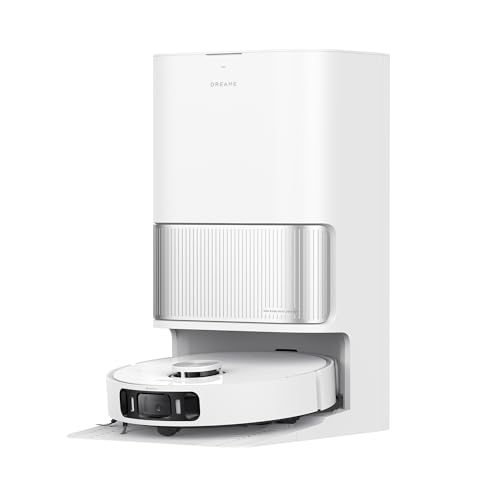
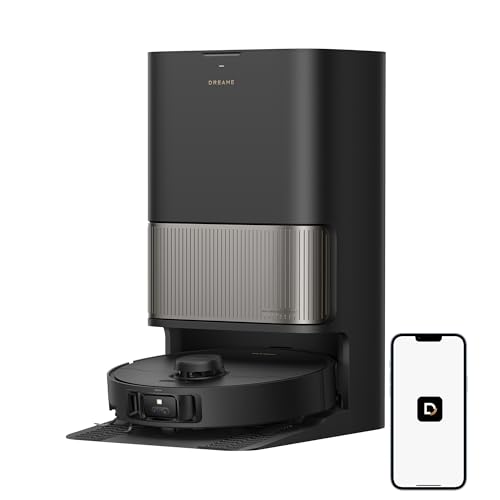
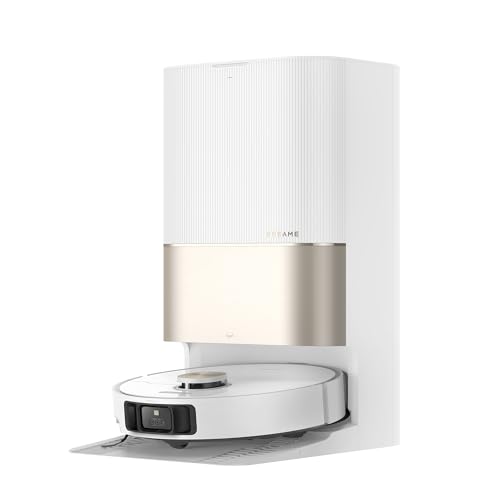
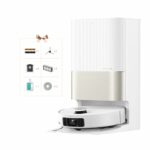
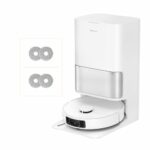
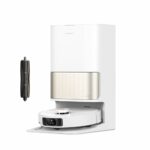
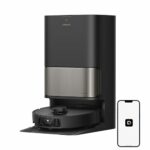
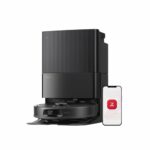
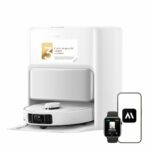
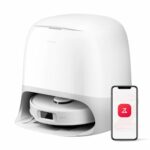
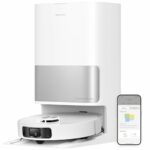
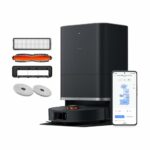
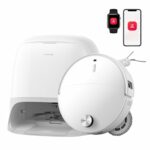
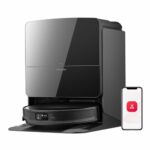
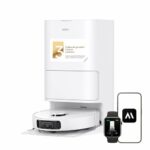
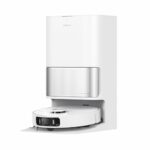
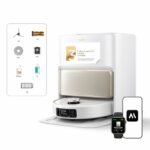
Dreame presents three high-end models that represent the evolution of its technology across two generations. The Dreame X40 Ultra arrived in 2024 as a premium reference, whilst the Dreame L40 Ultra AE and Dreame L40s Pro Ultra land in 2025 with notable improvements in certain areas. All three feature multifunctional bases with hot water mop washing and hot air drying, rotating dual mops with edge extension, and advanced AI navigation. The differences lie in specific details that can determine which suits each home best.
These robots target users seeking comprehensive automation: homes with multiple surface types, families with pets, and those who value a thorough mopping system without constant manual intervention.
Power and Suction
The 2025 models mark a substantial leap in suction power. Both the Dreame L40 Ultra AE and L40s Pro Ultra reach 19,000 Pa, a considerable increase over the 12,000 Pa of the X40 Ultra. This difference becomes particularly noticeable on carpets and rugs, where the newer models extract embedded dirt more effectively.
Regarding the main brush, the L40 Ultra AE maintains the TriCut 3.0 system that combines bristles with blades to cut tangled hair. The L40s Pro Ultra adopts a dual brush configuration, which tends to improve debris collection across different surface types. The X40 Ultra uses a simpler single brush design. All three lift their main brush during mopping to prevent contaminating clean floors.
The side brush reveals more pronounced differences. The L40 Ultra AE lacks extension or lifting capabilities, limiting its edge-cleaning performance. Meanwhile, the L40s Pro Ultra and X40 Ultra both feature extendable side brushes that reach into corners more thoroughly, plus they lift during mopping to avoid dragging dirt. The L40s Pro Ultra adds anti-tangle technology to its side brush, reducing maintenance for homes with long hair or pets.
Mopping
All three models share the same rotating dual mop system with edge extension and RoboSwing movement, allowing them to push mops slightly under furniture edges. They lift mops 10.5 mm to navigate low-pile rugs without wetting them. Each detects dirt on both mops and floors to adjust cleaning intensity.
The critical distinction appears in the L40s Pro Ultra's ability to automatically dismount its mops at the base. This means the robot can vacuum-only without dragging damp mops across carpets or when mopping isn't required. The L40 Ultra AE and X40 Ultra lack this feature, requiring manual mop removal for vacuuming-only sessions.
Regarding the base, all three wash mops with hot water and dry them with hot air, ensuring proper hygiene and preventing odours. The L40s Pro Ultra incorporates a third-generation self-cleaning tray system, whilst the other two use second-generation technology. In practice, this translates to reduced manual maintenance of the base itself. All include a detergent dispenser and offer an optional plumbing connection kit (sold separately) for those wanting to avoid refilling water tanks manually.
Navigation System
All three robots employ LiDAR navigation with AI cameras and frontal 3D laser sensors. They recognise pets, avoid obstacles, and allow remote camera access with night vision LED lighting. The differences lie in recognition depth and specific capabilities.
The L40 Ultra AE and X40 Ultra identify 120 objects, a respectable figure for avoiding common household items. The L40s Pro Ultra extends this to 180 objects thanks to its dual AI camera, offering more precise recognition and better adaptation to cluttered environments. This model also detects curtains, preventing the robot from becoming tangled, and includes AI-based spot stain recognition to intensify cleaning on specific dirty areas.
The X40 Ultra specifies its AI Sage 11.0 algorithm with an octa-core processor, though processing details for the 2025 models aren't fully disclosed. What's certain is that all three share CleanGenius technology for intelligent cleaning pattern adaptation.
Autonomy and Battery
The Dreame X40 Ultra leads in battery capacity with 6,400 mAh, delivering 194 minutes of autonomy. This suits larger homes where the robot needs extended runtime before returning to recharge. The L40 Ultra AE and L40s Pro Ultra feature 5,200 mAh batteries; the L40s Pro Ultra achieves 220 minutes of autonomy despite the smaller capacity, suggesting improved energy efficiency. Autonomy data for the L40 Ultra AE isn't available, though its battery matches the L40s Pro Ultra.
For homes under 150 square metres, any of these models provides ample autonomy. The difference becomes relevant in properties exceeding 200 square metres or complex layouts requiring multiple cleaning cycles.
Smart Features
The L40 Ultra AE climbs obstacles up to 20 mm, whilst the X40 Ultra manages 22 mm. The L40s Pro Ultra takes a different approach with a simple step-climbing system, though specific millimetre clearance isn't detailed. These figures matter for homes with thick rugs, raised thresholds, or uneven flooring transitions.
A unique feature of the L40s Pro Ultra is its built-in voice assistant, allowing direct voice commands without relying on Alexa or Google Home. The other two models support external voice assistants but lack their own. This can be convenient for quick instructions without activating a separate smart speaker.
Multifunctional Cleaning Base
All three bases share identical dimensions (340 mm wide, 590.5 mm tall, 456.7 mm deep) and identical tank capacities: 3.2-litre dust bag, 4.5-litre clean water, and 4-litre dirty water. All auto-empty the robot's dust bin, wash mops with hot water, dry them with hot air, and include a detergent dispenser.
The standout difference is the self-cleaning tray generation. The L40s Pro Ultra uses third-generation technology, whilst the L40 Ultra AE and X40 Ultra employ second-generation systems. This upgrade reduces the frequency of manual base tray cleaning. None feature UV disinfection or integrated plumbing connection, though all offer an optional plumbing kit for purchase separately.
Dimensions
The Dreame L40 Ultra AE and X40 Ultra measure 97 mm tall, enabling them to slip under most furniture and low-clearance spaces. The L40s Pro Ultra stands at 103.8 mm, nearly 7 mm taller, which may prevent access beneath certain sofas or beds. All share a 350 mm diameter.
This height difference deserves consideration if your home has furniture with limited floor clearance. Measuring the gap beneath sofas or cabinets before purchasing can prevent frustration later. The bases are identical in size across all models, requiring the same floor space.
Real-World Use Experience
For homes with pets, the L40s Pro Ultra stands out with its anti-tangle side brush and dual camera system for better pet recognition. Its 19,000 Pa suction handles pet hair on carpets effectively. The L40 Ultra AE offers similar suction but lacks side brush anti-tangle features, meaning slightly more maintenance. The X40 Ultra, with lower suction, may struggle more with embedded pet hair on thick carpets.
In large homes, the X40 Ultra's extended battery capacity proves advantageous, though the L40s Pro Ultra's superior autonomy despite a smaller battery suggests efficient energy management. The L40 Ultra AE's autonomy remains unclear, potentially limiting its suitability for expansive properties.
The automatic mop dismounting on the L40s Pro Ultra simplifies daily use. Homes with mixed flooring—carpets in bedrooms, hard floors in living areas—benefit from this automation. The other two require manual mop removal to avoid dampening carpets during vacuuming-only sessions.
For those prioritising minimal intervention, the L40s Pro Ultra's third-generation base tray cleaning reduces manual maintenance further. All three handle hard floors, parquet, and low-pile rugs thanks to mop lifting and adjustable suction.
Conclusion: Which to Choose?
Choose the Dreame L40 Ultra AE if you want 2025 suction power at a potentially lower price point, your home has standard furniture clearance (97 mm height works well), and you don't mind manually removing mops for vacuuming-only tasks. It suits medium-sized homes without excessive pet hair or complex obstacle recognition needs.
Choose the Dreame L40s Pro Ultra if you seek the most advanced features: automatic mop dismounting, dual AI camera with 180-object recognition, curtain detection, spot stain recognition, and a built-in voice assistant. It's ideal for homes with pets, mixed flooring, and users wanting maximum automation with minimal manual intervention. The third-generation base tray cleaning further reduces maintenance. Just ensure your furniture offers at least 104 mm clearance.
Choose the Dreame X40 Ultra if you have a large home requiring extended battery autonomy (194 minutes with 6,400 mAh), furniture with low clearance (97 mm height), and you're comfortable with 12,000 Pa suction. It remains a solid 2024 reference, though the 2025 models surpass it in suction and certain smart features. It's a sensible choice if found at a significantly reduced price compared to the newer models.