Introduction
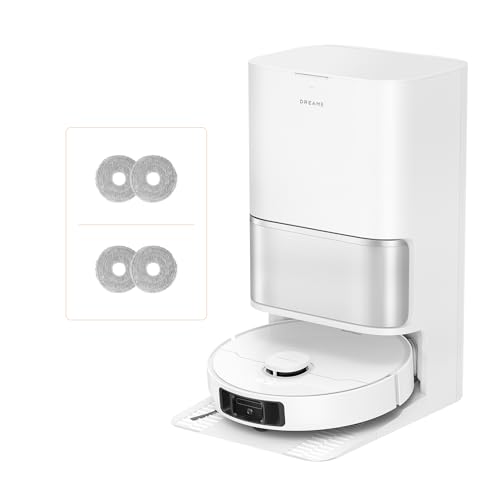
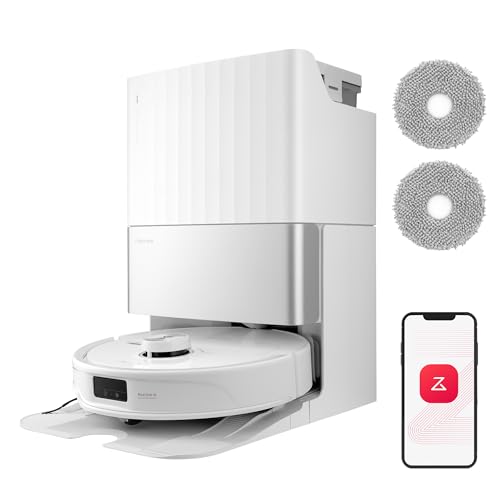
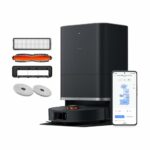
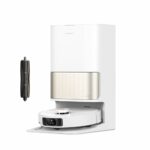
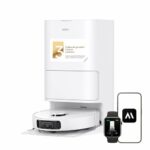
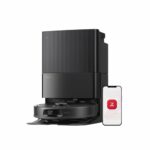
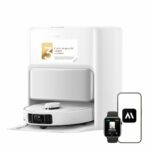
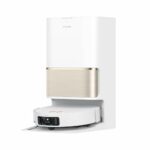
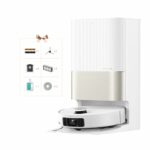
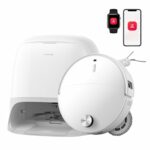
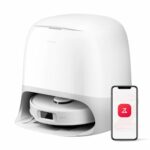
The Dreame L10s Ultra Gen 3 and the Roborock Qrevo Master represent two distinct approaches to premium robot vacuum cleaning, each bringing its own set of strengths to the table. The Dreame model arrives as a November 2025 release, positioning itself as one of the newest entries in the high-end segment, whilst the Qrevo Master launched in 2024 and has already established itself as a solid performer in the Roborock lineup.
These are both multifunctional robots with comprehensive cleaning stations that handle vacuuming, mopping, automatic emptying, mop washing and drying. They're designed for users who want minimal intervention in their cleaning routine and expect thorough results across different floor types. The choice between them will largely depend on whether you prioritise raw suction power and larger tank capacities, or prefer advanced AI navigation with camera-based features.
Differences at a Glance
- The Dreame L10s Ultra Gen 3 delivers 25,000 Pa suction compared to 10,000 Pa on the Roborock Qrevo Master
- The Qrevo Master features a dual roller brush system and can lift this brush during mopping; the Dreame uses a single brush without elevation
- Roborock includes dual AI cameras with remote access and LED night vision; Dreame has no camera system
- The Qrevo Master detects dirt on mops and floors to trigger automatic rewashing or extra passes; the Dreame lacks this feature
- Dreame's base washes mops with cold water, Roborock uses hot water
- The Dreame station includes a detergent dispenser and offers a kit for plumbing connection (sold separately); the Qrevo Master has neither
- Dreame provides longer autonomy at 231 minutes versus 180 minutes for the Roborock
- The Qrevo Master has its own voice assistant; the Dreame relies on external assistants like Alexa or Google Home
- Dreame's dust bag capacity is larger at 3.2 litres compared to 2.7 litres
- The Dreame robot stands at 97 mm tall; the Roborock measures 103 mm
Power and Suction
The most striking difference in this comparison lies in suction power. The Dreame L10s Ultra Gen 3 boasts 25,000 Pa, which is exceptionally high even for 2025 standards. The Roborock Qrevo Master sits at 10,000 Pa, a respectable figure but significantly lower. In practice, this gap will be most noticeable on carpets and rugs, where the Dreame should extract more embedded dirt and pet hair from fibres.
The brush configurations differ considerably. Roborock employs its DuoDivide dual roller system, which uses two brushes to channel debris towards the central suction point, reducing hair tangles. The Dreame uses a simpler single brush design. What the Roborock gains in anti-tangle engineering, it also adds in versatility: the main brush can lift during mopping to avoid getting wet, something the Dreame cannot do.
Both models feature extendable side brushes to reach into corners more effectively. Neither offers anti-tangle technology on the side brush, and neither can lift the side brush during mopping. For homes with long-haired occupants or shedding pets, the Roborock's dual brush system may require less frequent maintenance, whilst the Dreame compensates with sheer suction force.
Mopping
Both robots use rotating dual mops that extend towards edges. The Dreame L10s Ultra Gen 3 adds a Roboswing feature, allowing the robot to wiggle slightly and push the mop under furniture lips and skirting boards. The Qrevo Master extends its mops but without the swinging motion.
Mop elevation is nearly identical: 10.5 mm on the Dreame and 10 mm on the Roborock. This height is sufficient to lift the pads clear of most low-pile rugs, preventing them from getting wet during vacuuming runs. Neither model can automatically detach the mops at the base, so you'll need to remove them manually if you want a vacuum-only session.
Where the Roborock pulls ahead is in intelligent mopping. It detects dirt on both the floor and the mop pads themselves, triggering automatic rewashing at the base or additional passes over stubborn spots. The Dreame lacks these sensors, so it follows its programmed routine without adapting to actual floor conditions. For kitchens or high-traffic areas where spills and grime vary day to day, the Qrevo Master's adaptive approach can make a tangible difference.
Mop washing happens differently at the base. The Dreame station uses cold water, whilst the Roborock heats the water for washing. Hot water generally loosens grease and dried-on dirt more effectively. Both stations dry the mops with hot air, which helps prevent odours and bacterial growth.
Navigation System
Both robots navigate using a 360° LiDAR turret and front-facing 3D laser sensors for obstacle detection. They can recognise pets and avoid common household items. The fundamental difference lies in the Qrevo Master's dual AI cameras, which the Dreame entirely lacks.
These cameras allow the Roborock to identify up to 62 different object types, far more granular than basic laser detection alone. The Qrevo Master also features LED lighting for night vision and permits remote camera access through the app, effectively turning the robot into a mobile home monitor. The Dreame offers none of this visual intelligence.
The Roborock runs on its RR Mason 11.0 algorithm with SmartPlan 1.0, whilst the Dreame uses CleanGenius AI. Both systems learn room layouts and optimise cleaning paths, but the Qrevo Master's camera-based recognition gives it an edge in cluttered homes with lots of cables, shoes or toys scattered about.
Battery and Autonomy
Both models share the same 5,200 mAh battery capacity, yet the Dreame L10s Ultra Gen 3 achieves 231 minutes of runtime compared to 180 minutes for the Roborock Qrevo Master. This suggests more efficient power management on the Dreame, likely because it doesn't run cameras or as many sensors continuously.
The extra 51 minutes may not seem dramatic, but it can be the difference between completing a large home in one go or needing a mid-clean recharge. For properties over 150 square metres, the Dreame's stamina becomes a practical advantage.
Smart Features
Both robots can climb obstacles up to 20 mm, enough to handle most door thresholds and thick rugs without getting stuck. Neither includes a robotic arm or advanced manipulation features beyond their standard brushes and mops.
The Roborock Qrevo Master has its own built-in voice assistant, allowing direct voice commands to the robot without relying on external smart home ecosystems. The Dreame L10s Ultra Gen 3 integrates with Alexa and Google Home but doesn't have its own assistant. This may matter if you prefer a unified control method or want the robot to respond independently when your phone isn't nearby.
Multifunctional Base Station
Both bases handle automatic dust emptying, mop washing and hot air drying. The Dreame station holds a 3.2-litre dust bag compared to 2.7 litres on the Roborock, meaning slightly less frequent bag changes. Water tank capacities also favour the Dreame: 4.5 litres of clean water and 4 litres for dirty water, versus 4 litres and 3.5 litres respectively on the Qrevo Master. These differences are modest but add up over weeks of use in larger homes.
The Dreame base includes third-generation automatic tray cleaning, whilst the Roborock uses version 1.0 of this feature. In practice, this means the Dreame station should require less manual scrubbing of the washing tray where mops are cleaned.
A notable inclusion on the Dreame is the detergent dispenser, which doses cleaning solution during mop washing for better results. The Roborock lacks this tank entirely, relying on water alone. The Dreame also offers an optional plumbing connection kit (purchased separately) that can auto-fill and drain the station, though this isn't built in. The Roborock has no such option.
Neither base includes UV disinfection or automatic mop changing systems.
Dimensions
The Dreame robot measures 350 mm in diameter and stands 97 mm tall. The Roborock Qrevo Master is slightly wider at 353 mm and taller at 103 mm. That 6 mm height difference can matter if you have low-clearance furniture; the Dreame is more likely to slip under sofas and beds without getting stuck.
Base station footprints are similar in width (both 340 mm) but differ in height and depth. The Dreame base is taller at 590 mm versus 521 mm, whilst the Roborock extends deeper at 487 mm compared to 457 mm. Consider your available floor space and whether vertical or horizontal clearance is tighter in your home.
The Dreame's onboard dust bin holds 300 ml, larger than the Qrevo Master's 220 ml. This can reduce how often the robot needs to return to the base during a single cleaning session, particularly useful in very dusty environments.
Real-World Use
For homes with thick carpets or multiple pets, the Dreame L10s Ultra Gen 3 offers clear advantages. The 25,000 Pa suction will pull more fur and debris from carpet fibres, and the longer battery life means it can cover expansive areas without interruption. The larger dust bag and water tanks also suit bigger properties where you want to minimise maintenance frequency.
The Roborock Qrevo Master shines in cluttered or multi-room homes where obstacles vary. Its dual cameras and dirt detection mean it adapts on the fly, rewashing mops when needed and recognising a wider range of objects to avoid. The hot water mop washing and dual brush system appeal to users who prioritise mopping performance and low-maintenance brush care. Remote camera access adds a security dimension that the Dreame simply cannot match.
If you have low furniture, the Dreame's slimmer 97 mm profile gives it better access. If you value a self-contained voice assistant or want the robot to handle complex floor plans with lots of small items, the Roborock's AI cameras and SmartPlan system are worth the trade-off in suction power.
Conclusion: Which to Choose?
Choose the Dreame L10s Ultra Gen 3 if: you need maximum suction power for deep carpet cleaning, have a large home that benefits from extended battery life, want larger water and dust capacities to reduce refill frequency, prefer a slimmer robot to reach under low furniture, or value the convenience of a detergent dispenser and potential plumbing connection for truly hands-off maintenance.
Choose the Roborock Qrevo Master if: you live in a cluttered home where camera-based object recognition prevents collisions and stuck situations, want adaptive mopping with dirt detection and hot water washing, value remote camera access for home monitoring, prefer the dual brush system for reduced hair tangles, or want a built-in voice assistant for direct control without external smart home devices.
In essence, the Dreame is the powerhouse option for large, open spaces with demanding floor types, whilst the Roborock is the intelligent navigator for complex layouts where adaptability and visual AI make daily cleaning smoother.