Introduction
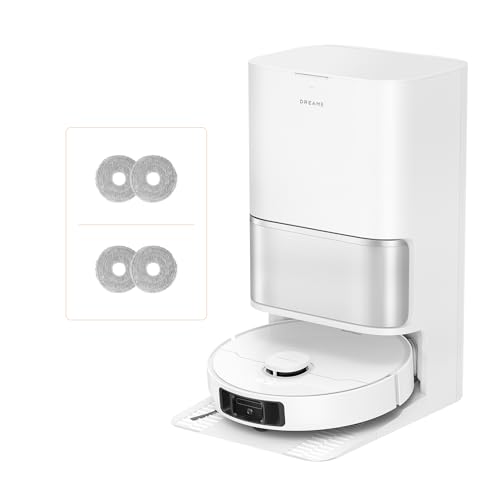
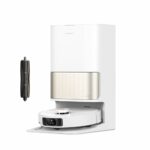
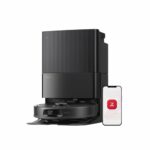
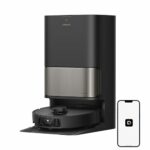
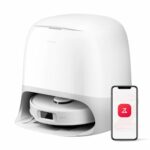
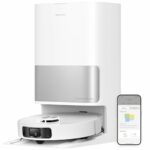
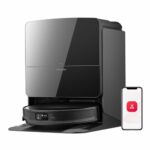
The Dreame L10s Ultra Gen 3 and the Dreame X50 Ultra Blanca represent two distinct approaches within Dreame's premium robot vacuum range. The L10s Ultra Gen 3 arrived in November 2025 as a third-generation update to a proven formula, whilst the X50 Ultra Blanca positions itself as a flagship model with enhanced artificial intelligence capabilities. Both feature multifunctional bases that handle everything from dust emptying to mop washing and drying, making them suitable for households seeking minimal manual intervention.
These models share several core characteristics—dual rotating mops, hot air drying, self-cleaning trays, and detergent dispensers—but diverge significantly in processing power, navigation sophistication, and cleaning intelligence. Understanding these differences matters particularly for larger homes, pet owners, or anyone prioritising autonomous operation without constant supervision.
Power and Suction
The Dreame L10s Ultra Gen 3 delivers 25,000 Pa of suction power, giving it a noticeable edge over the X50 Ultra Blanca's 20,000 Pa when tackling embedded dirt in carpets or pet hair in textured surfaces. This higher suction compensates somewhat for its simpler brush configuration, which relies on a single roller without specific anti-tangle features.
The X50 Ultra Blanca counters with Dreame's dual HyperStream brush system. This design uses two rollers anchored at one end, creating a geometry that actively prevents hair from wrapping around the mechanism. For households with long-haired occupants or shedding pets, this makes a tangible difference in maintenance frequency. The side brush on the X50 also benefits from anti-tangle engineering, whilst the L10s uses a conventional design.
What truly separates these models in daily use is brush elevation. The X50 Ultra Blanca lifts both its main and side brushes when mopping, preventing damp bristles from redistributing debris or leaving streaks on wet floors. The L10s Ultra Gen 3 lacks this capability entirely, meaning brushes remain in contact with the floor throughout the mopping cycle. Both models extend their side brushes for improved edge coverage, but only the X50 can retract them upward when needed.
Mopping Performance
Both robots use dual rotating mops with 10.5 mm lift capability and Roboswing technology, which shifts the robot's rear end slightly to push mops under furniture edges and skirting boards. The mops extend outward to reach closer to walls, a feature present in both models.
The base stations differ substantially in how they maintain those mops. The L10s Ultra Gen 3 washes mops with cold water during cleaning cycles, whilst the X50 Ultra Blanca heats the water for washing. Hot water proves more effective at breaking down oils, sticky residues, and dried-on grime, resulting in genuinely cleaner mops returning to the floor after each refresh cycle. Both dry with hot air, which accelerates drying and inhibits bacterial growth.
The X50 Ultra Blanca includes automatic mop removal when returning to the base. If you've scheduled a vacuum-only session or the robot detects carpeted areas throughout the home, it can detach its mops at the station and continue with aspiration alone. The L10s requires manual mop removal if you want pure vacuuming.
Dirt detection represents another meaningful gap. The X50 monitors mop cleanliness during washing and floor dirtiness during mopping, triggering additional passes or extended scrubbing when sensors register persistent soiling. The L10s follows predetermined patterns without adaptive re-cleaning, which works adequately for routine maintenance but struggles with unexpected spills or high-traffic zones that accumulate grime between scheduled cleans.
Navigation System
The Dreame L10s Ultra Gen 3 employs a traditional third-generation LiDAR turret paired with frontal 3D laser sensors for obstacle detection. This combination maps spaces accurately and avoids most hazards, with recognition for pets and common household objects.
The X50 Ultra Blanca uses retractable LiDAR that lowers when not actively mapping, reducing the robot's profile. More significantly, it adds dual AI cameras running the AI Sage 13.0 octa-core processor, capable of identifying up to 200 distinct object types. This includes specific recognition for curtains, allowing the robot to adjust behaviour near hanging fabrics rather than treating them as solid barriers.
The cameras enable remote access, turning the robot into a mobile home monitor you can view through the app. LED illumination provides visibility in darkened rooms, a feature entirely absent from the L10s. For households concerned about privacy, this may be undesirable; for those wanting occasional visual checks on pets or deliveries, it adds utility beyond cleaning.
Battery and Autonomy
Here the comparison produces counterintuitive results. The L10s Ultra Gen 3 carries a smaller 5,200 mAh battery yet achieves 231 minutes of runtime, whilst the X50 Ultra Blanca's larger 6,400 mAh cell delivers only 180 minutes. The discrepancy likely stems from the X50's power-hungry processor, dual cameras, and additional sensors constantly analysing the environment.
In practical terms, 180 minutes suffices for most homes up to approximately 150–180 square metres in a single cleaning cycle, assuming mixed vacuuming and mopping. The L10s can stretch further before needing to recharge, potentially completing larger properties without interruption. Neither specification lists charging time, but both return automatically when battery levels drop.
Intelligent Features
Both models navigate obstacles up to 20 mm in height, though the X50 specifies "simple step climbing" in its documentation, suggesting possible differences in approach angle or success rate that aren't quantified in the specifications.
The X50 Ultra Blanca includes a built-in voice assistant, allowing direct interaction without routing commands through external smart home ecosystems. Both robots integrate with Alexa and Google Home for those preferring established platforms.
The CleanGenius AI system appears in both models but functions quite differently. On the L10s, it primarily adjusts suction and water flow based on floor type detection. The X50 extends this to visual stain recognition, automatically increasing scrubbing intensity and making additional passes over detected marks without requiring user intervention.
Multifunctional Base Station
Both bases share identical 3.2-litre dust bags, 4.5-litre clean water tanks, and 4-litre dirty water tanks. Both feature third-generation self-cleaning trays that rinse themselves after washing the robot's mops, reducing manual maintenance. Detergent dispensers automatically dose cleaning solution during mop washing.
The X50 Ultra Blanca adds UV disinfection within the base, targeting bacteria on mops and in the dirty water pathway. Whether this provides meaningful hygiene benefits over hot water washing and hot air drying remains debatable, but it's present only on the X50.
Optional plumbing connection kits exist for both models as separate purchases, allowing permanent water supply and drainage connections. This eliminates manual tank filling and emptying but requires installation near suitable plumbing access points. Neither base includes this integration as standard.
Dimensions
The L10s Ultra Gen 3 stands 97 mm tall, whilst the X50 Ultra Blanca measures 89 mm. That 8 mm difference expands clearance under furniture, potentially allowing the X50 to clean beneath cabinets, bed frames, or sofas that block the L10s. Both share a 350 mm diameter, typical for premium robot vacuums.
Base dimensions remain nearly identical—340 mm wide, approximately 590 mm tall, and 457 mm deep—requiring similar floor space in laundry rooms, kitchens, or utility areas.
Dust and water capacities onboard the robots differ slightly: the L10s carries 300 ml of dust versus 395 ml in the X50. Both hold 80 ml of water in their mopping reservoirs, sufficient for the periodic dampening that occurs between base returns during mopping cycles.
Real-World Usage Experience
For homes prioritising raw cleaning power and extended runtime, the L10s Ultra Gen 3 offers stronger suction and longer battery life at the cost of manual mop handling and less sophisticated obstacle recognition. It suits properties without complex layouts, where scheduled cleaning occurs during predictable times and adaptive intelligence matters less than thorough dirt removal.
Pet owners face a choice: higher suction versus anti-tangle brushes. The L10s pulls more embedded fur from carpets, but you'll spend more time cutting hair from its brushes. The X50 requires less maintenance thanks to its HyperStream design and brush lifting, though its slightly lower suction may leave some debris in deep pile carpets.
The X50 Ultra Blanca excels in homes with variable flooring, frequent spills, or occupants who value autonomous operation without intervention. Its ability to detect dirty areas, remove mops automatically, and wash them with hot water produces consistently better mopping results. The lower profile helps in homes with low-clearance furniture, whilst the cameras and AI processor handle cluttered environments more gracefully.
For those who prefer not having cameras in their home, the L10s provides capable cleaning without visual surveillance. The X50's remote camera access appeals to pet owners wanting to check on animals or anyone seeking occasional visual confirmation of home status whilst away.
Conclusion: Which to Choose?
Choose the Dreame L10s Ultra Gen 3 if: you need maximum suction power for deep carpet cleaning, value longer battery runtime for larger properties, prefer avoiding cameras in your home, and don't mind manually removing mops when switching between vacuuming and mopping modes. It's well-suited to homes with predictable layouts where scheduled cleaning suffices.
Choose the Dreame X50 Ultra Blanca if: you want the most advanced navigation and obstacle recognition available, need automatic mop removal for mixed floor types, prioritise minimal maintenance with anti-tangle brushes, or value adaptive cleaning that responds to actual dirt levels rather than following fixed patterns. The lower profile benefits homes with tight furniture clearances, whilst hot water mop washing and UV disinfection appeal to those prioritising hygiene. Pet owners who want remote camera access will find this particularly useful, as will anyone seeking a robot that genuinely operates without supervision for extended periods.