Introduction
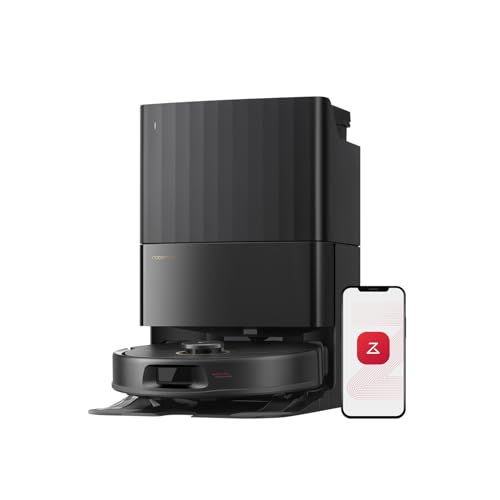
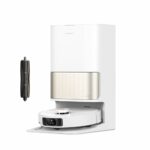
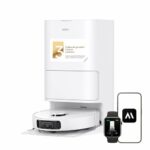
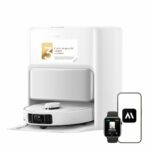
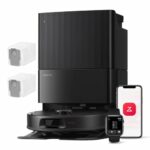
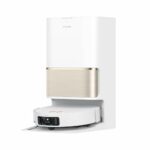
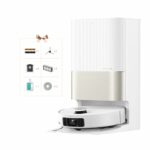
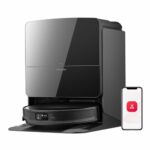
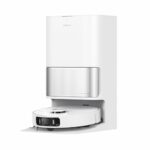
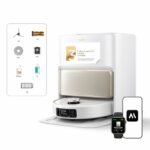
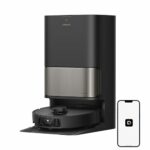
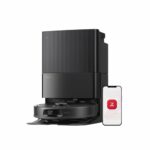
The Dreame L10s Ultra Gen 2 and the Roborock Qrevo S5V represent two distinct approaches to high-end robotic cleaning. The Dreame model arrived in 2024 with a focus on extended runtime and practical cleaning features, whilst Roborock launched the Qrevo S5V in 2025 with enhanced suction power and refined engineering. Both come equipped with multifunctional bases that handle emptying, mop washing, and drying—features that separate basic models from genuinely autonomous cleaning systems.
These robots target users who want minimal intervention in their cleaning routines. The Dreame L10s Ultra Gen 2 suits larger homes where battery life matters, whilst the Roborock Qrevo S5V appeals to those prioritising raw suction performance and advanced brush technology. Understanding their technical differences helps match each model to specific household needs.
Key Differences at a Glance
- Suction power: 10,000 Pa (Dreame) versus 12,000 Pa (Roborock)
- Battery autonomy: 240 minutes (Dreame) versus 180 minutes (Roborock)
- Brush system: simple main brush (Dreame) versus DuoDivide anti-tangle (Roborock)
- Side brush: standard (Dreame) versus anti-tangle design (Roborock)
- Mop extension: includes Roboswing movement (Dreame) versus standard extension (Roborock)
- Mop lift: 10.5 mm (Dreame) versus 10 mm (Roborock)
- 3D laser sensor: present (Dreame) versus absent (Roborock)
- Pet recognition: available (Dreame) versus not available (Roborock)
- Detergent tank in base: included (Dreame) versus not included (Roborock)
- Dust bag capacity: 3.2 litres (Dreame) versus 2.7 litres (Roborock)
- Clean water tank: 4.5 litres (Dreame) versus 4 litres (Roborock)
- Dirty water tank: 4 litres (Dreame) versus 3.5 litres (Roborock)
- Plumbing connection kit: available for purchase (Dreame) versus not available (Roborock)
- Robot height: 97 mm (Dreame) versus 96.5 mm (Roborock)
- Base height: 590.5 mm (Dreame) versus 521 mm (Roborock)
Power and Vacuuming
Suction capability differs notably between these models. The Roborock Qrevo S5V delivers 12,000 Pa, giving it a clear advantage for embedded dirt, pet hair, and carpeted areas. The Dreame L10s Ultra Gen 2 offers 10,000 Pa, which remains effective for most hard floors and low-pile rugs but won't match the Roborock's performance on demanding surfaces.
The brush systems reveal another fundamental difference. Roborock equips the Qrevo S5V with its DuoDivide anti-tangle main brush, designed to channel hair towards the central suction point rather than wrapping it around the roller. This proves particularly useful in homes with long-haired residents or shedding pets. The Dreame uses a simpler main brush design without anti-tangle features, which may require more frequent maintenance to clear wrapped fibres.
Roborock extends this anti-tangle philosophy to the side brush as well. The Qrevo S5V includes an anti-tangle side brush, whilst the Dreame L10s Ultra Gen 2 uses a standard design. Neither model offers side brush extension or elevation during mopping, so edge cleaning relies on the base brush configuration.
For households with pets or family members with long hair, these brush differences translate to real-world maintenance savings. The Roborock configuration reduces the frequency of manual brush cleaning sessions.
Mopping
Both robots use dual rotating mops, but their edge-cleaning approaches differ. The Dreame L10s Ultra Gen 2 incorporates Roboswing alongside mop extension, allowing the robot to shift its body slightly and push the mop closer to skirting boards and furniture edges. The Roborock Qrevo S5V features mop extension without the Roboswing movement, providing edge reach but with less dynamic positioning.
Mop lift capacity shows marginal variation: 10.5 mm for the Dreame versus 10 mm for the Roborock. In practical terms, this half-millimetre difference won't significantly affect carpet protection or obstacle clearance. Both models lift sufficiently to avoid dragging wet mops across rugs.
The multifunctional bases handle mop washing with cold water and drying with hot air. Neither robot removes mops automatically when switching to vacuum-only mode, nor do they detect mop soiling or floor dirt levels for adaptive cleaning. Floor mopping uses cold water in both cases.
What sets the Dreame apart here is the detergent tank integrated into its base. This dispenses cleaning solution during mop washing, enhancing cleaning effectiveness without manual intervention. The Roborock Qrevo S5V lacks this feature, relying on water alone for mop maintenance. This difference matters for users who prefer automated detergent use rather than periodic manual addition.
Navigation System
Both models employ 3D LiDAR navigation with obstacle avoidance, but the Dreame L10s Ultra Gen 2 adds a frontal 3D laser sensor. This extra sensor improves close-range object detection, potentially reducing furniture bumps and enabling more precise navigation around chair legs or floor-standing objects. The Roborock Qrevo S5V relies on its LiDAR turret without supplementary frontal sensing.
Pet recognition appears exclusively on the Dreame. This allows the robot to identify and navigate around animals more intelligently, which can prevent startling pets or getting stuck on toys and bowls. The Roborock lacks this specific recognition capability.
Neither robot includes an AI camera, LED lighting for night vision, or remote camera access. Both integrate smart cleaning systems—CleanGenius AI for the Dreame and SmartPlan 1.0 for the Roborock—though neither offers AI-based stain recognition. Voice assistant compatibility extends to Alexa and Google Home for both models, but neither includes a proprietary voice assistant.
Battery and Autonomy
Battery capacity matches at 5,200 mAh for both robots, but runtime diverges significantly. The Dreame L10s Ultra Gen 2 achieves 240 minutes of operation, whilst the Roborock Qrevo S5V reaches 180 minutes. This 60-minute difference stems from the Roborock's higher suction power consuming more energy.
For larger homes or multi-level properties, the Dreame's extended runtime reduces the need for mid-clean recharging. The Roborock's shorter autonomy remains adequate for most single-floor homes but may require a return to base in expansive layouts. Neither manufacturer specifies maximum coverage area in the provided data, but the runtime difference suggests the Dreame handles larger spaces more efficiently in a single session.
Smart Functions
Both robots manage 20 mm obstacles, allowing them to climb over door thresholds, thick rugs, and minor floor transitions without assistance. This capability proves essential for homes with varied flooring or raised doorways.
Neither model includes a robotic arm or proprietary voice assistant. External voice control through Alexa and Google Home provides hands-free operation for both.
Multifunctional Base
The base stations share core functions: automatic dust emptying, cold-water mop washing, and hot-air mop drying. Neither offers automatic tray cleaning, UV disinfection, or integrated plumbing connections. The Dreame does provide an optional plumbing kit for purchase separately, though this requires additional investment and installation effort.
Tank capacities favour the Dreame across the board. Its dust bag holds 3.2 litres versus 2.7 litres in the Roborock, extending the interval between bag replacements. Clean water storage reaches 4.5 litres in the Dreame compared to 4 litres in the Roborock, whilst dirty water capacity measures 4 litres versus 3.5 litres. These differences accumulate over time, particularly in homes where the robot cleans frequently or covers substantial floor areas.
The detergent tank in the Dreame base adds another layer of automation absent from the Roborock. For users who prefer set-and-forget operation, this feature reduces maintenance touchpoints.
Dimensions
Robot dimensions show minimal variation. The Dreame L10s Ultra Gen 2 measures 350 mm in diameter and 97 mm in height, whilst the Roborock Qrevo S5V spans 353 mm across and stands 96.5 mm tall. The Roborock's fractionally lower profile—half a millimetre shorter—offers negligible practical advantage for fitting under furniture. Both robots navigate beneath most sofas and bed frames without difficulty.
Base dimensions differ more substantially. The Dreame base rises to 590.5 mm with a depth of 456.7 mm. The Roborock base stands considerably lower at 521 mm but extends deeper at 487 mm. Width matches at 340 mm for both. The Roborock's lower profile suits placement under counters or in tighter vertical spaces, whilst the Dreame's taller, shallower footprint works better against walls where depth matters more than height.
Real-World Experience
The Dreame L10s Ultra Gen 2 suits larger homes where extended battery life prevents interruptions during cleaning cycles. Its 240-minute autonomy handles expansive floor plans without requiring a mid-session recharge. The detergent tank and larger water reservoirs reduce maintenance frequency, appealing to users who prioritise minimal intervention. Roboswing enhances edge mopping, particularly in homes with varied furniture layouts. The 3D laser sensor and pet recognition benefit households with animals or complex floor-level obstacles.
The Roborock Qrevo S5V excels in homes prioritising suction performance and anti-tangle maintenance. Its 12,000 Pa power tackles embedded dirt and pet hair more aggressively, whilst the DuoDivide brush system and anti-tangle side brush reduce the time spent clearing wrapped fibres. The shorter runtime of 180 minutes remains sufficient for most single-floor properties. The lower base height fits better in compact storage areas or beneath kitchen counters.
For pet owners, the choice depends on priorities: the Dreame offers pet recognition and longer runtime, whilst the Roborock provides superior hair management through its brush design and higher suction. Hard floor and parquet cleaning performs well on both, though the Roborock's extra suction power gives it an edge on textured tiles or grouted surfaces. Carpet performance favours the Roborock due to its increased suction capability.
Conclusion: Which to Choose?
Choose the Dreame L10s Ultra Gen 2 if: you have a large home requiring extended battery life, prefer automated detergent dispensing, want pet recognition features, value Roboswing for enhanced edge mopping, or need larger water and dust capacities to reduce maintenance frequency. The optional plumbing kit also appeals if you're willing to invest in permanent water connections.
Choose the Roborock Qrevo S5V if: maximum suction power matters for your flooring type, you deal with significant pet hair or long human hair and want anti-tangle brushes, your home fits within 180 minutes of runtime, or you need a lower-profile base for compact storage. The Roborock's engineering refinement and 2025 release also bring the latest design optimisations.
Both represent capable robot vacuum cleaners with comprehensive mopping systems. The Dreame prioritises autonomy and convenience features, whilst the Roborock focuses on cleaning power and low-maintenance brush technology. Matching these strengths to your specific household demands determines the better robot aspirador for your needs.