Introduction
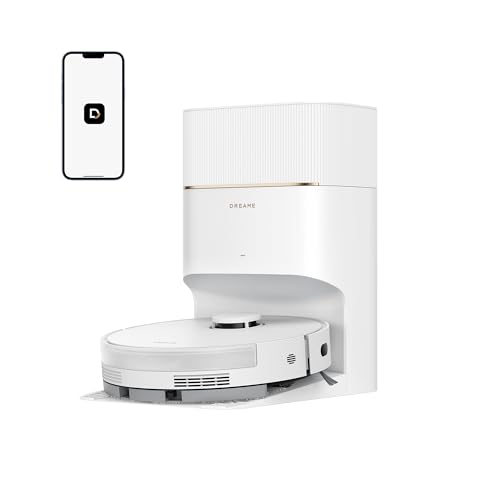
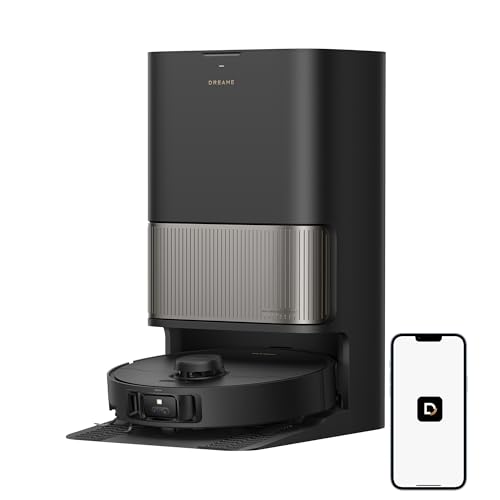
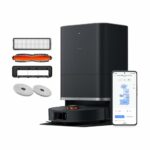
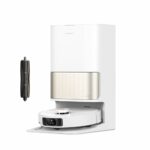
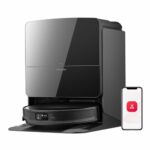
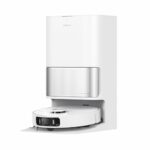
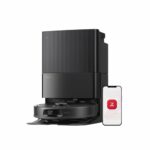
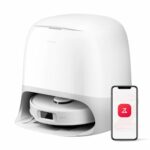
The Dreame D20 Pro Plus and Dreame L40s Pro Ultra represent two distinct approaches within Dreame's 2025 lineup. Whilst both share the same manufacturer and launch year, they cater to quite different user needs and budgets. The D20 Pro Plus positions itself as a more straightforward solution with auto-emptying capabilities, whereas the L40s Pro Ultra steps into premium territory with a full multifunctional base and advanced artificial intelligence features.
These models suit different household scenarios. The D20 Pro Plus works well for users seeking reliable vacuuming with basic mopping and minimal fuss, particularly in smaller to medium-sized homes. The L40s Pro Ultra, with its comprehensive mopping system and intelligent detection capabilities, targets those who want a genuinely hands-off cleaning experience, especially in larger properties or homes with pets.
Key Differences at a Glance
- Suction power: 13,000 Pa versus 19,000 Pa
- Mopping system: static mop versus dual rotating mops with extension and elevation
- Base functionality: auto-emptying only versus full multifunctional station with mop washing and hot air drying
- AI camera: absent versus dual camera system with remote access
- Main brush elevation: not available versus 10.5 mm lift capability
- Dirt detection: none versus dual detection for floors and mops
- Voice assistant: external only versus built-in assistant plus external compatibility
- Dust bag capacity: 5 litres versus 3.2 litres
Power and Suction
The suction power gap between these robots is substantial. The D20 Pro Plus delivers 13,000 Pa, which handles everyday dust and debris competently across hard floors and low-pile carpets. The L40s Pro Ultra pushes this to 19,000 Pa, providing noticeably stronger performance on carpets and better pickup of stubborn dirt embedded in fibres.
Both models feature Dreame's Doble Cepillo HyperStream design, which minimises hair tangles through its dual-anchor configuration. This proves particularly useful in homes with long-haired residents or pets. The side brushes on both units extend to reach corners more effectively and include anti-tangle technology.
A significant difference emerges in brush elevation. The L40s Pro Ultra can lift both its main brush and side brush during mopping, preventing wet brushes from spreading dirt or leaving marks on already-cleaned areas. The D20 Pro Plus lacks this feature, which means its brushes remain in contact with the floor throughout the mopping process. For anyone prioritising mopping quality, this distinction matters considerably.
Mopping
The mopping capabilities represent perhaps the starkest contrast between these robots. The D20 Pro Plus uses a static mop without elevation or extension features. It cannot wash its mop during cleaning, nor does it offer any dirt detection. This setup handles light maintenance mopping but won't tackle dried-on stains or provide consistently clean mopping throughout a session.
The L40s Pro Ultra operates on an entirely different level. Its dual rotating mops extend outward to reach edges and corners, backed by Roboswing movement that helps push the mop slightly under furniture edges. The 10.5 mm mop elevation allows the robot to transition onto carpets without wetting them, whilst the base station washes the mops with hot water during cleaning sessions and afterwards.
Hot air drying follows each wash, preventing odours and bacterial growth. The third-generation self-cleaning tray means the base itself stays hygienic without manual intervention. Detergent dispensing happens automatically from a dedicated tank. Dirt detection sensors identify particularly soiled areas on floors and monitor mop cleanliness, triggering additional passes or mop washes as needed. The ability to automatically remove mops at the base when switching to vacuum-only mode adds genuine convenience.
In practical terms, the D20 Pro Plus offers mopping as a supplementary feature, whereas the L40s Pro Ultra provides a comprehensive floor washing system that genuinely replaces manual mopping.
Navigation System
Both robots employ 3D LiDAR turrets for spatial mapping and include frontal 3D laser sensors for obstacle avoidance. This combination ensures accurate room mapping and reliable navigation around furniture.
The intelligence layer differs markedly. The D20 Pro Plus lacks AI camera technology, limiting its object recognition capabilities. The L40s Pro Ultra incorporates dual AI cameras that recognise up to 180 different obstacle types, including specific detection for pets and curtains. The cameras feature LED illumination for low-light conditions and support remote access, allowing you to check on your home through the robot.
The CleanGenius AI system in the L40s Pro Ultra analyses cleaning patterns and adjusts strategies accordingly, whilst AI-powered stain recognition enables targeted cleaning of specific marks. These features transform the robot from a programmable cleaner into something that adapts to your home's actual conditions.
Battery and Autonomy
Both models house identical 5,200 mAh batteries, yet their runtime differs due to power consumption variations. The D20 Pro Plus achieves 285 minutes of operation, whilst the L40s Pro Ultra manages 220 minutes. The higher suction power and additional sensors on the latter account for this reduction.
In real-world use, 220 minutes still covers substantial floor area before requiring a recharge. The more powerful suction often means the L40s Pro Ultra completes cleaning faster despite shorter total runtime. Neither manufacturer specifies maximum coverage area in the provided data, but both batteries prove adequate for typical residential properties.
Intelligent Functions
Obstacle climbing capability shows another differentiation. The D20 Pro Plus manages 20 mm steps, handling standard door thresholds and minor floor transitions. The L40s Pro Ultra employs an intelligent step-climbing system that adapts to obstacles, though specific height isn't detailed beyond describing it as suitable for simple steps.
Voice control works differently across the models. The D20 Pro Plus integrates with external assistants like Alexa and Google Home but lacks its own voice interface. The L40s Pro Ultra adds a built-in voice assistant alongside external compatibility, enabling direct commands without relying on smart home ecosystems.
Multifunctional Base Station
The base stations diverge fundamentally in purpose. The D20 Pro Plus base handles auto-emptying into a generous 5-litre dust bag, reducing manual emptying frequency to every couple of months for average households. It doesn't feature water tanks or mop maintenance systems.
The L40s Pro Ultra base functions as a complete cleaning station. Auto-emptying uses a smaller 3.2-litre bag, requiring more frequent replacement but still managing several weeks between changes. The 4.5-litre clean water tank and 4-litre dirty water tank support multiple mopping sessions without refilling. Hot water mop washing and hot air drying maintain hygiene automatically.
The third-generation self-cleaning tray prevents the base itself from becoming a maintenance burden. A detergent tank dispenses cleaning solution during mop washing. Dreame offers an optional plumbing connection kit for purchase separately, though the base doesn't include integrated plumbing as standard. This kit appeals to those wanting to eliminate manual water management entirely, though it requires installation and isn't essential for operation.
Dimensions
The robots measure identically at 350 mm diameter but differ in height. The D20 Pro Plus stands 96.8 mm tall, whilst the L40s Pro Ultra reaches 103.8 mm. This 7 mm difference occasionally matters when navigating under low furniture. The shorter D20 Pro Plus squeezes beneath slightly more restrictive spaces, though both manage typical sofa and bed clearances.
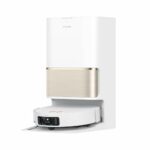
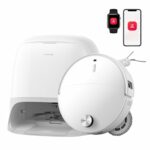
Base station footprints vary considerably. The D20 Pro Plus base measures 298 mm wide, 452 mm tall, and 440 mm deep—relatively compact for an auto-empty station. The L40s Pro Ultra base expands to 340 mm wide, 590.5 mm tall, and 456.7 mm deep, reflecting its additional water tanks and mop maintenance hardware. Planning installation space matters more with the larger unit, particularly in tighter utility areas or smaller homes.
Real-World Usage Experience
For smaller flats or homes without carpets, the D20 Pro Plus delivers solid performance. Its longer runtime suits single-level properties up to moderate size, whilst the simpler feature set means less complexity and fewer potential maintenance points. The static mop handles light daily maintenance on hard floors, though you'll likely still mop manually for deeper cleaning.
The L40s Pro Ultra suits larger homes, particularly those with mixed flooring. The brush and mop elevation enables seamless transitions between carpets and hard floors without manual intervention. Pet owners benefit substantially from the AI camera's ability to identify and navigate around animals and their belongings, plus the stronger suction handles pet hair more effectively.
Households seeking minimal involvement find the L40s Pro Ultra's comprehensive base station appealing. Weeks can pass with only occasional water tank refills and detergent top-ups. The D20 Pro Plus requires more hands-on mopping work but demands less from its base station footprint and initial investment.
The dirt detection and AI cleaning optimisation in the L40s Pro Ultra prove particularly valuable in high-traffic homes or those with children, where spills and concentrated dirt appear unpredictably. The D20 Pro Plus follows programmed patterns effectively but won't adapt to unexpected messes without manual intervention.
Conclusion: Which to Choose?
Choose the Dreame D20 Pro Plus if you want reliable vacuuming with auto-emptying at a more accessible price point, have a smaller home with primarily hard floors, don't require advanced mopping capabilities, prefer a more compact base station, or plan to supplement with occasional manual mopping anyway. It suits those who value simplicity and longer battery runtime over advanced features.
Choose the Dreame L40s Pro Ultra if you want genuinely hands-off floor maintenance, have larger spaces or multiple floor types, live with pets that benefit from AI recognition, need the robot to fit under slightly higher furniture, prioritise mopping quality with hot water washing and drying, or want remote camera access for home monitoring. The investment makes sense when the comprehensive base station and intelligent features align with your cleaning demands and you'd rather not touch a mop yourself for weeks at a time.