Introduction
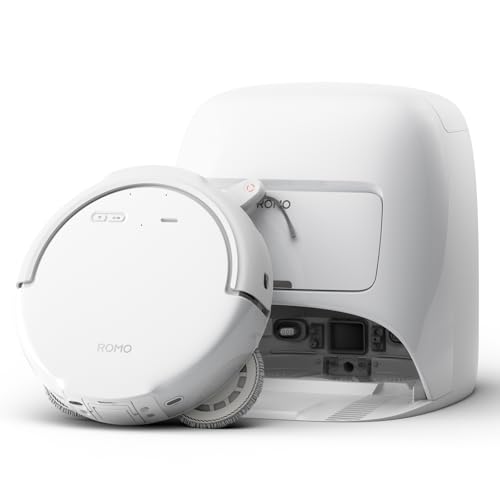
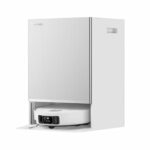
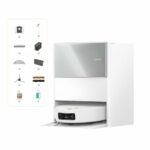
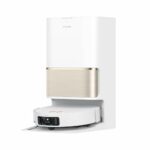
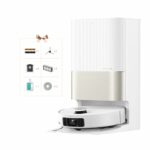
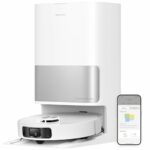
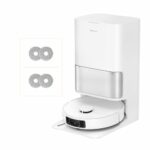
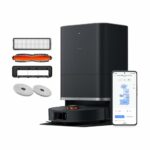
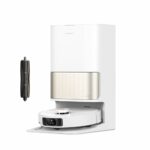
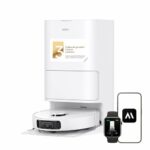
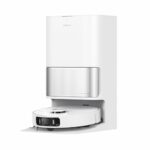
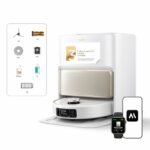
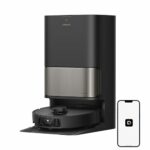
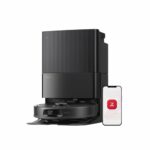
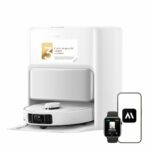
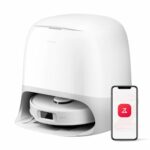
The Dreame Aqua 10 Ultra Roller and the DJI Romo S represent two fresh approaches to robotic cleaning in 2025. Dreame arrives with its signature focus on delivering high-end features at competitive pricing, whilst DJI brings its expertise in imaging and navigation technology from the drone world into the home cleaning arena for the first time.
The Dreame model showcases a distinctive roller-based mopping system with impressive suction power, aimed at users who want thorough cleaning across large homes with varied flooring types. DJI's debut robot emphasises intelligent navigation and advanced camera systems, appealing to tech enthusiasts who value precision and remote monitoring capabilities. Both units feature multifunctional bases that handle emptying, mop washing, and drying, making them suitable for households seeking minimal maintenance.
Key Differences at a Glance
- Suction power: Dreame delivers 30,000 Pa versus DJI's 25,000 Pa
- Battery capacity: Dreame packs 6,400 mAh compared to DJI's 5,000 mAh
- Mopping system: Dreame uses a 12N pressure roller; DJI employs dual rotating mops
- Mop elevation: Dreame lifts 14 mm with carpet detection; DJI offers standard elevation
- Side brush elevation: Dreame can raise its side brush; DJI cannot
- Mop washing: Dreame heats water for mop cleaning; DJI uses cold water
- Base self-cleaning: DJI includes automatic tray cleaning with a spray nozzle; Dreame doesn't
- Dust bag capacity: Dreame holds 3.2 litres; DJI manages 2.4 litres
- Object recognition: Dreame identifies 240 obstacles; DJI's count isn't specified
- Plumbing connection kit: Dreame offers an optional kit; DJI doesn't
Suction Power and Brushwork
The Dreame Aqua 10 Ultra Roller pushes suction to 30,000 Pa, giving it a noticeable edge over the DJI Romo S at 25,000 Pa. This difference matters particularly in homes with deep-pile carpets or persistent pet hair, where that extra pulling force helps extract debris more effectively.
Both robots feature split-design main brushes that minimise hair tangles. Dreame employs its Doble Cepillo HyperStream system, whilst DJI uses a Cepillo Dividido design. The practical outcome is similar: less time spent cutting away wrapped hair from the roller. Both units can lift their main brushes when mopping, preventing wet carpets and keeping the brush clean during floor washing.
The side brush setup reveals a meaningful distinction. Dreame's side brush can both extend to reach corners and elevate when mopping, preventing the brush from dragging through wet areas. DJI's side brush extends for corner coverage but stays down during mopping. Both incorporate anti-tangle features in their side brushes, with DJI specifically mentioning a dual side brush configuration.
Mopping Approach
Here the two robots diverge significantly. Dreame's roller-based system applies 12N of downward pressure, mimicking the action of a traditional mop being pressed firmly against the floor. This roller extends to reach edges and baseboards. DJI takes the rotating mop pad route with two spinning pads that also extend for edge cleaning.
Mop elevation differs between the models. The Dreame lifts its mopping assembly 14 mm and includes carpet detection to avoid wetting rugs. DJI provides mop elevation but doesn't specify the height. In practice, Dreame's approach offers more confidence when navigating mixed flooring.
Both robots detect dirty areas and can return to scrub stubborn spots more thoroughly. Neither heats the water inside the robot for floor cleaning—both use cold water during the actual mopping process. The Dreame doesn't automatically remove its mops at the base when you want vacuum-only operation, though DJI's capability here isn't confirmed.
Navigation Intelligence
Navigation systems on both models rely on LiDAR for mapping, combined with dual RGB cameras for obstacle identification. Dreame specifies its AI Sage 15.0 Octa-core processor and recognition of 240 different obstacle types, including specific detection for pets and curtains. The DJI system doesn't detail obstacle count or curtain detection, though it does employ LiDAR and camera vision.
Both robots offer remote camera access through their apps, letting you check on your home whilst the robot cleans. LED lighting enables night-time navigation and viewing. The Dreame includes a retractable LiDAR turret, whilst DJI uses a solid-state LiDAR design—both approaches work well for mapping, with the retractable version potentially offering slightly lower profile when fully lowered.
Dreame explicitly mentions pet recognition and curtain detection, useful features for households with animals or floor-length window treatments. DJI's specifications don't confirm these particular capabilities.
Battery and Coverage
Battery capacity tilts heavily towards Dreame with 6,400 mAh versus DJI's 5,000 mAh. Interestingly, runtime tells a different story: Dreame runs for 160 minutes whilst DJI manages 180 minutes. This suggests DJI's power management or motor efficiency extracts more cleaning time from a smaller cell.
For large homes, Dreame's bigger battery means less voltage sag during high-power cleaning modes, maintaining stronger suction throughout the session. DJI's longer runtime suits sprawling single-level properties where sustained moderate power matters more than peak performance.
Smart Features
Obstacle climbing reveals another practical difference. The Dreame handles single-step obstacles up to a certain height, though the exact measurement uses descriptive language. DJI specifies 20 mm climbing ability, helpful for transitioning between rooms with slight threshold differences.
Dreame includes its own voice assistant built into the robot, allowing direct voice commands without external smart speakers. DJI's voice assistant status isn't detailed, though both robots integrate with Alexa and Google Home for smart home control.
Neither model includes a robotic arm for picking up objects—you'll still need to clear floors of socks and cables before cleaning.
Multifunctional Base Station
Both bases handle the essential tasks of emptying dust, washing mops, and drying them afterwards. The washing process differs: Dreame heats water to clean its roller, whilst DJI uses cold water for its mop pads. Hot water dissolves grease and sanitises more effectively, giving Dreame an advantage for kitchen floors.
Mop drying on the DJI uses heated air, confirmed in specifications. Dreame's drying method isn't detailed, though bases typically include this feature at this price point.
The DJI base includes automatic self-cleaning of its washing tray with a spray nozzle, reducing manual maintenance. Dreame's base doesn't specify this feature. Both stations include detergent dispensers, with Dreame offering a dual-tank system for different cleaning solutions.
Dust storage capacity favours Dreame at 3.2 litres versus DJI's 2.4 litres—roughly a month longer between bag changes for average homes. Clean water tanks match at 4 litres, whilst dirty water collection gives Dreame a slight edge at 3.5 litres compared to DJI's 3.2 litres.
Dreame offers an optional plumbing connection kit (purchased separately) for continuous water supply and drainage, eliminating tank refills entirely. DJI doesn't provide this option.
Physical Dimensions
Robot dimensions are virtually identical. The Dreame measures 350 mm in diameter and stands 97.5 mm tall. DJI comes in at 351 mm diameter and 98 mm height. This millimetre difference won't affect furniture clearance in any meaningful way—both should fit under most sofas and beds with 10 cm clearance.
Base station footprints differ more noticeably. Dreame's base measures 420 mm wide, 500 mm tall, and 440 mm deep. DJI's station is wider at 453 mm, shorter at 440 mm tall, and slightly shallower at 425 mm deep. The Dreame base occupies more vertical space, whilst DJI spreads out horizontally. Consider your available floor space when choosing—the DJI needs more width, Dreame requires more height clearance.
Real-World Usage Scenarios
For homes with multiple pets, the Dreame's higher suction, larger dust capacity, and hot water mop washing address the challenges of fur and paw prints more comprehensively. The specific pet recognition also helps the robot navigate around feeding bowls and pet beds more intelligently.
Large homes benefit from Dreame's bigger battery and dust bag, reducing how often you'll need to intervene. The optional plumbing kit transforms the system into a truly hands-off solution for sprawling properties.
Tech enthusiasts drawn to DJI's reputation will appreciate the brand's imaging expertise applied to home robotics. The longer runtime from a smaller battery demonstrates efficient engineering, and the base's self-cleaning tray reduces one maintenance chore.
Homes with thick carpets should lean towards the Dreame's 30,000 Pa suction. The 14 mm mop lift with carpet detection also provides better protection against accidentally wetting rugs.
For maintenance simplicity, DJI's automatic base tray cleaning means one less component to scrub manually. Dreame's hot water mop washing counters this with more hygienic cleaning results.
Conclusion: Which Robot Suits You?
Choose the Dreame Aqua 10 Ultra Roller if: You have a large home with pets and want maximum suction power paired with hot water mop cleaning. The bigger battery, larger dust bag, and optional plumbing connection make this ideal for hands-off operation across extensive floor areas. The 14 mm mop lift with carpet detection suits homes with mixed flooring, and the hot water washing system delivers more hygienic results for families concerned about bacteria and allergens.
Choose the DJI Romo S if: You value DJI's engineering reputation and want a robot that runs longer on a smaller battery. The self-cleaning base tray reduces manual maintenance, and the heated air mop drying ensures thorough sanitisation. This model suits tech-forward households comfortable with a newer brand entering the robot aspirador market, particularly those with moderate-sized homes where the smaller dust capacity won't require frequent emptying.
Both represent solid entries in the mejor robot aspirador 2025 conversation, with the Dreame offering more raw power and capacity, whilst DJI brings refined efficiency and automated base maintenance. Your choice ultimately depends on whether you prioritise maximum performance and pet-handling capability (Dreame) or efficient operation with reduced manual upkeep (DJI).