Introduction
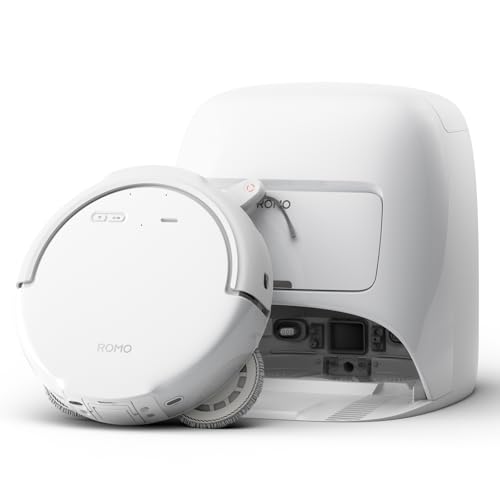
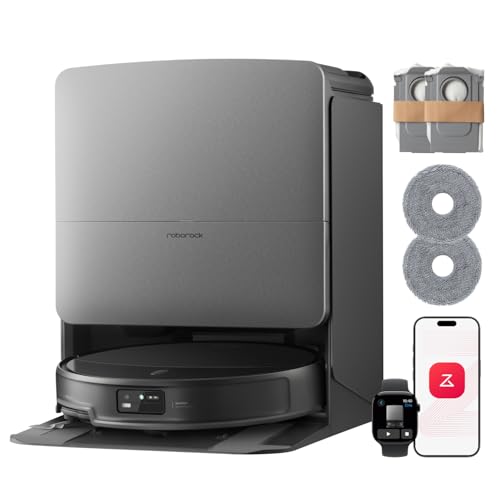
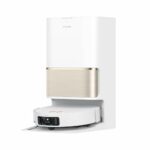
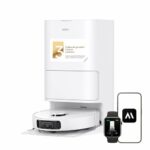
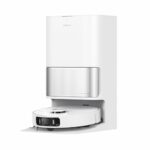
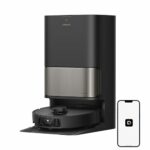
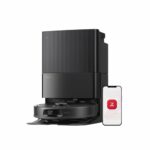
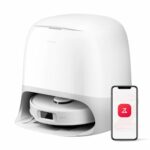
DJI has just entered the robot vacuum market with the Romo S, a 2025 model that represents the brand's first attempt to compete in a sector dominated by established players. Roborock, meanwhile, has launched the Saros 20 in February 2026, continuing its position as the world's leading brand in robot vacuums. Both models feature multifunction bases with mop washing and drying, making them suitable for homes requiring a complete cleaning solution without constant manual intervention.
The Romo S arrives with DJI's typical engineering approach, incorporating solid specifications and dual rotating mops. The Saros 20 builds on Roborock's extensive experience, featuring their latest StarSight 2.0 navigation and SmartPlan 3.0 artificial intelligence. These are high-end models designed for users seeking comprehensive automation in both vacuuming and mopping tasks.
Power and Suction
Suction power shows a clear advantage for the Saros 20 with its 36,000 Pa compared to the Romo S's 25,000 Pa. This difference becomes particularly noticeable on carpets and when dealing with embedded dirt in textile fibres. The Roborock model should handle medium-pile rugs more effectively and extract finer particles from hard floors.
Both models feature anti-tangle main brushes designed to minimise hair wrapping. The Romo S uses a divided brush design, whilst the Saros 20 employs Roborock's DuoDivide system that pushes hair towards the central suction channel. In practice, both approaches work well for homes with pets or long-haired residents.
Each robot includes an extendable side brush that reaches into corners more effectively than fixed designs. However, the Saros 20 adds an elevating side brush that lifts during mopping to prevent wet contact with carpets or rugs. The Romo S lacks this feature, meaning its side brush remains in contact with the floor regardless of cleaning mode. Both main brushes lift during mopping to avoid unnecessary contact with water.
Mopping
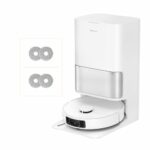
Both models use dual rotating mops with edge extension to reach skirting boards and room perimeters. The Saros 20 specifies 12-22 mm mop elevation, whilst the Romo S simply confirms elevation capability without stating the exact height. This lifting mechanism allows both robots to cross low-pile rugs without dragging wet mops across them.
The temperature difference in mop washing represents a significant distinction. The Saros 20 washes mops with hot water, which removes grease and stubborn marks more effectively than the Romo S's cold water system. Hot water cleaning generally results in fresher-smelling mops and better hygiene levels. Both bases dry mops with warm air, helping prevent bacterial growth and unpleasant odours.
Roborock's model automatically removes mops at the base when you want to vacuum without mopping. The Romo S doesn't clearly specify this function. Both robots detect dirt on mops and on floors, triggering additional cleaning passes or mop washes when necessary. Each base includes a detergent dispenser and features self-cleaning of the washing tray—the Saros 20 uses hot water for this process, whilst the DJI employs a rotating nozzle system.
Navigation System
The Romo S uses DJI's solid-state LiDAR navigation, bringing the company's expertise from drones and cameras into the robot vacuum space. The Saros 20 features StarSight 2.0, Roborock's latest navigation system that combines LiDAR with dual AI cameras and 3D laser sensors. Both models include front-facing cameras with LED lighting for night vision and remote viewing through their respective apps.
Roborock specifies recognition of 300 different obstacle types, including specific detection for pets and curtains. The curtain detection prevents the robot from becoming tangled in floor-length drapes. The Romo S confirms obstacle avoidance and AI camera capabilities but doesn't specify the number of recognisable objects. Both systems incorporate AI-driven cleaning intelligence that adjusts behaviour based on room type and detected dirt levels.
Remote camera access works on both models, allowing you to check on your home or pets whilst away. The dual-camera setup on the Saros 20 may provide more comprehensive visual data for obstacle avoidance and room mapping.
Autonomy and Battery
The Saros 20's 6,400 mAh battery exceeds the Romo S's 5,000 mAh capacity by a considerable margin. The DJI model states 180 minutes of runtime, though Roborock hasn't published specific autonomy figures for the Saros 20. Given the larger battery, expect similar or better performance from the Roborock unit, though its higher suction power may consume more energy during intensive cleaning.
For large homes, battery capacity directly affects whether the robot completes cleaning in one session or requires mid-clean recharging. The Saros 20's extra capacity should prove beneficial in properties exceeding 150 square metres, particularly when using maximum suction settings or when the robot needs to make multiple trips to the base for mop washing during a mopping cycle.
Intelligent Features
The Romo S can climb obstacles up to 20 mm high. The Saros 20 handles simple steps and thresholds but doesn't specify an exact height capability in millimetres. Both robots should manage standard door thresholds and minor floor level changes without difficulty.
The Saros 20 includes Roborock's own voice assistant alongside compatibility with Alexa and Google Home. The Romo S confirms external voice assistant support but doesn't specify whether DJI has developed a proprietary voice assistant. SmartPlan 3.0 on the Roborock model represents the brand's latest AI cleaning strategy, which learns room layouts and adjusts cleaning patterns accordingly.
Multifunction Cleaning Base
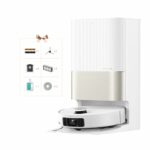
Both bases handle the complete maintenance cycle: automatic dustbin emptying, mop washing, and mop drying. The Saros 20's hot water washing provides better hygiene and cleaning performance compared to the Romo S's cold water system. Each base dries mops with warm air, which speeds up the process and reduces bacterial growth compared to cold air drying.
Dust bag capacity differs slightly—2.5 litres on the Saros 20 versus 2.4 litres on the Romo S. This small difference means both require emptying roughly every two months in average households. Clean water tanks hold 4 litres on both models, whilst dirty water capacity is 3 litres for the Roborock and 3.2 litres for the DJI. Neither base offers connection to household plumbing or an optional kit for such installation.
The Romo S base measures 453 mm wide, 440 mm tall, and 425 mm deep. Roborock's base is narrower at 381 mm but taller at 488 mm and deeper at 475 mm. The DJI base has a slightly wider footprint, whilst the Roborock unit requires more vertical and depth clearance. Consider available space in your utility area or kitchen when choosing between these configurations.
Dimensions
Height makes a substantial difference here. The Saros 20 measures just 79.8 mm tall, allowing it to clean beneath low furniture that the 98 mm Romo S cannot access. This 18 mm difference determines whether the robot fits under sofas, beds, and cabinets. If you have furniture with limited clearance, the Roborock model provides access to areas the DJI simply cannot reach.
Diameter is nearly identical—351 mm for the Romo S and 353 mm for the Saros 20. Both navigate similar spaces and turn in comparable areas. The Saros 20's robot dustbin holds 270 ml versus 260 ml on the Romo S, a negligible difference given both empty automatically at the base. The Roborock specifies a 69 ml water tank in the robot itself, though DJI hasn't published this figure for the Romo S.
Real-World Usage Experience
For homes with pets, both models handle hair well thanks to anti-tangle brush designs and strong suction. The Saros 20's higher power gives it an edge with embedded pet hair on carpets and upholstery edges. The hot water mop washing on the Roborock unit also means better hygiene when dealing with muddy paw prints or pet accidents.
In large properties, the Saros 20's bigger battery and higher suction make it better suited for extensive cleaning sessions. The Romo S's stated 180-minute runtime should cover most homes, but the extra capacity in Roborock's battery provides headroom for homes approaching 200 square metres or properties with complex layouts requiring more navigation time.
The Saros 20's low profile makes it essential for homes with low-clearance furniture. If you've struggled with previous robots missing under-bed or under-sofa areas, the 79.8 mm height solves this problem. The Romo S works fine for standard furniture heights but won't access tighter spaces.
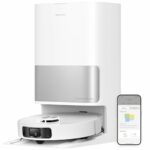
Roborock's established app ecosystem and proven reliability give the Saros 20 an advantage in day-to-day operation. DJI brings strong engineering credentials from other sectors, but this is their first robot vacuum. The Roborock app benefits from years of refinement and a large user base providing feedback for continuous improvement.
Conclusion: Which Should You Choose?
Choose the DJI Romo S if... you're interested in trying a new brand's approach to robot vacuums, particularly if you already use DJI products and appreciate their design philosophy. It delivers solid performance with a multifunction base at what may be a competitive price point as DJI establishes itself in this market. The 180-minute battery life suits most homes, and the divided brush design handles hair effectively.
Choose the Roborock Saros 20 if... you want proven reliability from the world's leading robot vacuum brand, particularly if you need to clean under low furniture where its 79.8 mm height makes all the difference. The 36,000 Pa suction, hot water mop washing, 6,400 mAh battery, and elevating side brush create a more comprehensive cleaning package. The recognition of 300 obstacles and specific curtain detection demonstrate Roborock's mature AI development. For homes with pets, large floor areas, or demanding cleaning requirements, the Saros 20 justifies its position as a February 2026 flagship model with features that address real-world cleaning challenges more thoroughly than DJI's first-generation offering.