Introduction
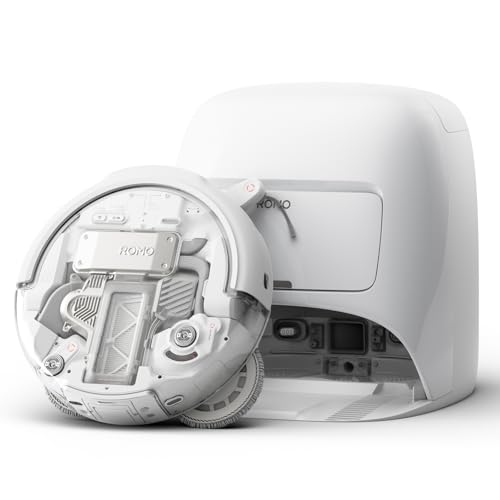
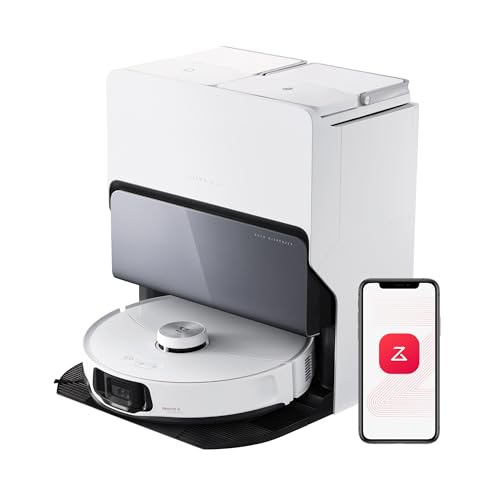
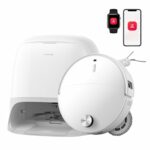
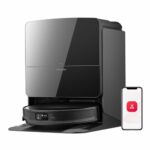
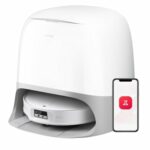
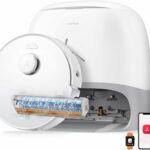
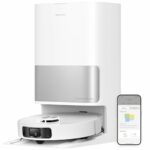
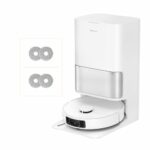
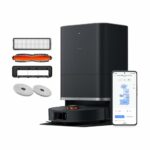
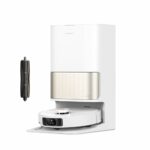
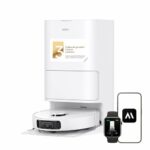
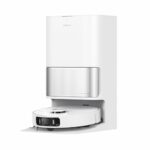
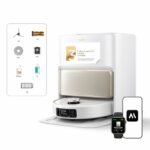
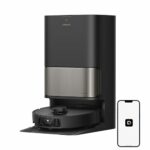
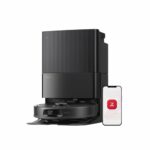
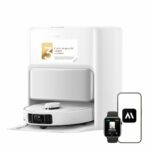
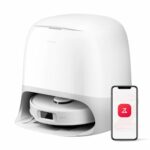
DJI has just entered the robot vacuum market with the Romo A (Robot Transparente), a 2025 model that arrives with cutting-edge specifications to challenge established brands. Facing it is the Roborock S8 MaxV Ultra, a 2024 model from the world's leading manufacturer in robot vacuum cleaners, known for its reliability and advanced features. Both are premium models equipped with multifunctional bases that handle self-emptying, mop washing, and hot air drying—essential for achieving proper floor mopping rather than just surface wiping.
The DJI model stands out immediately with its impressive 25,000 Pa suction power, more than double that of the Roborock. This newcomer is designed for users seeking maximum cleaning performance and aren't afraid to try emerging technology. The S8 MaxV Ultra, with its proven track record and mature ecosystem, appeals to those prioritising reliability and a polished user experience. Both target large homes with pets and multiple floor types, though they approach the task differently.
Key Differences at a Glance
- Suction power: DJI delivers 25,000 Pa versus Roborock's 10,000 Pa
- Main brush design: DJI uses a divided brush system; Roborock employs its dual DuoDivide brush
- Side brush anti-tangle: DJI features double anti-tangle brushes; Roborock doesn't specify this
- Mopping system: DJI has two rotating mops; Roborock uses vibrating mops with a mini side mop
- Mop lifting: DJI lifts mops without specified height; Roborock lifts 20 mm
- Base tray cleaning: DJI includes automatic nozzle cleaning; Roborock lacks this feature
- Mop washing: Roborock washes with hot water; DJI uses cold water
- Navigation: DJI uses solid-state LiDAR; Roborock has traditional 3D LiDAR turret
- AI cameras: Roborock features dual cameras; DJI has single camera
- Recognised obstacles: Roborock identifies 73 objects; DJI's number unspecified
- Dust bag capacity: DJI holds 2.4 litres; Roborock 2.5 litres
- Dirty water tank: DJI 3.2 litres; Roborock 3.5 litres
- Robot height: DJI measures 98 mm; Roborock 103 mm
- Base dimensions differ across all measurements
Suction Power and Brushing
The most striking difference in this robot vacuum comparison lies in raw power. The DJI Romo A (Robot Transparente) delivers a staggering 25,000 Pa of suction—a figure that dwarfs the Roborock S8 MaxV Ultra's 10,000 Pa. In practical terms, this means the DJI unit should excel at extracting embedded dirt from carpets and handling heavy debris that might challenge other models. For homes with deep-pile rugs or persistent pet hair, this advantage matters considerably.
The main brush systems differ fundamentally. DJI employs a divided brush design, whilst Roborock uses its signature dual DuoDivide brush that pushes hair towards the central suction gap to minimise tangles. Both manufacturers elevate their main brushes during mopping to prevent wet debris transfer. The DJI model specifies double anti-tangle side brushes, which should reduce maintenance frequency—a detail Roborock doesn't highlight for its side brush, though it does feature an extendable side brush matching DJI's capability for better edge cleaning.
Neither model elevates its side brush during mopping, which is typical at this price point. The extendable side brushes on both units help reach into corners more effectively than fixed designs.
Mopping Performance
The mopping approaches diverge significantly. The DJI Romo A (Robot Transparente) uses two rotating mops with full extension capability for reaching edges. The Roborock S8 MaxV Ultra relies on vibrating mops paired with a mini lateral mop—a different strategy that still addresses edge coverage but through an alternative mechanism. Both systems detect floor dirt and adjust their cleaning intensity accordingly, refining their approach based on actual soil levels rather than following preset patterns blindly.
Mop lifting exists on both robots, though Roborock specifies its 20 mm elevation height whilst DJI doesn't provide this measurement. This function prevents carpets from getting wet when the robot transitions between hard floors and rugs. When it comes to mop maintenance at the base station, Roborock washes mops with hot water—a feature that helps break down grease and stubborn marks more effectively than cold water. The DJI unit washes with cold water, which still cleans adequately but may require more passes on heavily soiled floors.
Both bases dry mops using hot air, accelerating the process and preventing odours from developing. The DJI model adds automatic cleaning of the washing tray itself via a dedicated nozzle, reducing manual maintenance. Roborock doesn't include this self-cleaning tray feature. Both systems detect when mops are dirty and can trigger rewashing or additional scrubbing passes—essential for maintaining genuinely clean floors rather than just spreading dirt around.
Navigation Systems
Navigation technology represents another area of divergence. The DJI robot vacuum employs solid-state LiDAR, a newer technology that eliminates moving parts found in traditional laser systems. This potentially improves reliability and reduces the robot's profile. Roborock sticks with its proven 3D LiDAR turret, a mature technology that's been refined over multiple generations and works exceptionally well in complex environments.
The Roborock S8 MaxV Ultra features dual AI cameras compared to DJI's single camera setup. More cameras typically mean better spatial awareness and object recognition from multiple angles. Roborock specifies recognition of 73 different obstacles, including pets, whilst DJI doesn't provide a count. For households with animals, Roborock's confirmed pet recognition offers reassurance that the robot won't disturb sleeping cats or get tangled in dog toys.
Both models include 3D laser sensors at the front, LED lighting for night vision, and remote camera access—allowing you to check on your home through the robot's eyes. Neither detects curtains specifically, which would help avoid getting tangled in floor-length drapes. The Roborock runs its SmartPlan 1.0 AI cleaning intelligence on the RR Mason 11.0 processor, details DJI hasn't fully disclosed yet.
Battery and Autonomy
Battery specifications sit remarkably close. The DJI Romo A (Robot Transparente) packs a 5,000 mAh cell whilst the Roborock S8 MaxV Ultra carries 5,200 mAh. Both deliver 180 minutes of runtime, which translates to coverage for large homes in a single session. This similarity suggests both manufacturers have optimised their power consumption to achieve comparable results despite the DJI's significantly higher suction power—an impressive engineering achievement if it maintains that autonomy under real-world conditions.
Neither manufacturer specifies charging times or maximum recommended floor area in the provided data, so direct comparison isn't possible on those fronts.
Smart Features
Both robot vacuum models can climb obstacles up to 20 mm high, allowing them to traverse door thresholds, thick rugs, and minor floor transitions without getting stuck. This capability matters considerably in homes with varied flooring levels.
The Roborock S8 MaxV Ultra includes its own voice assistant, enabling direct commands without relying on external ecosystems. Both robots integrate with Alexa and Google Home for broader smart home control. Neither model features a robotic arm—a cutting-edge technology still rare in consumer robot vacuums.
Multifunctional Base Station
Both bases handle the complete cleaning cycle: self-emptying dust collection, mop washing, and hot air drying. The DJI base holds a 2.4-litre dust bag compared to Roborock's 2.5 litres—a marginal difference that might mean changing bags slightly more frequently on the DJI, though both capacities suit several weeks of use in typical homes. Clean water tanks match at 4 litres, but the DJI's dirty water tank holds 3.2 litres versus Roborock's 3.5 litres.
Both stations include detergent dispensers for adding cleaning solution during mop washing. Neither offers UV disinfection, plumbing connection, or optional plumbing kits. The DJI's automatic tray cleaning via nozzle represents a genuine maintenance advantage, keeping the washing area hygienic without manual scrubbing.
Physical Dimensions
The DJI Romo A (Robot Transparente) measures 351 mm in diameter and stands 98 mm tall. The Roborock S8 MaxV Ultra is fractionally wider at 353 mm but noticeably taller at 103 mm. That 5 mm height difference could determine whether these robots fit under certain furniture. For homes with low-clearance sofas or beds, the DJI's slimmer profile provides better access to those hard-to-reach areas.
Base station footprints differ more substantially. The DJI base measures 453 mm wide, 440 mm tall, and 425 mm deep. Roborock's base is narrower at 409 mm, taller at 470 mm, and slightly shallower at 419 mm. The DJI base occupies more width whilst Roborock's extends higher—consider your available floor space and whether width or height matters more in your intended location.
The robot's onboard dust bin in the DJI holds 260 ml compared to Roborock's 270 ml, though this matters less given both empty automatically. Roborock specifies a 100 ml water tank in the robot itself; DJI doesn't provide this figure.
Real-World Usage Scenarios
The DJI Romo A (Robot Transparente) suits households prioritising maximum suction power—particularly beneficial for deep carpets, heavy shedding pets, or families with young children who scatter crumbs and debris. The 25,000 Pa figure suggests this robot won't struggle with embedded dirt. Its lower profile helps it clean under more furniture, and the automatic tray cleaning reduces hands-on maintenance. However, cold water mop washing may require more frequent manual attention for stubborn kitchen spills.
The Roborock S8 MaxV Ultra appeals to users valuing proven reliability and comprehensive smart features. The dual camera system and 73-object recognition create confidence that it won't collide with obstacles or disturb pets. Hot water mop washing delivers better results on greasy floors, making it preferable for homes with high cooking activity. Roborock's established app ecosystem and customer support provide peace of mind that DJI, as a newcomer to this market, hasn't yet built.
Both handle large homes effectively with their 180-minute runtime and 20 mm obstacle climbing. The similar battery capacities mean neither forces you to split cleaning across multiple sessions unless you're tackling truly enormous floor plans. For homes with varied flooring—hardwood, tile, and rugs—both models adjust appropriately, though the DJI's extra power gives it an edge on thick carpets.
Conclusion: Which Robot Vacuum Should You Choose?
Choose the DJI Romo A (Robot Transparente) if maximum suction power matters most to you, particularly for deep carpet cleaning or heavy pet hair. Its lower height fits under more furniture, and the automatic base tray cleaning reduces maintenance tasks. This model suits early adopters comfortable with a new brand entering the robot vacuum market, especially those prioritising raw cleaning performance over established ecosystem maturity.
Choose the Roborock S8 MaxV Ultra if you value proven reliability, comprehensive obstacle recognition (73 objects including pets), and hot water mop washing for better floor cleaning results. The dual camera system provides superior spatial awareness, and Roborock's reputation as the world's leading robot vacuum manufacturer offers confidence in long-term support. This model suits those wanting a refined, mature product with extensive smart features and a polished app experience, even if it means accepting lower suction power compared to the DJI alternative.