✨ VS Analyses · VacuumSpain comparison technology. Explanation created with AI from verified technical data.
Introduction
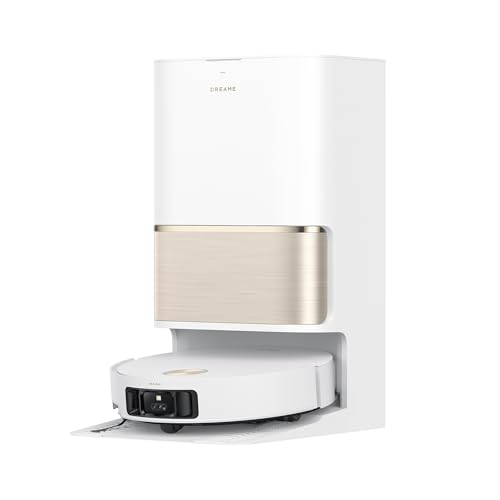
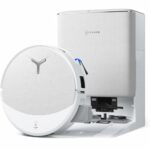
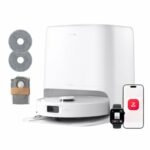
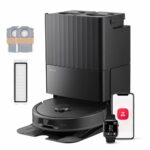
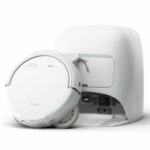
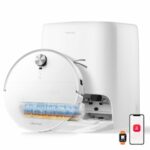
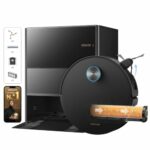
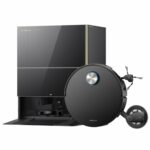
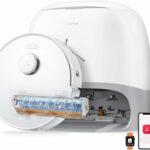
Dreame offers two interesting options within its range of robot vacuum cleaners with multifunction docks. The Dreame L10s Ultra Gen 2, launched in 2024, is positioned as a well-established option with strong features for users looking for a complete robot without having to invest in the highest-end range. Opposite it, the Dreame L50 Pro Ultra arrives in 2025 with a clearly premium approach, incorporating significant technological improvements that take the autonomous cleaning experience to another level.
Both models feature a multifunction dock that performs automatic dust emptying, mop washing and mop drying, ensuring reduced maintenance. However, differences in power, navigation, artificial intelligence and advanced functions create a considerable gap between them, especially for users with specific needs or complex homes.
Power and Suction
The difference in suction power is clear. The Dreame L50 Pro Ultra delivers 19500 Pa, almost twice the 10000 Pa of the L10s Ultra Gen 2. In practice, this translates into a greater ability to remove embedded dirt from carpets and vacuum heavier or more stubborn debris from any surface.
The brush system marks another substantial difference. The L50 Pro Ultra comes with the HyperStream dual anti-tangle brush system as standard, specifically designed to prevent long hair and fibres from wrapping around the brushes. The L10s Ultra Gen 2 uses a single brush, although an anti-tangle brush can be fitted as an optional accessory. For homes with pets or people with long hair, this feature can be a deciding factor.
In addition, the 2025 model automatically lifts the main brush while mopping, something the L10s Ultra Gen 2 does not do. This prevents the brush from becoming unnecessarily wet and improves mopping results by avoiding dragging damp dust across the floor.
The side brush also receives improvements on the L50 Pro Ultra: it extends to reach corners more effectively, lifts during mopping and features an anti-tangle system. The L10s Ultra Gen 2 does not offer these functions on its side brush.
Mopping
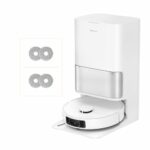
Both robots mop with two rotating mops that extend 3.0 mm thanks to the Roboswing system, allowing them to reach edges more effectively and perform the characteristic sideways movement that improves coverage. The mops lift by 10.5 mm when carpets are detected or when returning to the dock, which works well in most situations.
The main difference lies in mop washing. The Dreame L50 Pro Ultra washes the mops with hot water at 75°C, a temperature that helps dissolve grease more effectively and remove bacteria. The L10s Ultra Gen 2 washes them with cold water, making it less effective against difficult stains or stuck-on residue.
Drying is the same on both models, using hot air at 45°C to speed up the process and reduce unpleasant odours.
The L50 Pro Ultra features dirt detection on both the mops and the floor, allowing it to automatically adjust mopping intensity and go over particularly dirty areas again. This feature is not available on the L10s Ultra Gen 2, which follows more standard cleaning patterns.
Another advantage exclusive to the 2025 model is the ability to automatically leave the mops at the dock when vacuuming only, without having to remove them manually. This makes everyday use easier and prevents the mops from touching the floor during vacuum-only sessions.
Navigation System
The Dreame L10s Ultra Gen 2 uses a conventional 3D Lidar turret that protrudes from the top surface, giving the robot a total height of 97 mm. The L50 Pro Ultra features retractable Lidar that reduces the robot's height to 89 mm, making it easier to clean under low furniture, beds and sofas that the other model may not be able to reach.
The major difference is artificial intelligence. The L50 Pro Ultra features a dual AI camera, a front LED for night vision and recognition of up to 180 different types of obstacles. It detects curtains, avoids getting tangled in them and allows remote access to the camera through the app to monitor the home. The L10s Ultra Gen 2 does not include a camera, so its object recognition capabilities are more limited.
Both models recognise pets and feature a front 3D laser sensor for obstacle avoidance, but the level of accuracy and the range of identifiable objects are considerably greater on the L50 Pro Ultra thanks to its AI Sage 13.0 Octa-core processor.
Runtime and Battery
The Dreame L50 Pro Ultra features a 6400 mAh battery that provides up to 200 minutes of runtime. The L10s Ultra Gen 2, with 5200 mAh, reaches 240 minutes. Although this may seem contradictory, the greater suction power of the L50 Pro Ultra consumes more energy, reducing its total continuous operating time.
In practice, both robots offer enough runtime to clean medium-to-large homes in a single session. The difference may become noticeable in very large homes or when maximum suction power is used constantly.
The robot's dustbin capacity also differs: 395 ml on the L50 Pro Ultra compared with 300 ml on the L10s Ultra Gen 2. This allows the newer model to collect more dirt before returning to the dock for automatic emptying.
Smart Features
The Dreame L50 Pro Ultra can overcome obstacles of up to 22-40 mm thanks to its improved wheel system, while the L10s Ultra Gen 2 is limited to 20 mm. This difference can be relevant in homes with raised thresholds, thick carpets or transitions between different floor surfaces.
The 2025 model also includes its own simple voice assistant, allowing users to give basic commands directly to the robot without having to use the app or external assistants. The L10s Ultra Gen 2 does not offer this function.
Multifunction Cleaning Dock
Both docks share identical dimensions and similar capacities: a 3.2 L dust bag, 4.5 L clean water tank and 4 L dirty water tank. They also include a detergent tank and an optional kit for direct connection to water pipes.
The difference lies in self-cleaning of the washing tray. The Dreame L50 Pro Ultra features a 3rd-generation system that automatically cleans the tray where the mops are washed, reducing manual maintenance. The L10s Ultra Gen 2 uses a 2nd-generation system, which is less advanced but still functional.
Dimensions
The diameter is identical on both models: 350 mm. The difference lies in height. The Dreame L50 Pro Ultra measures 89 mm thanks to its retractable Lidar, while the L10s Ultra Gen 2 reaches 97 mm. Those 8 mm can make a difference when cleaning under furniture with limited clearance from the floor.
The docks have exactly the same dimensions: 340 mm wide, 590.5 mm high and 456.7 mm deep. This should be taken into account if the available space is limited.
Real-world user experience
The Dreame L10s Ultra Gen 2 works well in medium-sized homes without very thick carpets or complicated obstacles. Its 10000 Pa of suction is sufficient for everyday cleaning, although it may fall short on deep-pile carpets. If you have pets, you should consider purchasing the optional anti-tangle brush.
The Dreame L50 Pro Ultra is designed for users looking for maximum autonomy and minimal intervention. Its AI camera, advanced obstacle detection and automatic adaptation capabilities make it ideal for homes with pets, small children or complex layouts. Mop washing at 75°C and dirt detection significantly improve mopping results, especially in kitchens or high-traffic areas.
The lower height of the L50 Pro Ultra allows it to reach spaces that the L10s Ultra Gen 2 cannot access, which can be decisive if you have low furniture or beds with limited clearance from the floor.
Conclusion: Which one should you choose?
Choose the Dreame L10s Ultra Gen 2 if: you are looking for a complete robot with a multifunction dock at a more affordable price, your home is no larger than 100-120 m², you do not have very thick carpets and you do not need advanced features such as a camera or intelligent dirt detection. It is a balanced option for users who want to automate cleaning without investing in the highest-end range.
Choose the Dreame L50 Pro Ultra if: you want the best technology available in 2025, you have pets or long hair in the home, you need maximum suction power, you value hot-water mop washing, you want remote camera access for monitoring, or your home has low furniture that a conventional robot cannot clean underneath. It is the option for users looking for maximum autonomy, minimal maintenance and professional results in both vacuuming and mopping.