✨ VS Analyses · VacuumSpain comparison technology. Explanation created with AI from verified technical data.
Introduction
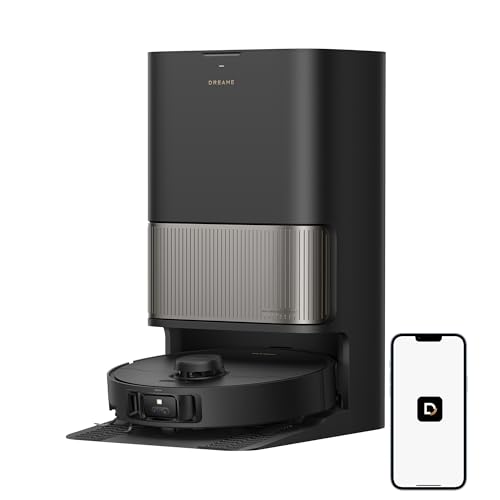
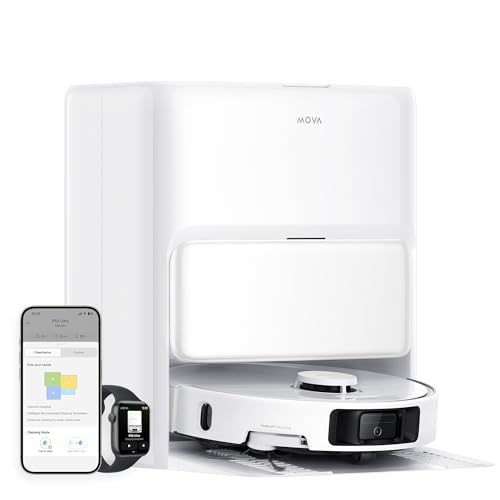
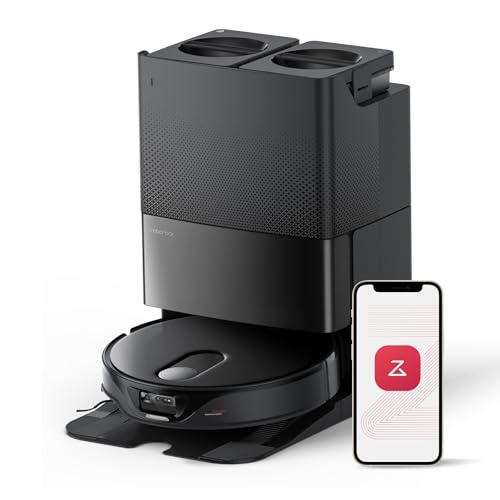
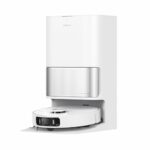
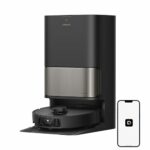
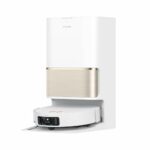
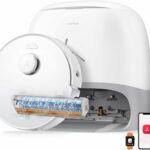
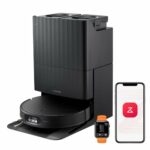
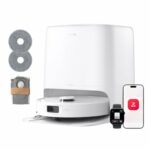
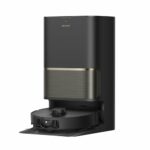
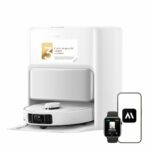
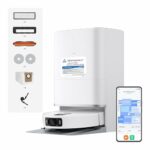
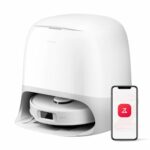
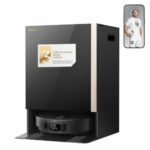
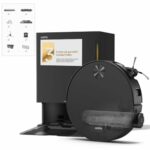
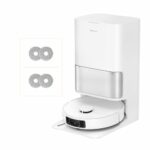
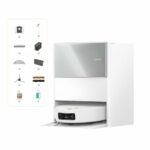
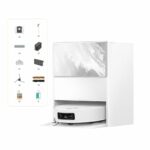
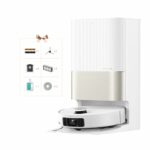
The Dreame L40s Pro Ultra and Mova P50 Ultra both arrive in 2025 as high-specification cleaning machines, whilst the Roborock Qrevo Slim launched in 2024 and represents a more compact approach to premium robotic cleaning. All three models feature multifunctional bases with mop washing and drying capabilities, making them suitable for households wanting a genuinely hands-off cleaning experience. The Dreame and Mova share identical suction power at 19,000 Pa, considerably outpacing the Roborock's 11,000 Pa, which suggests the newer models target users with demanding floor types or heavy debris loads. The Qrevo Slim, as its name suggests, focuses on accessibility—its 82 mm height allows it to slip beneath furniture that would block taller machines.
These aren't entry-level devices. Each one caters to homeowners seeking comprehensive automation, from dust collection through to mop maintenance. The differences lie in how each manufacturer balances power, intelligence, and physical design.
Power and Vacuuming
The Dreame L40s Pro Ultra and Mova P50 Ultra share a 19,000 Pa suction rating, placing them among the most forceful robot aspirador models available. The Roborock Qrevo Slim sits at 11,000 Pa, which remains adequate for most hard floors and short-pile rugs but may struggle with deeply embedded dirt in thicker carpets. In practice, the extra headroom on the Dreame and Mova translates to faster debris pickup and better performance on high-pile surfaces.
Brush configuration reveals another split. The Dreame employs a dual-brush HyperStream design, as does the Roborock with its DuoDivide system. Both arrangements help funnel hair towards the suction inlet, reducing tangles. The Mova uses a single-brush layout, which can be simpler to maintain but may require more frequent cleaning if pet hair is abundant. All three models lift their main brush during mopping to prevent wet fibres dragging across carpets.
Side brush behaviour differs more than you might expect. The Dreame and Mova can elevate their side brush when mopping begins, preventing splatter on skirting boards. They also feature anti-tangle side brushes, which matters if you have long human hair or pet fur drifting along edges. The Roborock Qrevo Slim cannot lift its side brush and lacks the anti-tangle feature, so edge cleaning during wet passes may leave marks on walls. All three extend their side brush outward to reach into corners, a helpful touch for thorough edge coverage.
Mopping
Each robot uses twin rotating mopas that spin against the floor. The Dreame and Mova both extend their mopas outward and incorporate a swinging motion—Roboswing—that nudges the pad slightly under furniture plinths and door frames. The Roborock extends its mopas but does not perform the swinging manoeuvre, so coverage along tight edges will be marginally less aggressive.
Mopa lift height is almost identical: 10.5 mm for the Dreame and Mova, 10 mm for the Roborock. That extra half-millimetre makes no real-world difference; all three clear low-pile rugs without dragging wet pads across them. What does matter is the Dreame's ability to detach its mopas automatically at the base when you want a vacuum-only session. The Mova and Roborock require manual removal, which adds a small maintenance step if you frequently switch between mopping and dry vacuuming.
Dirt detection on mopas and floors is present in the Dreame and Roborock, prompting the machines to make extra passes or return to the base for a mopa rinse. The Mova lacks this sensor-driven refinement, so it follows a fixed cleaning pattern regardless of visible grime. All three wash their mopas with hot water at the base and dry them with warm air, which accelerates drying and inhibits odour. The Dreame and Mova benefit from third-generation self-cleaning tray systems, whilst the Roborock uses version 1.0—still effective, but potentially requiring more frequent manual rinsing of the tray itself.
Navigation System
LiDAR towers sit atop all three robots, building floor plans and planning efficient routes. The Dreame and Roborock add dual front-facing cameras for object recognition, whilst the Mova relies on its laser sensor and a single 3D detection array. The Dreame recognises 180 distinct objects—shoes, cables, pet toys, furniture legs—and the Roborock identifies 73. The Mova's object count is unspecified, which suggests a less granular classification system.
Pet owners will notice that the Dreame and Roborock can spot animals and adjust behaviour accordingly, such as reducing speed near a sleeping dog or avoiding food bowls. The Mova does not offer pet recognition. Curtain detection appears on the Dreame and Mova, helping the machines avoid tangling in floor-length drapes; the Roborock misses this feature. LED lighting for low-light navigation is standard on the Dreame and Roborock, absent on the Mova, so night-time cleaning or dark hallways may challenge the Mova's camera-free setup.
Remote camera access is available on the Dreame and Roborock, letting you check on pets or view rooms via the app. The Mova does not provide this function. Each model runs its own intelligent cleaning algorithm—CleanGenius on the Dreame and Mova, SmartPlan on the Roborock—but the Dreame also includes AI-driven stain recognition, prompting targeted scrubbing when it detects spills. Neither the Mova nor the Roborock offers this stain-specific response.
Battery and Range
All three machines carry 5,200 mAh batteries. The Dreame quotes 220 minutes of runtime, the Roborock 180 minutes, and the Mova provides no published figure. In practice, mopping drains the battery faster than dry vacuuming, so expect real-world times to fall below these maximums when wet cleaning large areas. The Dreame's longer stamina suits expansive homes or multi-level properties where a single charge needs to cover more ground.
Smart Features
Obstacle-climbing ability varies slightly. The Dreame can mount simple steps and quotes a maximum threshold height, the Mova clears 22 mm obstacles, and the Roborock manages 20 mm. These figures matter if you have raised door thresholds or thick rugs with pronounced edges. The two-millimetre difference between the Mova and Roborock is marginal, but the Dreame's step-climbing capability may prove useful in homes with split-level flooring.
Voice control takes two forms. The Dreame and Roborock include proprietary assistants that respond to spoken commands without requiring a separate smart speaker. The Mova supports external assistants like Alexa and Google Home but lacks an onboard voice system. For users who prefer a single ecosystem, the built-in assistants simplify interaction; for those already invested in Alexa or Google, the Mova's approach is perfectly adequate.
Multifunctional Base
Each base empties the robot's dust bin, washes mopas with hot water, and dries them with warm air. Dust bag capacity is 3.2 litres in the Dreame and Mova, 2.7 litres in the Roborock. That half-litre difference means roughly one extra week between bag changes in a typical household, assuming moderate daily use.
Water tank sizes show minor variation. The Dreame holds 4.5 litres of clean water and 4 litres of dirty water; the Mova stores 4 litres clean and 3.5 litres dirty; the Roborock matches the Mova at 4 litres clean and 3.5 litres dirty. Larger clean-water reserves reduce refill frequency during extended mopping sessions, so the Dreame edges ahead for very large floor areas.
Detergent dispensing is standard on the Dreame, optional—requiring a separate purchase—on the Mova, and unavailable on the Roborock. If you want automated detergent dosing without manual mixing, the Dreame is the only out-of-the-box solution here. The Dreame also offers an optional plumbing connection kit, letting you hook the base directly to water and waste lines for truly hands-free operation. Neither the Mova nor the Roborock provides this accessory, so tank refilling and emptying remain manual tasks.
Dimensions
Height is the most striking difference. The Roborock Qrevo Slim measures 82 mm tall, the Mova P50 Ultra 97 mm, and the Dreame L40s Pro Ultra 103.8 mm. That 21.8 mm gap between the Roborock and Dreame determines whether the robot fits beneath low-slung sofas, bed frames, or kitchen plinths. If furniture clearance is tight, the Roborock's slim profile becomes a decisive advantage.
Diameter varies only slightly—350 mm for the Dreame and Mova, 353 mm for the Roborock—so turning radius and corner access are virtually identical. Weight is not listed, but the taller Dreame likely carries more mass due to its additional camera hardware and larger internal dust bin (300 ml versus the Roborock's 220 ml).
Base footprints differ more noticeably. The Dreame and Roborock share a 340 mm width, whilst the Mova stretches to 420 mm, making it the widest station. The Dreame is the tallest base at 590.5 mm, the Mova the shortest at 470 mm, and the Roborock sits in between at 521 mm. Depth runs from 456.7 mm on the Dreame to 487 mm on the Roborock. If floor space is limited, measure your intended location carefully; the Mova's extra width may complicate placement in narrow alcoves.
Real-World Use
For large homes with mixed flooring, the Dreame L40s Pro Ultra combines high suction, extended battery life, and comprehensive object recognition. The 180-object database and dual cameras help it navigate cluttered living spaces without constant supervision. Automatic mopa removal suits households that alternate between mopping and vacuuming schedules, and the optional plumbing kit appeals to users wanting zero manual intervention.
Pet owners benefit from the Dreame and Roborock's animal recognition and anti-tangle brushes. The Dreame's dual-brush system and higher suction make it particularly effective on homes with shedding dogs or cats. The Roborock's slimmer build helps it reach under pet beds and feeding stations, whilst its DuoDivide brush minimises hair wrap.
The Mova P50 Ultra offers similar suction and battery capacity to the Dreame but strips away some of the camera-based intelligence. It suits buyers who want strong cleaning performance without paying for advanced AI features. The lack of a detergent tank as standard and no plumbing kit option means more hands-on maintenance, but the lower base height may fit better in compact utility spaces.
The Roborock Qrevo Slim targets homes with low furniture and moderate cleaning demands. Its 11,000 Pa suction handles daily dust and light debris well, and the 82 mm height unlocks areas taller robots cannot reach. The smaller dust bag and water tanks mean more frequent servicing, so it's best suited to smaller properties or users who prefer regular interaction with the machine.
Conclusion: Which to Choose?
Choose the Dreame L40s Pro Ultra if you want maximum suction power, the longest battery runtime, and the most sophisticated object recognition. The automatic mopa detachment and optional plumbing kit make it the most hands-off option, ideal for large homes with pets, varied floor types, and owners who value minimal maintenance. The taller profile requires adequate furniture clearance.
Choose the Mova P50 Ultra if you prioritise raw cleaning power at a potentially lower price point and don't need advanced camera features. It shares the Dreame's high suction and battery capacity but simplifies the sensor suite. The wider base and absence of certain smart functions suit users who clean on a schedule and don't mind occasional manual tasks like detergent refills or mopa removal.
Choose the Roborock Qrevo Slim if fitting under furniture is your primary concern. The 82 mm height opens up spaces other robots cannot access, and the dual-camera system with pet recognition delivers intelligent navigation. It works well in smaller homes or flats where dust bag and water tank capacity align with the property size, and where moderate suction suffices for daily upkeep. The lack of detergent dispensing and plumbing options means you'll handle refills manually, but the slimline design compensates by reaching areas competitors miss.